Monday, May 03, 2010

Pirkei Avot - Ethics of Our Fathers - Chapter 4, II

Pirkei Avot 4:1

בן זומא אומר איזה הוא חכם הלמד מכל אדם שנאמר מכל מלמדיי השכלתי (תהלים קיט צט) איזה הוא גיבור הכובש את יצרו שנאמר טוב ארך אפיים מגיבור (משלי טז לב) איזה הוא עשיר השמח בחלקו שנאמר יגיע כפיך כי תאכל אשריך וטוב לך (תהלים קכח ב) אשריך בעולם הזה וטוב לך לעולם הבא איזה הוא מכובד המכבד את הברייות שנאמר כי מכבדיי אכבד ובוזיי ייקלו (שמואל א ב ל). סוף


Ben Zoma used to say, who is wise? He who learns from all men, as is said in Psalms CXIX:99, "From all my teachers I have gained wisdom." Who is strong? He who controls his passions, as is said in the Book of Proverbs XVI:32, "better is the slow to anger than he mighty, and the one who rules his spirit than he who captures a city." Who is rich? He who rejoices in his lot, as is said in Psalms CXXVIII:2, "For thou shalt eat the labor of thy hands; happy shalt though be, and it shall be well with thee in this world and in the world to come." Who is honored? He who honors his fellow men, as is said in I Samuel II:30, "For I honor those who honor Me, and those who despise Me shall be lightly esteemed."

- I find it interesting, and telling, how Pirkei Avot dictates we define someone who is smart, strong, rich or honored. Compare how 'we' define the aforementioned in the 'Western world,' and we see one of areas where the Western world and Jewish world constantly clash.

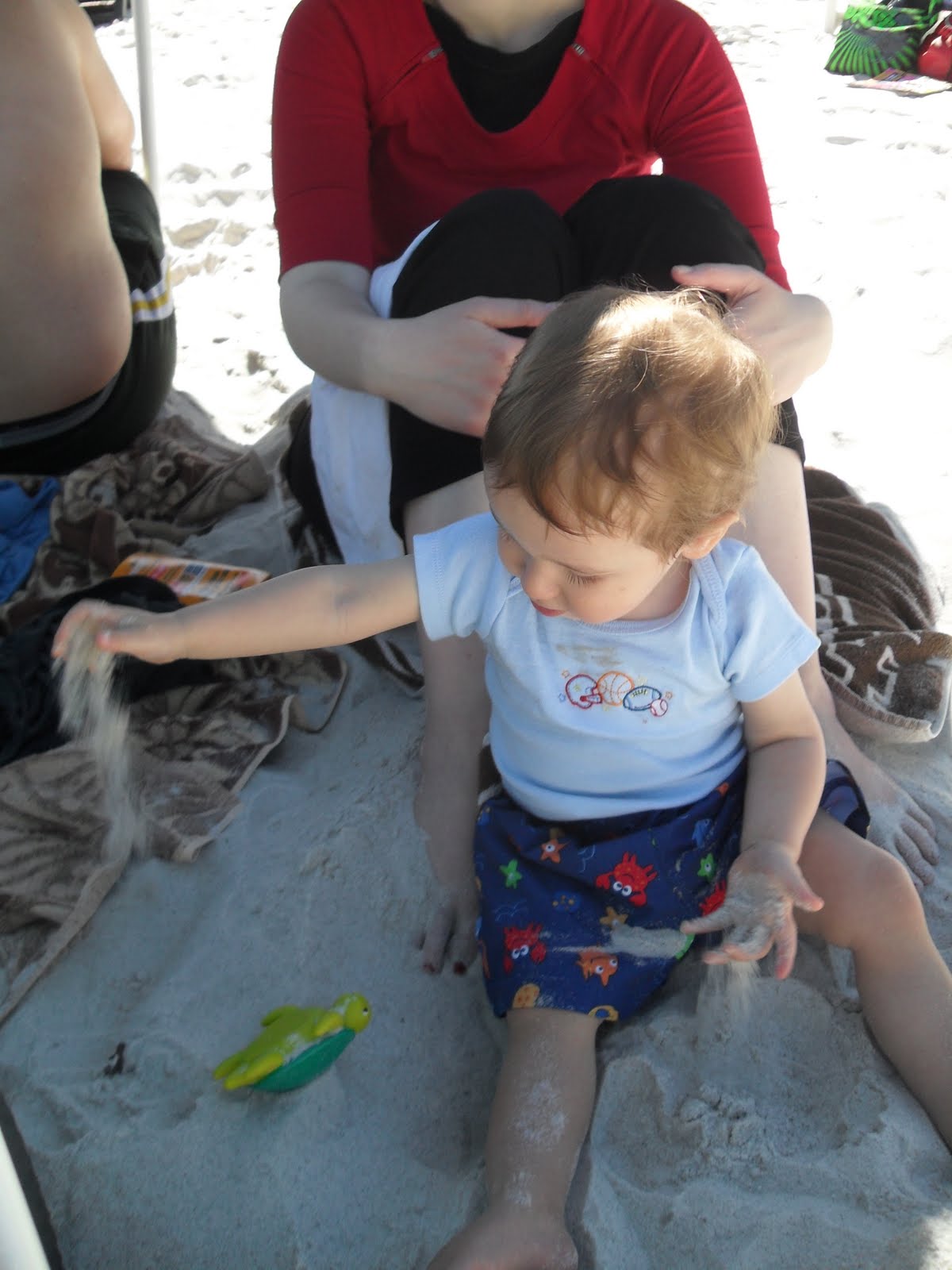
- Surely if one can learn from 'all,' one should be able to learn from a baby too ... but what? One of the things Nissim has taught me is one should do things with excitement. Whenever he gets up, he doesn't lay back down and relax. He wants to start his day an enthusiastic burst of energy. Babies look forward to each morning - a new discovery awaits - while those later on in life sadly lack that youthful passion. If I can learn such a valuable lesson from my 18 month old son, I'm sure I can learn something from everyone.

- Slightly related to our region and the difficulties in making peace, but perhaps he who is strong is one who 'represses the hatred we feel towards an enemy and makes a friend of him or her,' (taken from Rabbi Meir Matzliah Melamed's Pirkei Avot commentary).

- "Self control therefore needs the incredible strength of restraint. It requires holding back for just a few seconds between the things that happen to us and our response, creating a little space to think and process the point of view of the divine voice. It is what Stephen Covey calls the 'pause button between the stimulus and the response.'

We need to train ourselves not to act quickly and instinctively. We need to use the unique ability of the human being to stop and ask ourselves the question: is this wrong or right? It takes amazing strength to wait a few seconds, but those few seconds can be the difference between an animalistic act and a divine one." (How Strong are You? by Rabbi Michoel Gourarie).

- Ah yes, the 'who is rich' statement. Something that my Nonnou lived by, something I would love to master. I think that being 'happy with your lot' is allowing yourself the balance of being grateful for what you've been granted and striving to better your life ... for the right reason. We're a greedy species - and we're always liable to be jealous & ambitious (for the wrong reason), but if the striving is done for the right reason (I think the 'right reason' changes for each individual), it should allow us to handle & hopefully suppress the "look what s/he's got" mentality and fear that we'll not be able to sustain ourselves if what we think we need isn't granted to us.

- The part about honor is perhaps best summed up by Cuban poet Jose Marti, "Honrar, honra, "To honor, brings honor" (Rabbi Melamed).
_

Sunday, April 25, 2010

Pirkei Avot - Ethics of Our Fathers - Chapter 3, II

Pirkei Avot 3:14

רבי דוסא בן הרכינס אומר: שינה של שחרית, ויין של צהרים, ושיחת הילדים, וישיבת בתי כנסיות של עמי הארץ, מוציאין את האדם מן העולם

Rabbi Dosa ben Harkinas said, morning sleep, noonday wine, children's talk and frequenting the synagogues of the ignorant takes a man from the world of life

- 'Morning sleep' can refer to those who struggle to wake up, which results in being late to (or missing) shacharit or hours at work. That takes you away from your zecut to pray in a minyan (perhaps leading to more sins as is stipulated in Pirkei Avot 4:2, chet gorer chet), or can lead to trouble with your boss at work. It could also just simply be referring to a lazy person.

- In my opinion, 'noonday' wine means going out of your way to have wine (or other alcoholic beverages) during the day.

- I think 'children's talk' could refer to unnecessary talks with children or playing with them when there's other issues that need to be addressed. However, if this is a adult talking with kids for a positive benefit (be it helping with schoolwork, or teaching him the importance of good morals etc.), then there's surely no problem with it as it's something an adult should be doing.

- All these actions have something in common - they all take away from necessary daily tasks (work, study etc.) and are of little benefit to the person partaking in them. This mishna is warning us to not allow distractions to 'remove us' from far more important Torah & related goals.
_

Saturday, April 17, 2010

Pirkei Avot - Ethics of Our Fathers - Chapter 2, II

Pirkei Avot 2:17

רבי יוסי אומר, יהי ממון חברך חביב עליך כשלך. והתקן עצמך ללמוד תורה, שאינה ירשה לך וכל מעשיך יהיו לשם שמים

Rabbi Yose says: Let your fellow's belongings be as dear to you as your own; apply yourself to study the Torah, for it is not yours by inheritance; and let all your deeds be for the sake of Heaven.

- Rabbi Abraham Twerski (Visions of the Fathers) quotes his great uncle, Rabbi Yehoshua Heschel Rabinowitz, who interprets the first line in the mishnah to mean: Let that which you give to your neighbor (i.e., tzedakah) be as dear to you as what you own and retain. To back this up, he brings in a story about Don Isaac Abarbanel, a renowned scholar and the minister of finance during the Golden Age of Jews in Spain.

Abarbanel enjoyed the unwavering trust of the king. Several anti-Semitic people in the court sought to defame him, and repeatedly told the king that this minister was growing extremely wealthy by embezzling from the royal treasury, and that his estate far exceeded what he could amass from his salary. Although the king tried to ignore the accusations, their repetition eventually led him to ask his minister to present him with an accurate inventory of all he owned. Several days later, Abarbanel presented the king with a rather meager account. The king remarked, "This cannot be. You obviously own much more than this."

"Your Majesty," Abarbanel said, "Your inquiry as to how much I own could result only from the efforts of my enemies to discredit me. If they can cause Your Majesty to suspect me of embezzlement, they may also prevail on your Majesty to confiscate my belongings. I can hardly consider anything that I can lose at a moment's notice as being truly mine. I therefore made a list of all that I have given to charity, because that can never be taken from me. That is all I can truly claim as my own, and that is the amount I have submitted to Your Majesty."

- The first part of the mishnah can also simply mean, 'Respect other people's property like you respect your own.' That should also mean that one needs to respect the lands we live in, it is 'property' too ... and just like you wouldn't litter or spray graffiti on your property, so you shouldn't do it on public property.

- Does the statement "Apply yourself to study the Torah, for it is not yours by inheritance" not negate what we're told in the Torah, "It [Torah] is an inheritance to the congregation of Jacob," (Deuteronomy 33:4)? The Gur Rebbe says the 'it' is not the Torah, but 'study.' The aforementioned Twerski analyzes the mishnah with the following comparison: You inherited a large sum of money which is in the bank; The money is yours, but if you do not put it to use, the mere ownership of the money does nothing for you. Unless we 'put the Torah to use' (i.e., study it), the fact that it still is ours is of little value.
_

Memorial Day

On Sunday night, Memorial Day begins in Israel. I normally write something about this day, a day where a majority of Israelis mourn and remember the lives of those we've lost in wars, terror attacks & missions abroad. However, this time I'll let Barbara Sofer's powerful article in the Jerusalem Post do the 'talking.' If you're interested in reading more about Gadi Ezra and the victims of the Jenin battle in Operation Defensive Shield, Brett Goldberg's 'A Pslam in Jenin' is a must read.

‘I’m sick and tired of defending Israel,’ wrote an American relative, annoyed by a wave of criticism over its plans to expand a Jewish neighborhood in Jerusalem. He’s run out of patience with us Israelis who think we’re smarter than everyone else about our country.

I couldn’t find a civil answer. All I could think was: You’re tired of defending Israel? What about the Peretzes?

Said mother Miriam Peretz, a school principal, in a press interview: “In Morocco where I was born, I went around with my head bowed and I had no freedom. Here in Israel I see my boys in uniform and I’m proud to be Jewish.”

And then, 12 years ago, she heard a gentle knock on their door, the sound feared by every Israeli parent.

“Such a quiet knock and in one moment, your entire world is destroyed,” she said.

Uriel, their first born, was dead, killed by timed explosives in south Lebanon. Five years ago, father Eliezer Peretz died of cancer. And then last month, the angel of death came knocking again. Their son, Maj. Eliraz Peretz, was killed in a firefight with terrorists placing explosives on the Gaza border.

And there’s more.

WHEN URIEL was killed, his short M-16 was passed to another officer in his unit, until it became the property of a soldier named Gadi Ezra [picture below] from Bat Yam.

Ezra was the youngest child of Roseline and Soli Ezra, immigrants from Algeria and Egypt whose families had lived in those countries since the Spanish Inquisition.

Gadi was home on leave when, on the eve of Pessah 2002, a terrorist entered the Park Hotel in Netanya, exploded and killed 30 men and women, mostly Holocaust survivors.

In the early morning hours Ezra’s phone rang, summoning him back to the army. He fought in Operation Defensive Shield, transferred to Jenin. There he was assigned a new commander: Eliraz Peretz, Uriel’s younger brother.

The narrow alleys of Jenin where the terrorists were holed up were rigged with explosives, but the IDF decided against air attacks and artillery to minimize civilian casualties. Peretz and Ezra fought together in booby-trapped houses, seeking out terrorists.

Until they were caught in an ambush. Ezra stooped to help a wounded soldier, and took a bullet in his neck.. He couldn’t feel his limbs. “You have to save me,” Ezra called to Peretz, then “Shema Yisrael...” He died in Peretz’s arms.

Peretz was also wounded. When he returned to his fighting unit, he took a new weapon. A short M-16. Only later did he learn, from the strap, that it was Gadi’s, and before that it had belonged to his own brother, Uriel.

SO MANY, so many beloved soldiers have paid with their lives, year after year, decade after decade for our existence as a state, but Gadi Ezra’s name may be familiar to readers. A letter he wrote to his fiancée Galit Meislik before going to battle has often been reprinted and read at ceremonies.

Here’s a shortened, translated version.

“My Dear Galiti, If this letter reaches you, it means that something has happened to me. This morning, we were informed that the mission planned yesterday, with the Almighty’s help, will take place today. My beloved, on one hand I feel that there is nothing more that I want in this world than to be with you – to love you and establish a home and a family with you. But on the other hand, there isn’t anything I want more than to be a part of this military operation and strike those terrorists a blow so strong that they will never again even consider carrying out a terrorist attack.

“Don’t be angry with me, my love, but at moments like this, your feeling for klal Yisrael (the people of Israel) is the feeling that is supposed to guide you – and you relate to this evil as if your private life does not exist.

“To do this, there is a price that we must pay. I am willing to be that price. Soldiers of King David’s army would free their wives from marriage before going into battle. My beautiful one, I love you so much and the only grief of mine is that you will have sorrow and I won’t be the one who will be privileged to make you happy.

“You deserve all the happiness in the world. I will always watch over you from wherever I am and I will see to it that you will meet someone who will make you even happier than I could have made you. Only promise me that you will continue onward and will not allow Sodom to be the victor. I will love you forever, Gadi.”

BY THE time Eliraz Peretz could leave the battlefield to make a condolence call to the Ezra family, the shiva was over. He drove to Bat Yam with his fiancée Shlomit Gilboa. Shlomit spent much of the condolence call with Galit, who was mourning even though she and Gadi hadn’t yet wed. Shlomit asked Galit to take part in her bridal Shabbat before her wedding. Galit tried to beg off – she wasn’t in the mood for parties and certainly not bridal parties, but Shlomit was relentless.

Six weeks later, on the bridal Shabbat, Galit met the Gilboa family except for Shlomit’s brother, Eliezer, who wasn’t home. “Several times on that Shabbat, family members and friends said that I would be ‘perfect for Eliezer,’” Galit told me. “It was awkward, to say the least.”

Galit said Eliraz Peretz, the new groom, “called us and pressured us and simply wouldn’t take no for an answer.”

Three months after they met, Galit married Eliezer Gilboa. They have four sons. Galit recalled, “At the engagement party, Eliraz took me aside. He said he’d finally understood Gadi’s dying demand for him to help him meant that he had to introduce me to Eliezer.”

The Peretzes and the Gilboas were now family, and the Ezras close to family.

Then, last month, Eliraz Peretz joined the too long list of soldiers who had given their lives to protect his civilians.

Yossi Ezra, Gadi’s older brother, has the M-16 now. A biology teacher, he’s also in charge of security in his village. His mother is unhappy about him using it, he told me.

“Our families have become very close,” says Gadi Ezra’s sister, Vivian Elbaum. “We attend each other’s joyous occasions and the sad ones. Happiness and mourning are mixed up together for us, the bereaved families of Israel. We remind each other that we have to go on, because life is stronger than death.”

May all the memories of the fallen be for a blessing. May we be privileged to defend the State of Israel with words, and not to be put to the ultimate test.

_

Akavia ben Mahalalel & Corruption

With so much of the news in Israel currently revolving around Ehud Olmert and the Holyland bribery scandal, this brief passage I read in Rav Abraham Twerski's Visions of the Fathers really struck a chord:

We know that he [Akavia ben Mahalalel] stood head and shoulders above all his peers, who wished to appoint him as the Head of the Sanhedrin. However, Akavia differed with his colleagues on four halachot, and he was told that if he would retract his position on these four issues, the distinguished position would be his. Akavia stated that inasmuch as he was espousing the opinion of his teachers, he felt that this was the prevailing opinion of the authorities of the previous generation. He was therefore not at liberty to retract. Furthermore, he argued, if he did yield to his colleagues who now constituted a majority of the Torah scholars, he might be accused of having changed his mind because he could not resist the lure of the lofty position as Head of Sanhedrin. "I may be considered a fool for not yielding and thereby forfeiting this singular honor, but I would be considered unscrupulous if I did yield. I would rather people think of me as foolish than as corrupt," (Eduyot 5:6-7)
_

Wednesday, April 14, 2010

Stranded in Cape Town

After a wonderful 3+ weeks in Cape Town, Talya & I were ready to go home. It was time to get back to the routine of ‘reality’ that would begin on Tuesday morning. We arrived at Cape Town’s airport on Monday afternoon two hours before our flight was scheduled to depart for Johannesburg. At the baggage check-in, the lady behind the counter innocently said, “I don’t see you on this flight.” Confused, I pointed to the e-ticket and said, “But we’re right there, surely there’s a mistake.” After asking for some help, the lady sent us to the British Airways (BA) desk to find out exactly what was happening.

This stuff happens. I wasn’t too worried. If there’s one thing I’ve learned since coming to Israel is that you stay calm when these situations arise and try and turn them in your favor – and this is where I diverge from the ‘standard’ Israeli way as I’m not that good at the screaming and yelling part.

We approached the agent at the BA desk and explained what had happened. He started bringing up the data and within a few minutes, a lady had joined to help him out. Struggling to figure out why we were not showing up on the flight, the agent called El Al’s Jo’burg desk to see if they could assist in the matter. While the two were chatting, the supervisor (or at least I thought she was as she had her own room on the side) came in. She looked at the screen and said, “You were supposed to be on the AM flight leaving Cape Town.” “How is that possible if El Al’s flight from Joburg to Tel Aviv is leaving at 8:55pm?” I asked. “That flight left before noon too sir,” she said.

Talya and I looked at each other; we were both caught completely off guard. “Can I speak to the El Al agent please?” I asked the BA agent and he passed me the phone. So this is the story. In December, two months after we’d purchased the tickets, El Al changed the time of the flight. Our travel agent unfortunately forgot to pass this information on to us. What was even more annoying was that when we confirmed the flight with BA on Friday – they never warned us about this either! The balagan (Hebrew for mess) could have been avoided.

Talya & I weren’t too happy about this, but what could we do? We were now stuck without a ticket and the next El Al flight to Tel Aviv was only leaving Thursday (ironically enough, around the same time our flight was supposed to have left at). I asked the El Al agent to please help us and get us on that flight and then called my Nonna. “No,” she exclaimed, “But you confirmed!” I explained it to her briefly and within two hours, we were all back at Nonna’s flat in Sea Point. We had mentally prepared ourselves to leave, so it was odd to be ‘back.’ The next day, the aforementioned El Al agent called back, “We’ve confirmed you on the El Al flight on Thursday and because this was not your fault, there will be no extra fees for you to pay.”

Oddly enough, I don’t think I got angry during the entire episode. I guess there was no point in getting angry – Nothing we could do could change what had happened. The fact that we were getting such excellent service from the BA & El Al agents also helped I'm sure. If they were being well mannered and helpful, surely we could also return the favor. These things happen and despite the few negatives, there are quite a few positives due to this balagan – more time with Nonna and Sea Point.

גם זה לטובה … This is also for the better ...
_

Friday, April 09, 2010

Table Mountain & Boulders

So today I finally got to take Talya up Table Mountain, one of the most beautiful sites the world has to offer. We went up there with a good friend of mine from Israel (whom I met in Turkey, but that's a story for another day) and his lady. Though it was slightly foggy early on in the day, the weather cleared up rather quickly leaving us with a perfect day for seeing much of the Cape Peninsula. The scenery was, as expected, breath taking. One of the highlights for me was spotting two whales just off Camps Bay. Though we were so far away, we could see them coming in and out of the water. Fantastic stuff. I've uploaded a few pictures (In the 1st, you'll see Robben Island in the middle of the picture, just after the fog) - and will upload more when I return to Israel.


“During the many years of incarceration on Robben Island, we often looked across Table Mountain at its magnificent silhouette … To us on Robben Island, Table Mountain was a beacon of hope. It represented the mainland to which we knew we would one day return.”
Nelson Mandela

***

After Table Mountain, Talya and I met up with my 'rents and went to Pinelands Cemetery. It was tough, really tough. So many members of our family tree - so many names that are carried by my siblings, my son & I. My tears started flowing when I saw my late Granny's grave. Oh how I wish she could have interacted with my son. She was such an incredible woman. I broke down when I saw my late Nonnou's grave - Nissim Piha. My son's name on a tombstone ... in English & Hebrew. I guess what I felt was what my dad must have felt when he saw his grandfather's (the man whose name I carry) grave in Rhodes with me. A tradition continues. A simple one, but one that creates an unbreakable bond to our history and identity.

***

We finished off the day with a trip to Boulders, a beach shared by man and penguins (and a few dassies). It was fun to see Nissim's reactions to the penguins. He really does love the sand but still no success with the water bit. Oh well, at least we tried! :)


***

It's amazing to think this (almost) month long vacation is almost over ... It's been such a wonderful experience. A home away from home. I'm looking forward to get back to Israel ...
_

Sunday, April 04, 2010

One Pair of Socks

I really liked the following story, so decided to share (taken from the Sephardi Hebrew Congregation of Cape Town's Communal Directory & Diary):

Edward Reichman died in Jerusalem after a long illness at the age of 80 years old. He was a real estate tycoon who had become a billionaire. When he passed away, he left a vast fortune worth billions of dollars. He left 2 wills directing that one be opened immediately and that the other one to be opened 30 days later. Among the instructions left in his first will was the request that he be buried with a certain pair of socks he owned. The Reichman children immediately brought the socks to the Chevra Kadisha (Wikipedia definition here), requesting that their father be buried in them. Of course the Chevra Kadisha refused, reminding the family that it is against Halacha (Jewish law). They pleaded explaining that their father was a very pious and learned man, and he obviously had a very good reason to make this request. The Chevra Kadisha remained firm in their refusal.

The family frantically summoned the Chevra Kadisha to the Beit Din (Wikipedia definition here) where the great Rav explained to them "Although your father left that request when he was in this world, now that he is in the world of truth, he surely understands that it is in his best interests to be buried without the socks."

Mr. Reichman was buried without his socks.

30 days later, the second will was opened and it read something like this: "My dear children, by now you must have buried me without my socks. I wanted you to truly understand that a man can have 1 billion dollars, but in the end, he can't even take along one pair of socks!"
_

He's alive!

March 30th, Al Jazeera reported:

A 15-year-old Palestinian boy has been killed and several others injured near Gaza's border with Israel after Israeli troops opened fire at Israeli Arabs and Palestinians protesters marking the "Land day".

Witnesses said Mohamed al-Farmawi was shot dead on Tuesday after he approached the fence along the border with Israel.

Gaza emergency chief Moaweya Hassanein told reporters that medical teams and International Red Cross Committee (ICRC) co-ordinated with the Israeli army to collect the boy's body.

The New York Times was a bit more skeptical:

Palestinian officials said the youth, Muhammad al-Farmawi, was killed by Israeli soldiers close to his home in the southern Gaza town of Rafah. The military denied having fired at anybody in that area, however, and local Palestinians said the boy had been missing since Monday, raising questions about whether he could have been the victim of internal violence.

Yesterday, YNET provided the story with a happy ending:

The teen returned home on Friday after apparently trying to cross over into Egypt via a smuggling tunnel, where he was kept for several days. The Ma'an news agency reported that his family was overwhelmed with happiness at the news

The curse of the Palestinian 'witness' strikes again ... When will we learn?
_

Saturday, April 03, 2010

Pirkei Avot - Ethics of Our Fathers, II

I've decided to, bli neder, try this exercise again, almost two years since I did it last. I won't go into the mishna I choose as deeply as I did during the first round, but will just offer ideas and relate personal stories to it. A quick introduction as per the original blog:

Pirkei Avot (Ethics of Our Fathers), one of the tractates contained in Nezikin within the Mishnah, offers moral advice and insights of the leading sages of different generations. One of the customs of the Sfradim & Mizrachim is that we read the six chapters of Pirkei Avot during the last six weeks of the Counting of the Omer. So, as I continue to delve into this amazing work, I've decided to share one quote a week and offer some commentaries on it. The format will be simple - the quote in Hebrew & English followed by some commentary on it. Please feel free to add your take in the comments.

*This 'project' is also dedicated to my late Nonnou (Grandfather in Italian) Nissim who lived by this tractate. Although he failed to get me interested in it as young boy (I did write the opening few lines for 100 Rand though), he helped plant the seeds that have allowed me to mature spiritually.

For the reason Sfradim & Mizrachim do this during this time period, please click here.

And now the quote (1:17):

שמעון בנו אומר, כל ימי גדלתי בין החכמים, ולא מצאתי לגוף טוב אלא שתיקה. ולא המדרש הוא העקר, אלא המעשה. וכל המרבה דברים, מביא חטא


Shimon his son said: All my life I have been raised among the Sages, and I have not found anything better for the body than silence. It is not the theory that is the primary thing but action. Whoever talks excessively brings about sin.

- It's interesting that Shimon says silence is better for the body (and not the soul, as is continually mentioned in Chafetz Chaim's work). The pain we cause others, or the strife we promote within our relationships due to unnecessary talk, can lead to great discomfort and depression.

- I think the 'silence' is important for our finger tips too. I often find that discussions, be it about serious subjects or even just jokes, get taken out of context online and upset people unnecessarily. The most recent one for me was a discussion about kitniyot with N., a friend. Looking back on it, I don't even think we disagreed with each other's view point. However, my inability to use proper 'typed' talk upset N., who I think took my words as an attack on his point of view. We're not going to always agree on everything and though debate is critical, respect and silence can sometimes be better than debating a machloket (disagreement). If however, there is a need/desire to discuss, one must use their words wisely as 'excessive talk' can only cause harm.

- My family was invited to the Rabbi's home last night for Shabbat dinner. I asked the Rabbi what he most associated with my late Nonnou Nissim. He responded after some thought, "His anavah (humility) and ability to come to synagogue and just be quiet. He just focused on prayer, and didn't talk about anything unrelated. I even used to see people trying to talk to him to see if they could get a rise from him, and I don't ever remember him rising to the bait."
_

Thursday, April 01, 2010

Chol Ha'Moed on Clifton

As it was Chol Ha'Moed for Tals and I already, we decided to take the scenic walk from Sea Point to Clifton's 4th beach for a swim today. The 45 minute walk takes one around Lion's Head and to the beach (see pic below) via the coastal route, where one has a stunning view of the cable car station on top of Table Mountain & the 12 Apostles. The time on the beach was a lot of fun. While I've been to this beach many times in the past, I don't quite remember the water ever being that close to freezing. Didn't stop me from spending time in it however, but boy was it cold ... maybe I'm just getting old. Nissim didn't really want anything to do with the water, but after much convincing from his mother, he started enjoying the sand! Hopefully, when we go to the Indian ocean beaches, he'll take the next step in the 'How to Enjoy the Beach' booklet and actually play in the water too!


***
While Nissim can say most of our names (Abba, Imma, Nonna, Tova & Nonnou), he's come up with two quite brilliant nicknames for my mom and little brother. My mother is called 'I see' (Due to the game where she covers her eyes and says, "Where's Granny? Where's Granny," and then uncovers her eyes and says, "I see!" ... My little brother is called "Saba" (Grandfather in Hebrew) - No one is quite sure how this came about! Oh well, every time he calls either name out, most of us are laughing ... Ahhh kids.
_

Thursday, March 25, 2010

A-24430

It's a letter, a dash and a few numbers ... Written in black ink.

Every time I take a glimpse at it, my stomach churns and I shiver slightly. I turn my head. Madame Sarah asks me a question, "Do you speak Spanish?" "No, I answer," as my head turns and catches a glimpse of A-24430 again. I look at her. She's almost 90 now. Still strong, still glowing of life despite her health issues. She amazes me. What a phenomenal testament to the will of man to live, to survive, to march on.

At 22, her world - as well as that of European Jewry - was viciously attacked. Torn away from her home in Rhodes and put through a journey to hell - a journey to Auschwitz. She was given a letter. A dash. A few numbers. She asks and then demands that my wife and I have a drink. We oblige as she offers a wrapped present to Nissim. His curiosity peaks and he approaches her. He gets a toy car. She looks at me and compliments me on my articles for the community's magazine. I look at it again - she's been carrying it for almost 68 years now. Why? How? Never again? A quick peak at my watch and the questions stop twirling around my head, it's time for mincha & arvit, "We need to go, we'll see you soon Madame Sarah." I pick up Nissim, and after Tals says her goodbye, I lean over and kiss Madame Sarah goodbye. A privilege and a lesson.

A few days ago, an elderly Jew started interacting with Nissim at Checkers (A large South African supermarket chain). After a few seconds, he turned to Tals and said, "I hope he doesn't see what my eyes had to see." His words gave me chills - I hope the old man was right.
_

Tuesday, March 23, 2010

Happy Passover

Another day, another really bad road sign in Israel. Oh well, at least this one isn't dirty! (h/t to Yaakov)


On that note ... I hope everyone has a happy & kosher Passover, חג שמח וכשר לכולם

... and last thing (honest) ... Big mazal tov goes out to my sister in law, Odelia, who just got engaged to Netanel over the weekend in London (yes, in London ... If you don't get the joke, you probably don't watch Friends enough).
_

Monday, March 22, 2010

Watching

Before today's update, here's a pic of Nissim we took yesterday with the one armed 2010 World Cup mascot, Zakumi:


Back to the present ... My cousins (Simone & Francois) took us on a road trip to Gordon's Bay, Betty's Bay & Hermanus, a prime spot to see whales. We picked a gorgeous day for the trip that even had Nissim wearing a hat, something he usually hates to do:

The first pit stop gave us the beautiful view facing Gordon's Bay. Quite magnificent really, but I'll let the pics do the talking:


As we were passing Betty's Bay, I saw a penguin sign and suggested we go check it out. We were not disappointed as we saw a handful of African penguins (while I took quite a few pictures, the below is the best one - Nissim spent a few minutes chatting up the poor penguin as it was trying to sleep) and even a few dassies (Afrikaans for Hyrax), with one trying (& luckily failing) to get intimate with my camera:


When we got to Hermanus, we were hoping to spot a few whales. Unfortunately, as is evident by the Blog's title, we were only watching. A whale never came into the equation ... Well, at least not a 'real' one.


As Nissim was none too happy about this, we decided to lessen the disappointment by giving him a few licks of a Rolo ice cream bar ... Kid was happy, parents were happy, cousins were happy ... A fun day.

_

Saturday, March 20, 2010

Full Circle

My first impressions of Johannesburg's airport were only positive. Helpful and friendly staff eager to help whenever approached. Lots of helpful signs & footballs and well, a clean floor for Nissim to crawl around on:


***

It was slightly odd to walk around Nonna's apartment again. It's the same place it was some ten years ago when my sister, father & I came for a visit to be at my late Nonnou's tombstone unveiling. I said my good bye to Nonnou Nissim that time - he was a man I respected deeply and loved. This time, I returned with my wife and my Nissim. The cycle continues.

Though I spent so little time living in Cape Town throughout my life, it's the only place I'd call home if I wasn't so attached to Israel. I've missed it. The warmth, the memories ... and the beautiful view.


***

On Friday morning, I took Talya for a walk on Sea Point's beach front. Talk about memories. We walked by the Pavilion (the pool where I used to fling myself off the 10 meter high diving board), the ice cream shop (where Tova & I used to get caramel dipped vanilla ice cream cones), the playgrounds (which my cousins and I used to frequent, and now Nissim can enjoy too!), the beach (sorry Tov, couldn't find one of those shells we used to go hunting for) and a quick stop at 2 Tobi Lodge on Oliver Road, where my Gramps & late Gran lived. Sheesh ... Life moves on, but at least the memories stay ...


***

It's been a lot of fun to see Nonna interacting with her great grandson. After a long frown at her when she welcomed us to her building, Nissim warmed up to her and cannot stop saying her name. The best 80th birthday present we could have given her! ... רק בשמחות


***

It's great to eat delicious chopped herring again (part of the Saturday kiddush offered by the Sefardi synagogue). Not to mention bourekitas and reshikas ... Ahhh Spangole delicacies ... Next on the craving list: Sparletta's Cream Soda!
_

Monday, March 15, 2010

Current Threats

From Rabbi Twerski's Angels Don't Leave Footprints:

The Chazon Ish gave a parable. A general fought a battle to defend his country from an enemy from the north. When he died, his son assumed his position. Years later, the country again came under attack, this time by an enemy from the south. The son dispatched the army to the north, because his father had done so. He was reprimanded, "You fool! Your father sent the army to the north because that is where the attack was from. This time it is from the south, and that is where the army must go."

The Chazon Ish said, "Every generation faces new threats. We must confront these current threats and not those of previous generations if they no longer exist."
_

Tuesday, March 09, 2010

R-Rated Road Signs

The English translation of road signs in Israel are usually terrible. I can't help but grimace when I see some of these signs (like the 'Petach Tiqwa' signs for example - it should be Tikvah). However, I now think the issue should be looked at a wee bit more urgently, especially with signs like the one below!


** if you can't read Hebrew and you're over 18, I'll translate for you **

h/t Max
_

Sunday, March 07, 2010

Tears & Books

I remember quite well the first movie which made me cry. I was 6 or 7 years old when my Nonnou & Nonna let my sister and I watch Raid on Entebbe, starring Peter Finch and Charles Bronson. When Yoni died near the movie's climatic end, my sister and I started crying. I was devastated. "Why Yoni?" I kept on asking my grandparents. That movie left its mark on me - and since then, I've watched all 3 Entebbe movies too many times to remember (and my "Oh no, you're not watching it again" family are my witnesses!), and read as many books about the operation as possible (From Yoni's Letters to Yoni's Last Battle).

Two years ago, I found another book on the subject, Sayeret Matkal in Entebbe (The book seems to only be available Hebrew, סיירת מטכ"ל באנטבה). The 700+ page book is interview after interview with figures, be it the Minister of Defense (Shimon Peres) or the receptionist at the Chief of Staff's office, who found themselves around Sayeret Matkal during the hectic 3 day (Thursday - Saturday / July 1st - 3rd, 1976) period that gave us one of the most daring rescue attempts history has ever known. While I'm only on the 'Friday' so far, I've learned a lot of new information about the planning of the raid (for example, the Mercedes idea was raised on Thursday evening during the first few hours of planning, and the Ugandan flags on the car were actually drawn by a few soldiers as there were no authentic ones available). What has impressed me the most so far is the incredible speed Yoni and his team developed a plan and how they continually improved it before any dry runs. Tough book to put down ...
_

Monday, February 22, 2010

His Name

Last week I blogged about seeing my name (my great grandfather's name) in Hizkia Franco's book, The Jewish Martyrs of Rhodes and Cos. As the book hits the sad climax, the Nazis start deporting Jews to Haidari (a concentration camp outside of Athens) and then Auschwitz. Here, I came by yet another name that a family member carries. While I briefly blogged about the 3 Davids from which Nissim got his middle name, here's a bit more information about the tragic end of one of these Davids, Nonna's grandfather (his name bolded below):

The following details have been taken from an interview with Mr. Bension R. Menasche. The facts speak eloquently:

'This trip from Athens to Auschwitz lasted thirteen days, from 3 to 16 August 1944. What a journey, and in what terrible conditions! Thirteen days of unheard-of atrocious suffering. Men and women, old people and children were all packed into these dirty and repugnant wagons. We were suffocating, almost dying, the air was so different to breathe. All we had to eat was a mess-tin of filth, and a jug of water they called drinkable. That was all. Many of our deportees succumbed to their sufferings during the trip.

These corpses were flung out on to the fields as prey for the wild beasts. One can easily imagine the emotions of their fellow sufferers. It was these terrible conditions that the deportees spent the thirteen days of their appalling journey.

Here is a list of the deportees who died on the trip from Rhodes to Auschwitz:

Michel Menasche
Michel S. Menasche
Rica de Bochor Levi
Rebecca de Josef Abouaf, from Izmir
Alegra, his daughter
Boulissa de Nissim Alhadeff, the Hazan
David Capelluto, the travel goods supplier
The wife of Yacov Alhadeff, a shopkeeper
Avraam Levi
Sarota de Bochor Alhadeff
Mussani Tarica, an old man
Mazaltov de Bochor Hasson
Mussani Habif, the ironmonger
Bochor Cohen, a porter
Tia Linda de Halfon
Rebecca de David Alhadeff
Yznuda Levi, from Milas
The wife of the Hacham de Cos
Albert, the son of Bochor Almeleh
Avram Huniou, shammas of the Gadol Synagogue
Bochor Menasche de Moushon
Hadji Yehuda Notrica

May their blessed souls rest in peace!

_

Wednesday, February 17, 2010

7 Up

Today I celebrate 7 years in Israel.

It does sometimes seem like decades since I arrived in Ben Gurion on a warm Monday morning and took the taxi to Arad's absorption center. So much has changed since that 22 year old kid arrived in Israel to fulfill a dream and plant his roots.

It's been fun.

It's been sad.

It's been great.

It's been challenging.

It's been difficult.

... and I'm happy.

Other 'Aliya'versary blogs: 3, 4, 5, 6
_

Tuesday, February 16, 2010

World Trade Center

I watched the last half of this movie today. As I got sucked into it, the memories of that day ... September 11th, 2001 ... started coming back.

Senior year ... Binghamton University ... A typical Tuesday morning.

It must have been 8:50 or so and my roommate knocked on the door, "Avram, a plane has hit the world trade center towers." Why is he waking me up I thought to myself, probably just an accident anyways. A few minutes later, I got out of bed and walked to the TV in our lounge. My jaw dropped. No. No, this can't be happening. A few minutes later, another plane hit the second tower. I don't remember much of what I said as I sat down watching this unfold. One tower collapsed. The other followed. It was the most incredible special effects I had ever witnessed in a movie, a movie I wish I had never needed to see.

A few minutes later, I ran to my room and called my dad. I couldn't reach him, the lines were down. I had no idea where his office was in relation to the towers. Was he ... No ... Please no ... Was I going to hear his voice again? I called my mom. Same issue I had with my dad's number. I was getting scared but I saw a friend on AOL Instant Messenger who I knew worked in the city. "Are you ok?," I asked not really interested in her answer. "Ok," she responded, "Are you?" "Yes, I'm at school and I need a favor - can you call my mom and ask her if my dad is ok?" "Sure," and then I waited. I just wanted to hear his voice.

The phone rang. "Hey son, dad is ok. He saw it from his office, and he's fine, don't worry." I breathed deeply, told her how much I loved her and told her I would call everyone and let them know the news. Sister, check. Nonna, check. Gramps, check. Answer all the e-mails from concerned friends, check. The day was over, but I think everyone who experienced what I experienced, or who sadly experienced much worse, would have the day etched in their memory forever.

The movie bought out a lot tears. A few quotes near the end stood out ...

"Hang in there, don't give up"

... Doesn't need much explaining, right? To quote Booker T. Washington, "I have learned that success is to be measured not so much by the position that one has reached in life, as by the obstacles which he has overcome while trying to succeed."

"Did I love you enough?"

This line really hit me. Not because I thought it was something I needed asking, but because it's something that has been on mind a lot lately for some reason. If G-d forbid your loved one goes suddenly, will they know how much you loved them? I remember once my dad told me, "You will one day not bear the pain that I did and still do, of not having told my Dad z”l how much I loved him and respected him." Tell your loved ones how much you care ... Show them too ... Life's too short and uncertain to miss out on the many opportunities we get to do so.

"9/11 showed us what human beings are capable of. The evil, yeah, sure. But it also brought out the goodness we forgot could exist. People taking care of each other for no other reason than it was the right thing to do. It's important for us to talk about that good, to remember."

To the many heroes that day, I salute you. Thank you.

To the 2,976 souls who never returned home that day - may your dear souls rest in peace.
_

Monday, February 15, 2010

My Name

I've started reading Hizkia M. Franco's The Jewish Martyrs of Rhodes and Cos, a book about two rather small Spangoli Jewish communities that were destroyed during the Nazi Holocaust. The chapter I'm currently reading is talking about the expulsion of Turkish born Jews who had got Italian citizenship by virtue of the Treaty of Lausanne. The boat (or 'tramp steamer' as Franco calls it) that was supposed to take them to the Mandate caught fire as it was leaving the harbor and the Rhodes Jewish community organized itself in order to help the 'refugees':

Early the following morning, many men and women of our community hurried to the aid of the castaways, and they were the first to supply food, clothing and blankets. Soon a kitchen was organized in the stadium to feed them properly, as the prescribed rations issued by the authorities were insufficient. Fortunately we still had plenty of food at the time.

In our community, there were good people who devoted themselves wholeheartedly to this charitable work. One of them, the well-known businessman Avraam Piha, fell ill as a result of his efforts. He died on 26 July 1939. May his blessed soul rest in peace!

I'm named after that man, my great grandfather (My dad isn't sure if that date of death (his azkara is in Elul) is accurate). What an honor to carry this name.
_

Sunday, February 07, 2010

Simply the Best

No other words needed to describe the latest member of the Hall of Fame, Emmitt Smith. Here are some stats for the best RB in NFL history:

* 18,355 career rushing yards, NFL record.
* 164 career rushing TDs, NFL record.
* 78 100 yard games, NFL record.
* 3 time Super Bowl champion (XXVII, XXVIII, XXX)
* 1993 NFL MVP

A few pictures that stick out in my mind from his wonderful career:


The Triplets:


Running through the Bills on the way to the Cowboys 1st Super Bowl of the 90s:


Running through the Bills again for back to back Super Bowl victories:


Celebrating the 3rd Super Bowl:


Breaking Payton's rushing record:


Welcome to the Hall:

Tuesday, February 02, 2010

Puzzle Two

It's hard to believe that the last puzzle we did was just over a year ago. I'm sure when I wrote that blog I was thinking this would be a more common occurrence. Oh well, a once a year hobby isn't that bad I guess. Without further delay, the latest puzzle:

The Box:


After Day 1:


After Day 2:


After Day 3:


After Day 4:

_

Monday, February 01, 2010

Yitro's advice - a mixed blessing

Most of us are aware of the positives that came from Yitro's advice to Moshe (18/13-26), but there was however, one serious negative. By accepting the proposal, the nation significantly reduced their time around Moshe's personality, influence and teaching. As Rashi notes in Dvarim 1:14, the Nation should have said, "From whom is better to learn, from you or from your student: Is it not better to learn from you?" The lesson for us? It highlights the importance of attaching oneself to a wise and inspirational leader, even when 'good sense' dictates a different approach.
_

Friday, January 29, 2010

Monday, January 18, 2010

Understatement of the Year

The storm over the past day has caused massive flooding in the South (for some pictures, click here). The best picture however has to be the one below, where the bus sign reads, "Not in Service" ... Ha ha, well duuuuh!

_

An Umbrella

Last night, a major thunderstorm hit Israel (for picture, see below). It poured the whole night, truly a wonderful blessing for a country in such desperate need of water. When I woke up to go to minyan at 6, it was still pouring. Even after a one and a half hour long shacharit (Hebrew for morning service), the rain continued. On the way back from shul, my friend and I passed our road's bus stop. There, a soldier stood under the small canopy unable to stay dry. As Shmuel passed him, he asked, "Where's your jacket?" "There weren't any on base," the soldier replied. Shmuel said, "Here, take my umbrella." The soldier refused, "It's ok, I'll be on a bus soon." "And when you walk to your base?," Shmuel persisted, "just take it." The soldier held his ground and in the end Shmuel continued on with me and his umbrella. He may not have succeeded in helping the soldier, but the desire to help and do a mitzvah was there. I guess sometimes it's the thought, or desire, that counts.

***

Here's some footage (1 2) of Israel's Search and Rescue teams helping to find survivors after the devastation in Haiti. The most touching story so far has been the birth of the first Haitian in an Israeli hospital, Israel. For more, see here.

***

A bloody Zionist rain cloud, courtesy of Yaakov Lozowick's blog:


_

Tuesday, January 12, 2010

An Inanimate River

As Hashem prepares Moshe and Aaron to unleash the first of the ten plague on Egypt, he commands the brothers, "Say to Aaron, 'Take your staff an stretch out your hand over the waters of Egypt," (Exodus 7:19). Rashi explains the reason Aaron was chosen to strike the River, and not Moshe, was that the same River had protected the infant Moshe when his mother placed him upon it (Exodus 2:3). It would have been wrong of him to be the one to inflict a plague on it.

This should teach us a very important lesson: if the Torah considers it wrong to show ingratitude to an inanimate river, surely one must be zealous never to slight a human being ...
_

Thursday, December 31, 2009

Why Judah and not Joseph?

Before he dies in Parashat Vayechi, Jacob blesses his twelve sons. He blesses Judah with "The scepter shall not depart from" him (Bereishit, 49/10), essentially providing his fourth son's descendants with the responsibility of providing Israel a sovereign ruler.

Knowing Jacob's relationship with his all his sons, how come Jacob doesn't bless Joseph with the honor of being leader of the nation?

Abarbanel explains this by quoting part of Jacob's blessing to Joseph, "They embittered him and became antagonists; The arrow-tongued men hated him," (49/23). Joseph couldn't have been a leader because he provoked jealousy in people (the famous example being the brothers, and one can also assume the jealousy created with the ' young Hebrew Slave's' ascendancy in Egyptian political life caused). This was never the case with Judah, who enjoyed undisputed popularity.
_

Saturday, December 26, 2009

Inspiration

I thought my last blog would be the last for 2009, but alas, I wanted to share what I heard today with my three (or is it four?) readers.

I've joined a footy team that competes in the Anglo League in Israel. Each team is allowed to have 2 Israelis on the pitch, and I was giving one of our Israelis a ride to the game from Jerusalem. As we discussed each other, Rannie started talking about his impressive football background - at least for an Israeli! He came up through the ranks of the Beitar youth system, playing the game with current Beitar stars like Aviram Bruchian & Barak Yitzchaki. As he started to detail aspects of their games, I asked him why he wasn't with them on the pitch every weekend at Teddy. His answer startled me, "I joined the army." So I prodded more, "You're telling me you could have played professionally but you gave it up to do 3 years in the army?" His reply filled me with admiration, "I was offered a professional contract. I thought about it and decided that I live in Israel and I'd serve the country the full 3 years in a combat unit."

Here's a guy who's given his whole life to achieving a dream - and when the day comes for making the dream a reality, he turns it down for the IDF. Unreal. What a role model ...
_

Thursday, December 24, 2009

Gilad, Beit Yaakov Boycotts and more

I'm torn about Gilad Shalit and his potential return home. After years of campaigning by Gilad's parents, Aviva & Noam, it seems that we're on the verge of a 1 for 1000 deal that will bring him home.

As we edge closer to the potential agreement, an interesting debate has heated up - whether or not Israel is making the right decision in pursuing this exchange. Oddly enough, I understand both sides and see no wrong in either side's points.

Those against the hostage exchange are worried that some of the ~1000 soon to be free Palestinians will commit terrorist attacks that will end the lives of tens of Israelis. They think that the success of this deal will promote more Palestinians attempts to kidnap Israeli soldiers.

Those in favor want Gilad home at all costs, relating to the plight of Gilad's parents (& family & friends) - who have been without their son for 3+ years. They also acknowledge how important it is for a 'country of soldiers' to know that we do our best to never leave our boys behind enemy lines.

Where do I stand? I'm against the deal. I think the negatives far outweigh the positives. I still wouldn't say that to Gilad's parents - nor do I feel that any of their actions to return their boy have been wrong.

***

Haaretz had a story today about a handful of Ashkenazi students not attending Beit Yaakov due to the high court ruling that the school must integrate Mizrachi students:

The Education Ministry on Wednesday threatened to prosecute parents of students in a West Bank settlement school under the mandatory education law, unless the students returned to their classrooms.

The Ashkenazi students of the ultra-Orthodox Beit Yaakov girls' school in Immanuel stayed home on Wednesday, yet again, as part of an organized protest against the decision by the Education Ministry and High Court to end the segregation between Sephardi and Ashkenazi students

In August, the court ruled that Beit Yaakov and the Independent Education Center have "infringed on the Sephardi students' right to equality" by segregating them from their Ashkenazi peers. It also scolded the Education Ministry for not using "all the means available to prevent discrimination."

"The court and media don't understand that this is another world," a mother who is keeping her daughter out of school said. "The Hasidic program was created because of a different religious outlook. Only pure children attend it."

"The Mizrahi students' families don't belong with the other families,"another parent said. "They have a television at home while the [Ashkenazim] speak Yiddish. The Mizrahi girls have a bad influence on our girls. No court will change anything," he added. "It's better for everyone to have separate study programs. This way each student keeps his identity - just like you wouldn't play Mizrahi and classical music on the same radio show," another resident said.

The school has 215 students from first to eighth grade, 35 percent of whom are Sephardi.

"It's a disgrace to this place, the ministry must intervene to stop the segregation once and for all," the father of one Mizrahi student said. "The Ashkenazis think they're more intelligent than we are, but what really bugs them is our skin color."


I think these righteous, elitist & racist Ashkenazim should boycott more than the school. Why not also incorporate those Mizrachi/Sefardi 'bad incluence' Rabbis like Rambam, Ramban, Ibn Ezra, Abarbanel, Hillel, Shammai etc into their boycott. I mean, you wouldn't want to hurt your kids' "identity."

And people wonder why I still harp about how this country handled the Mizrachi aliyot in the 1950s ...


***


Interesting piece by Carlo Strenger of Haaretz after Jimmy Carter's 'apology' for his tough stance on Israel.


***

Courtesy of Jewlicious:

Every Friday, protesters have been gathering [in the Sheikh Jarrah neighborhood in east Jerusalem] lately to protest the expulsion last August of two families from their apartments after the Israel Supreme Court ruled that the land upon which their homes were built belonged to the Sephardi Jewish community. The evacuated houses were built in the 1950s by the UNWRA in order to house Arab refugees who had fled from West Jerusalem during the 1948 war. In 1967, when Israel captured East Jerusalem from Jordan and reunited the city, the Palestinian families were permitted to stay on as tenants. Disputing the validity of the ownership of the land, they stopped paying rent. This led to the events that preceded the protests. As you can see, the bulk of the protesters are Jewish and Israeli. What really stood out though was at around 3:19 of the video [already edited in clip below].

One of the middle aged Palestinian women started chanting what sounds like the following: “Falasteene Bladna, al-Yahud klabna” – that would translate into “Palestine is our country! The Jews are our dogs!” – which is kind of odd – I mean the people walking by her in handcuffs were the aforementioned “Jew Dogs” who had been arrested whilst protesting in favor of the Palestinians. Maybe that’s why she was shushed? I mean am I hearing this right?

***

"I would like to point out one permanent assignment that is entrusted to each of us, old and young, men and women, educated and ignorant, as a group and as individuals; this assignment is the defense of our people's honor.

All too easily we allow this honor to be impinged. So far have we become used to humiliation, that in a simple curse we no longer find insult, and just say to ourselves: 'thank you for only swearing at us – after all you could also have beaten us!' Everywhere, even in public places, our ears pick up vulgar outbursts against our people, and we pretend that we did not hear them, and console ourselves that 'they did not mean us'.

This is a lie: It is always aimed at us, and we must respond. We must end this abuse of ourselves, at all costs. And it is very easy. They spit in our faces without fear, 'in passing', for no reason – not because our insulters are blessed with courage and want to pick a fight with us, but because this pleasure is so cheap for them: they will spit at us and go on their way, and nothing will happen.

We must accustom them to the thought that from now on this pleasure will come at a hefty cost. A new commandment must enter our hearts: that even where there is only one Jew, the word 'Zhid' must not be heard without response. Wise people will come and try to dissuade us: 'You are weak – what can you do?' But it is not our purpose to win in every single incident. Our objective – to create about us the belief that a slur on our national feelings is no longer what it once was, a small diversion free of cost – but will rather, with an absolute certainty and a mathematical precision, result in a sharp and unpleasant confrontation

It is the hour to prove what we truly are: A proud people, or filthy scum whose only calling is to be trodden upon."

Ze'ev Jabotinsky, What are we to do?, published 1905

***

There's a good chance this will be my last post of 2009. So to those celebrating, Happy New Year!
_

Tuesday, December 08, 2009

Joseph's Dreams

At the beginning of Parashat VaYeishev, Joseph had two dreams (Lines 37:55 & 37:9). Both of the dreams are revealed to his family - the first one only to his brothers, who now "hate him even more" (37:8, the hatred was originally inspired by Jacob's favoritism) due the dream's content, and the second to Jacob and his brothers, which results in a scolding from Jacob and feelings of jealousy from his brothers. Joseph surely knew that revealing these dreams could only further strain his relationship with his brothers, and yet he still did. Why?

The commentators offer a few reasons ... Here are a few from The Stone Edition Torah:

- He was still young (17) and not aware/mature enough to understand that his actions would inflame them (Sforno)
- He hoped his brothers would realize his fate was Divinely decreed and would stop disliking him (Chizkuni)
- He hoped his brothers would realize he was destined to play a pivotal role in their futures and would realize that hating him was unwise (Or HaChaim)
- He understood his dreams were prophecies, and a prophet is forbidden to conceal what he must reveal to others (Vilna Gaon)
_

Friday, December 04, 2009

Another Hateful Elitist

Two days ago, I spent some time talking with one of my wife's friends. Her father's family had moved to Israel from Iraq, and on arrival, were 'gassed' because of the diseases they may have had. What would follow for her family, and far too many of the approximately one million immigrants from the Arab world, was disgraceful - and it would continue the established precedent of how us Israelis would treat our own, be it Mizrachim or Russians or Haredim (Ultra Orthodox Jews) or 'Settlers'.

Now why am I bothering with this introduction? This morning while eating breakfast, I read Yossi Sarid's latest hateful article in Ha'aretz, "I have no brother." What infuriated me about the article was not that Sarid listed some disgraceful instances (though there are two that need further information for the reader, but that information is not giving for obvious reasons) of Settler behavior, but that he proceeded to generalize them all in his wrap up, "If settlers are our brothers, I have no brother. " All settlers Yossi? All of them commit these acts that you rightly abhor and believe that it's ok? Surely a man of your intelligence is better than that ... Who am I kidding, right?

It's Yossi's kind of attitude that has ripped our country apart time after time, from before the country's birth to the present. The sad and ironic thing is it's been hateful, elitist hypocrites like Sarid from day one who have caused these unnecessary 'brotherly confrontations'. It started essentially with the Season, where Jewish fighters were betrayed to the British by their 'brothers', the Haganah. It would continue during the 1948 Independence Day War, where Ben Gurion ordered the Altalena to be destroyed as she was on Tel Aviv's shoreline. 25 Jews died that day, and as some Holocaust survivors swam to the shore from the burning ship, grenades were thrown on them under one Yitzchak Rabin's watch, "If the Irgun are our brothers, I have no brother." It continued in the 1950s with the disgraceful treatment of Mizrachi Jewry. From gas showers to the ma'abarot to non-stop discrimination, their struggle to become a vital part of Israeli society was a long and arduous one. But I guess, "If the Mizrachim are our brothers, I have no brother," right Yossi? I mean all these crimes were committed by people who thought along your lines. The examples sadly go on and on.

Sarid raises some disturbing points in his article - but the fact is they highlight the acts of the minority. That he can generalize the whole settler community, much like that Shalom Achshav motto - "A Settler is not my Brother," is disgraceful. Would he be ok if all Jews were generalized, like he has just done with the Settlers, based on the actions of a few? Nope, he would probably call it Anti-Semitism ... The sad thing is that we are a fractured society, one where statements like Sarid's, are far too common. "All Haredim ..." (because of the minority which burns trash cans, or throws stones on Shabbat, or bothers the non-religious because they want to park their cars in Mamila), or "All left wingers ..." (because of comments such as Yossi's, or the growing rates of them who refuse to serve in combat units, or those that go abroad to slam Israel), or "All right wingers ..." (because of classless posters showing Obama as a Nazi, or because some shout slogans like 'Death to Arabs', or because of physical abuse of Arabs) are hateful, stupid and do nothing but harm the fragile 'internal peace' of Israel. Reading Sarid's hate filled rhetoric reminds me of what Anwar Sadat said after signing the peace treaty with Israel, "How do you destroy Israel? Leave them in peace for 25 years and they'll take care of it themselves" ...
_

Thursday, December 03, 2009

Ariel Sharon's Dream


On Tuesday morning's 8-9 AM show on IDF radio with Niv Raskin, the personal secretary of 6 Israeli prime ministers was interviewed. She is now retired, and she served for 25 years as personal secretary for PMs Shamir, Rabin, Netanyahu, Peres, Barak, and Sharon.

She was asked all sorts of questions, but the most interesting one was, "What was the most intimate story shared with you by one of the Prime Ministers?"

Without missing a beat, she immediately answered, "Ariel Sharon's dream."

The interviewer asked for more details, and she stated as follows:

"Two days before the Disengagement, Sharon had a dream.

He was next to a deep well, hanging over it by a rope.

Hanging over it, dangling.

And then the rope snapped.

And then he woke up.

He was very disturbed by the dream, and it bothered him alot"

Credit to Muqata
_