Stamped for Life
When Hitler invaded Poland in 1939, Polish Jewry was trapped between two beasts, the Nazis to the West and the Communists to the East. On one side was certain death, on the other was spiritual destruction. There was nowhere to turn. As darkness set upon the European continent, the sun began to dawn in a far away land, where no one ever would have expected -- Japan, the land of the rising sun.
Polish and Lithuanian Jews sought to escape across the barren Soviet wasteland to the Far East. Underneath the Nazis' very nose, thousands of Jews took refuge in Japan, amongst the Nazis' own allies. How did they make it through the iron curtain to safety? As many as 10,000 Jews owe their salvation to the actions of one man and his wife, who defied everything but their own morals to save lives.
Rebel with a Cause
Chiune Sugihara was born on January 1, 1900, in Yaotsu, a rural area in Japan, into a middle class samurai family. Although the samurai clans put great emphasis on honor and tradition, Chiune was a rebel for most of his life. Instead of following in his father's footsteps and becoming a doctor, he deliberately failed the medical school entrance examination and instead pursued a degree in English literature with a hope to someday travel abroad. The Japanese Foreign Ministry eventually recruited him to serve as Foreign Minister in Manchuria in 1918 where he met with great success. While in Manchuria, Chiune became fluent in Russian and German and ended up converting to Orthodox Christianity. Despite his success, Chiune quit his post in Manchuria in protest over Japanese mistreatment of Chinese locals. In 1935, he returned to Japan, where he married Yukiko Kikuchi and together they had four sons.
In 1939, he became a vice-consul of the Japanese Consulate in Kaunas, Lithuania. When Russia took over Lithuania in 1940, annexing it to the Soviet Union, thousands of Jewish refugees attempted to obtain exit visas to escape the iron grip of Communism; they knew full well that if they remained behind, they would either be forced to give up their Torah lifestyle or be shipped off to the dreaded Siberia. Furthermore, everyone knew that it was just a matter of time before Hitler broke his pact with Stalin and began his conquest of the Soviet Union. The refugees included several of the most prestigious yeshivas of Europe as well as many of the leading Rabbis of the time.
Leaving the Soviet grasp was not easy. The Soviets would only issue an exit visa to people possessing an entrance visa to a foreign country however it was almost impossible to find a foreign consulate who would grant such a visa. It was now Chiune Sugihara's moment to enter the stage.
Saving Lives Every Moment
Despite the refusal of the Japanese government in Tokyo to grant visas to anyone lacking the proper funds, Sugihara chose to defy official orders. From July 31 to August 28, 1940, Sugihara began to grant visas on his own initiative. During this time, he would spend 18 hours a day hand writing over 300 visas daily, more than one month's regular quota. He refused to take breaks to eat, knowing that every moment was a chance to save another life. At the end of each day, his wife recalled massaging his swollen hands.
He promised the crowds of refugees gathered outside the walls of the consulate that he would not abandon them. He would keep writing until every single person had a visa. "It is the kind of sentiments anyone would have when he actually sees refugees face to face, begging with tears in their eyes," he said. "He cannot just help but sympathize with them. Among the refugees were the elderly and women. They were so desperate that they went so far as to kiss my shoes, Yes, I actually witnessed such scenes with my own eyes." (Levine, Hillel. [1996]. In Search of Sugihara: The Elusive Japanese Diplomat Who Risked His Life to Rescue 10,000 Jews from the Holocaust, p259).
Sugihara continued to issue visas until he was forced to leave his post on September 4 when his consulate was dissolved due to the impending Nazi invasion. He continued to write visas while in transit, throwing them into the crowd of desperate refugees while he boarded his train. When the train began to depart from the station, he allegedly threw his visa stamp into the crowd, enabling the Jews to continue to write their own visas. If he was humanly capable of doing more he would have. He was forced to leave so many behind, and it broke his heart that he was unable to save more.
From Obscurity to Honor
Between 6000-10,000 Jews were rescued by his heroic efforts, second only in numbers to the Jews saved by Swedish diplomat, Raoul Wallenberg. Many of the refugees made it safely to Japan with no intention of continuing to another destination. Some 20,000 Jews survived the war in the Shanghai ghetto despite German pressure for the Japanese government to liquidate the Jewish refugees. In a legendary meeting between the Amshinover Rebbe and several Japanese generals, the question was posed as to why the German's hated the Jews so much. Without missing a beat the Amshinover Rebbe responded, "Because we are not Aryan like them, we are Asians."
In 1945, the Japanese government unceremoniously dismissed Sugihara from his diplomatic service and to this day they deny that it was related to his behavior in Lithuania. From then on, he lived a low key existence for the rest of his life, working hard to make a living to support his family. He lived a quiet, humble life, and his story remained virtually unknown. He felt no need to talk about his accomplishments because he saw nothing extraordinary about them.
In 1968, Sugihara was discovered by one of his beneficiaries, a diplomat to the Israeli Embassy in Tokyo. He was granted the honor of Righteous among the Nations by the State of Israel in 1985. He passed away one year later and only when a large delegation of Jews from around the world appeared at his funeral, did his story become known to the Japanese people.
When asked about his motivations, Sugihara replied by quoting an old samurai saying, Even a hunter cannot kill a bird which flies to him for refuge. "I may have to disobey my government, but if I don't I would be disobeying God," he said. "There is nothing wrong in saving many people's lives... The spirit of humanity, philanthropy... neighborly friendship...with this spirit, I ventured to do what I did, confronting this most difficult situation -- and because of this reason, I went ahead with redoubled courage." (Levine, ibid)
Visas for Life
Chiune Sugihara's widow, Yukiko, passed away last month at 94. In her book, "Visas for Life," Yukiko describes her own feelings as she watched the crowds of Jews waiting outside the Japanese consulate in Lithuania: "We saw a little child standing behind his mother hiding himself in his mother's coat, and a girl with an expression of hunger and terror which made her look like an adult and some others crouching in fatigue." She had just given birth to her third child and recalled thinking that if those mothers loved their children as much as she loved hers, she must try to help them.
She stood firmly behind her husband and was the driving force to keep him going despite all odds. "The Jews who passed through Kaunas still treasure the visas which my husband issued," she said. "They didn't forget what they shouted when we were leaving Kaunas station. 'We will never forget you. We will see you again.' I've heard that, as a people, the Jews never forget a promise."
Today, over half a century and two generations later, there are over 40,000 people who owe their lives to Chiune and Yukiko Sugihara. We will never forget.
Sunday, November 02, 2008
Stamped for Life
This is a wonderful piece, courtesy of Aish, about a couple I had never heard of before. Like Raoul Wallenberg, they dedicated themselves to saving innocent Jews during some of mankind's darkest hours. Chiune and Yukiko Sugihara ... May their dear souls rest in peace.
He's baaack
Haaretz's latest headline:

I mentioned back in February how much I'd like to see this man return to politics ... I guess my vote is already cast.
Ex-cabinet minister Benny Begin announces return to Likud
By Yossi Verter, Haaretz Correspondent
Former cabinet minister and Likud MK Benny Begin will soon announce his return to politics and to the Likud Party, and his intention to run in the party primary for the next Knesset list.
Begin, who dropped out of politics and public life in 1999, agreed in talks with Likud Chairman Benjamin Netanyahu over recent weeks to return to the party, after having apparently been promised a ministerial appointment if Netanyahu should win the upcoming elections.
I mentioned back in February how much I'd like to see this man return to politics ... I guess my vote is already cast.
Thursday, October 30, 2008
Thoughts - October 30th, 2008
- It's been raining like crazy this past week in Israel. The Kinneret has gone up by 1.5 cms already! I remember the first time it rained after I made aliyah in February 2003. We were on the way to Jerusalem for a tiyul when it started to rain and I got rather emotional. Rain, in a country which continually faces water issues, is truly a blessing here. It's refreshing, it's renewing and it revitalizes the country's awesome landscape.
- Avigdor Lieberman has been heavily criticized by the Israeli press and her leaders for telling Egyptian President Hosni Mumbarak to 'go to hell'. While I understand where the anger is coming from, I think Liberman touches on a rather important point. Israeli government members are always going to Egypt on 'official visits', while Mumbarak has been to Israel but once (for Rabin's funeral) and never on an 'official visit'. I've long felt that this 'cold' peace was probably a good short term solution for our problems with Egypt. I do wonder however how long it can last when Egyptian government run media continually screen shows and print articles that are anti-semitic and anti-Israel, while their government officials make highly vitriolic comments against us. I think Shmuel Katz had it right in 1981 with The Hollow Peace ...
- The US presidential election is a few days away and here is my take on the candidates:
McCain seems a little bit senile to me, with some of his flip flopping almost being as bad as the legendary John Kerry. Sad to say this, but he would have been a far better choice 8 years ago. I think his VP candidate, Sarah Palin, was a mistake. Instead of sticking to his 'experience' line, he picked a candidate who had the same 'experience' issues that he slammed Obama for. McCain has some good ideas and is not similar to George Bush (McSame) like many people are claiming, but American citizens won't be ready to give him a chance due to their extreme anger & disappointment with Bush (Iraq, economy etc)
I worry about Barack Obama, the future president of the US. I think he has the potential to be a better leader than McCain but something about him concerns me. He has little experience and quite a few connections to very shady characters. His naivete regarding foreign policy is highlighted by many people from his own party expressing concern, even Joe Biden, his VP candidate, has already forgotten his dismay at Obama's 'no precondition talk' with regards to Iran last year. I hope his desire to revitalize the US will bring upon successful ideas and reforms, but something about him just worries me. He seems to be the quintessential salesperson. - I'm looking forward to the sleepless nights ... Will talk more about that later as I don't like to etchoo ozoos!
Wednesday, October 22, 2008

Tuesday, October 14, 2008
Recongize This?
Mientras en lo profundo del corazón
palpite un alma judia
y rumbo al Oriente
dirija la mirada a Tzión
No se habrá perdido nuestra esperanza
la esperanza de dos mil ańos
de ser un pueblo libre en nuestra tierra
la tierra de Tzión y Jerusalem
palpite un alma judia
y rumbo al Oriente
dirija la mirada a Tzión
No se habrá perdido nuestra esperanza
la esperanza de dos mil ańos
de ser un pueblo libre en nuestra tierra
la tierra de Tzión y Jerusalem
Tuesday, October 07, 2008
Pepitada ... The Tradition Continues
Drying melon pips is a yearly tradition at the Piha US household, and I hadn't seen any since I moved back to Israel ... well, until this year, when I decided it was time to start drying my own pips so I could introduce pepitada to our holiday drink list. Pepitada, which has been the Sephardi drink of choice after fasts even before the expulsion from Spain, means 'made of fruit pips' in Ladino.
The milky looking drink made from crushed (& then soaked) melon pips has long been a staple of my family's dining room table after the Yom Kippur fast and I am honored to be able to continue this tradition with Tals ... And without further waiting, here are a few pics from how the adventure went:
The recipe:

The pips:

The crushed pips in the cheese cloth bag:

Soaking away:

The Drink:

גמר חתימה טובה ולחיים
The milky looking drink made from crushed (& then soaked) melon pips has long been a staple of my family's dining room table after the Yom Kippur fast and I am honored to be able to continue this tradition with Tals ... And without further waiting, here are a few pics from how the adventure went:
The recipe:

The pips:

The crushed pips in the cheese cloth bag:

Soaking away:

The Drink:

גמר חתימה טובה ולחיים
Friday, October 03, 2008
From Twain to Twerski
"Shortly after the Yom Kippur War, I visited Israel, and indeed spirits were low. Many families had suffered losses, and the shock of the war had seriously dampened the euphoria that had resulted from the triumph of the Six Day War. I left Israel with profound feelings of sadness.
On the way back from Israel, I stopped off in Rome and visited the ruins of ancient Rome - the Coliseum and the Forum. I walked among the broken columns of the once-proud buildings, and I came to the Arch of Titus. On the arch there is the bas relief of the Sack of Jerusalem, with Roman soldiers carrying off the Menorah, and the inscription, Judea Capta, Judah was taken captive. Under this relief someone had scrawled in graffiti in white chalk: עם ישראל חי, the nation of Israel lives on!"
Rabbi Abraham J. Twerski in Visions of the Fathers.
On the way back from Israel, I stopped off in Rome and visited the ruins of ancient Rome - the Coliseum and the Forum. I walked among the broken columns of the once-proud buildings, and I came to the Arch of Titus. On the arch there is the bas relief of the Sack of Jerusalem, with Roman soldiers carrying off the Menorah, and the inscription, Judea Capta, Judah was taken captive. Under this relief someone had scrawled in graffiti in white chalk: עם ישראל חי, the nation of Israel lives on!"
Rabbi Abraham J. Twerski in Visions of the Fathers.
Sunday, September 28, 2008
... Shanna Tova
As I left the synagogue today after evening services, Shmuel asked me if I had heard about Elisha, "No, I was away this weekend, what happened?" He proceed to tell me of his passing last week - a healthy, though overweight, man went to bed and didn't get up. And there I was, mouth open. I had sat next to this man since my very first service at the Kurdi shul near my home. He was always friendly & happy, always making sure to say hi, smile and joke with me, be it about my wedding ring or about me being late by a few minutes to services. I really liked him ... He was one of the good guys.
Elisha always treated me like his son - perhaps due to his children and grandchildren rarely being in synagogue as they all no longer practiced the faith. I remember one Saturday morning he wanted to bless me during Birkat Ha'Kohanim (the Priestly blessing). I normally don't like the idea - only my dad should bless me, but I let him out of respect and fondness. Looking back today, I'm glad I let him, I'm glad I had the privilege ...
On this rather sad note, I'd like to wish all those reading my blog a שנה טובה ומתוקה, a happy & sweet new year. Enjoy your loved ones, your family, your friends ... Enjoy their smiles and presence. Hold it close to your heart ...
Elisha always treated me like his son - perhaps due to his children and grandchildren rarely being in synagogue as they all no longer practiced the faith. I remember one Saturday morning he wanted to bless me during Birkat Ha'Kohanim (the Priestly blessing). I normally don't like the idea - only my dad should bless me, but I let him out of respect and fondness. Looking back today, I'm glad I let him, I'm glad I had the privilege ...
On this rather sad note, I'd like to wish all those reading my blog a שנה טובה ומתוקה, a happy & sweet new year. Enjoy your loved ones, your family, your friends ... Enjoy their smiles and presence. Hold it close to your heart ...
Thursday, August 28, 2008
J'ai Quitte Mon Pays - Enrico Macias
The song mentioned in the title would bring tears to my Nonna Lea's (paternal grandmother's mom) eyes as it reminded her of the life she left behind in the Belgian Congo in 1960. Living in South Africa, she felt "deracinee" (displaced and without roots).
I remember hearing this, as well as other Macias classic, a lot as a kid. Although I struggle to understand all the words, I still love the songs and the memories they evoke (the long car rides in my Nonna's car for example).
Without further delay, the beautiful song by Enrico Macias (born Gaston Ghrenassia) about leaving one's country (He left Algeria in 1961 during the Algerian War of Independence).
I remember hearing this, as well as other Macias classic, a lot as a kid. Although I struggle to understand all the words, I still love the songs and the memories they evoke (the long car rides in my Nonna's car for example).
Without further delay, the beautiful song by Enrico Macias (born Gaston Ghrenassia) about leaving one's country (He left Algeria in 1961 during the Algerian War of Independence).
Thursday, August 21, 2008
I'm now a licensed driver of ...
this baby:

***
One of the more interesting discussions I had during the past few days on reserve duty was with a 37 year old Ethiopian reservist. I've always been interested in the Ethiopian story, especially the immigration waves that brought them to Israel from 1984 (Operation Moses) to 1991/92 (Operation Solomon). He was one of the Ethiopians (approximately 15,000) who made the treacherous journey to Sudanese camps in the early 1980s, waiting for his chance to come home through the secret military airlifts. He described the camps as "hell" and says everyone who survived those few years before the Israeli airlift has no reason to ever doubt G-d's existence. One can only imagine the conditions he lived under in order to reach this country.
While his descriptions of the six day journey to Sudan astounded me, his various stories about racism within Israel infuriated me. I've long been bothered by the unnecessary & wrong troubles we've placed upon the Ethiopians, be it the inability to recognize their religious leaders or the blatant racism shown towards them. While things have improved due to various programs and their increasing integration into Israeli society (Just as it did with the Arab Jewish immigrants of the '50s, and the Russian immigration of the early to mid 90s), these stories serve as a reminder to how poor we are at accepting our own. The one story that really stood out was the refusal by a religious kindergarten to accept his daughter to their program - while at first he felt it was due to the fact he didn't wear a kippa (although he did observe Shabbat, the festivals and kashrut), he soon realized it was more likely due to his skin color. After various meetings with the city council, his daughter was accepted to the school.
While he holds no grudges against the country or those who have perpetrated these crimes against him, I still found it necessary to apologize to him. It just sickens me how a country which was 'built' for the Jewish people continually hates and hurts its own. Some will say it's the hazing process every new immigrant class deals with but to me, that is inexcusable. The damage we do to these people, while not permanent, will continue to be the barrier in our ability to reach internal peace. I've long held the opinion that Israel's survival rests far more on our ability to make internal peace as it's been a problem & hindrance throughout our history. When I hear stories like these, I realize how we've sadly forsaken the need to fix ourselves while looking for peace with our neighbors.
***
On the bus ride home tonight, three religious kids (between the ages of 3 to 5) saw a few Arab workers on the Mamila building site. They announced it in English, "Arabs!" and straight away made gun noises while aiming their finger guns at the three workers. The mother stood by smiling as I stood there shocked. Regardless of the fact our last three terrorists were Israeli Arabs, teaching kids such hatred is sickening and inexcusable. The majority of the Arab world does not need to be tarred with the same brush people tar the radical minority and their despicable actions. It's sad that any Jewish parent feels the need to take a page from the 'Hamas rule book' and brainwash kids with an attitude of hatred and the desire to kill.
***
One of the more interesting discussions I had during the past few days on reserve duty was with a 37 year old Ethiopian reservist. I've always been interested in the Ethiopian story, especially the immigration waves that brought them to Israel from 1984 (Operation Moses) to 1991/92 (Operation Solomon). He was one of the Ethiopians (approximately 15,000) who made the treacherous journey to Sudanese camps in the early 1980s, waiting for his chance to come home through the secret military airlifts. He described the camps as "hell" and says everyone who survived those few years before the Israeli airlift has no reason to ever doubt G-d's existence. One can only imagine the conditions he lived under in order to reach this country.
While his descriptions of the six day journey to Sudan astounded me, his various stories about racism within Israel infuriated me. I've long been bothered by the unnecessary & wrong troubles we've placed upon the Ethiopians, be it the inability to recognize their religious leaders or the blatant racism shown towards them. While things have improved due to various programs and their increasing integration into Israeli society (Just as it did with the Arab Jewish immigrants of the '50s, and the Russian immigration of the early to mid 90s), these stories serve as a reminder to how poor we are at accepting our own. The one story that really stood out was the refusal by a religious kindergarten to accept his daughter to their program - while at first he felt it was due to the fact he didn't wear a kippa (although he did observe Shabbat, the festivals and kashrut), he soon realized it was more likely due to his skin color. After various meetings with the city council, his daughter was accepted to the school.
While he holds no grudges against the country or those who have perpetrated these crimes against him, I still found it necessary to apologize to him. It just sickens me how a country which was 'built' for the Jewish people continually hates and hurts its own. Some will say it's the hazing process every new immigrant class deals with but to me, that is inexcusable. The damage we do to these people, while not permanent, will continue to be the barrier in our ability to reach internal peace. I've long held the opinion that Israel's survival rests far more on our ability to make internal peace as it's been a problem & hindrance throughout our history. When I hear stories like these, I realize how we've sadly forsaken the need to fix ourselves while looking for peace with our neighbors.
***
On the bus ride home tonight, three religious kids (between the ages of 3 to 5) saw a few Arab workers on the Mamila building site. They announced it in English, "Arabs!" and straight away made gun noises while aiming their finger guns at the three workers. The mother stood by smiling as I stood there shocked. Regardless of the fact our last three terrorists were Israeli Arabs, teaching kids such hatred is sickening and inexcusable. The majority of the Arab world does not need to be tarred with the same brush people tar the radical minority and their despicable actions. It's sad that any Jewish parent feels the need to take a page from the 'Hamas rule book' and brainwash kids with an attitude of hatred and the desire to kill.
Saturday, August 16, 2008
Beating Hitler
Watching my 6 day old nephew this past Thursday was quite an experience. I don't think I've ever just looked at a baby at such a young age, and admired the result of the amazing nine month life making process. Maybe it's because it's quite relevant to what is about to happen in my life b'h, or just because I'm a wee bit older than the last time I had the opportunity to appreciate the miracle of life. The world must be quite a place for a newborn, but at least he looked rather peaceful and content to be sleeping as the rest of the family celebrated during the Brit Yitzchak.
The next day was his Brit Milah. As he was passed along to Talya's safta (Hebrew for grandmother), she started to cry. Holding her 2nd great grandchild, her first great grandson, must have given this 86 year old Holocaust survivor a tremendous feeling of pride, joy and happiness. The kindness of a family from her village saved her during the Nazi occupation of Poland, and her mom's quick thinking saved her from danger when they returned to their now occupied home (This was all too common amongst the Polish population, with many Jews being killed by their homes' new occupants. For more, click here or here). She managed to start her life in Switzerland, raise two children, who in turn would give her the joy of eight grandchildren. Although I doubt it even crossed her mind at the moment, as I watched the tears stream down her face, I thought to myself, "This is how she beat Hitler."
The Baby's name? Yair Avraham (pictured below with his sister, Noa). His second name is that of safta's brother (May his memory be blessed), who died in the Holocaust ... but whose name Yair will carry from now on.

The next day was his Brit Milah. As he was passed along to Talya's safta (Hebrew for grandmother), she started to cry. Holding her 2nd great grandchild, her first great grandson, must have given this 86 year old Holocaust survivor a tremendous feeling of pride, joy and happiness. The kindness of a family from her village saved her during the Nazi occupation of Poland, and her mom's quick thinking saved her from danger when they returned to their now occupied home (This was all too common amongst the Polish population, with many Jews being killed by their homes' new occupants. For more, click here or here). She managed to start her life in Switzerland, raise two children, who in turn would give her the joy of eight grandchildren. Although I doubt it even crossed her mind at the moment, as I watched the tears stream down her face, I thought to myself, "This is how she beat Hitler."
The Baby's name? Yair Avraham (pictured below with his sister, Noa). His second name is that of safta's brother (May his memory be blessed), who died in the Holocaust ... but whose name Yair will carry from now on.

Wednesday, August 13, 2008
Crying Wolf
This past week, Education Minister Yuli Tamir decided to remove Ze'ev Jabotinsky from a list of terms students are required to learn. A man who's brilliant mind led to the founding of the Irgun and Likud, a man who warned Polish Jewry that they 'were on the edge of a volcano' in 1938(His 'Evacuation Plan' for Polish Jewry, approved by 3 major Eastern European governments, was rejected by Polish Jewry and Chaim Weizmann) and a man who's vision became one of the main pillars within the Zionist movement is now being forcefully removed from the mind's of our students. This is just another black mark on the secular education system, which continues to resemble a 3rd world country's education system, and fails to teach our children properly about their country's past & heritage.
Perhaps one shouldn't be surprised. Yuli Tamir does come from the movement that betrayed its people during 'The Season', and even murdered them on the Altalena, a movement which proudly refused to bring Jabotinksy to be buried in Israel and regarded the Arab Jews/Sephardim as second class citizens ... A movement that was bound to take another step in defining this country based solely on its secular, liberal European vision.
They say in order to know where one's going, one has to know where s/he came from. It's no surprise that our leadership seems so lost and unable to make few, if any, positive strides internally or externally.
For anyone looking to learn more about Jabotinksy, the best book available is that of the late Shmuel Katz: Lone Wolf: a Biography of Vladimir (Ze'ev) Jabotinsky.
And in closing, an interesting fact about the man the Left has long despised:
Perhaps one shouldn't be surprised. Yuli Tamir does come from the movement that betrayed its people during 'The Season', and even murdered them on the Altalena, a movement which proudly refused to bring Jabotinksy to be buried in Israel and regarded the Arab Jews/Sephardim as second class citizens ... A movement that was bound to take another step in defining this country based solely on its secular, liberal European vision.
They say in order to know where one's going, one has to know where s/he came from. It's no surprise that our leadership seems so lost and unable to make few, if any, positive strides internally or externally.
For anyone looking to learn more about Jabotinksy, the best book available is that of the late Shmuel Katz: Lone Wolf: a Biography of Vladimir (Ze'ev) Jabotinsky.
And in closing, an interesting fact about the man the Left has long despised:
Jabotinsky was a complex personality, combining cynicism and idealism. He was convinced there was no way for the Jews to regain any part of Palestine without opposition from the Arabs, but he also believed that the Jewish state could be home to Arab citizens. In 1934 he wrote a draft constitution for the Jewish state which declared that the Arab minority would be on an equal footing with its Jewish counterpart "throughout all sectors of the country's public life." The two communities would share the state's duties, both military and civil service, and enjoy its prerogatives. Jabotinsky proposed that Hebrew and Arabic should enjoy equal rights and that "in every cabinet where the prime minister is a Jew, the vice-premiership shall be offered to an Arab and vice versa".
Thursday, July 31, 2008
A Year & A Day
To think 366 days have passed since I got married boggles the mind. Time has just flown - it feels like yesterday when I was signing the ketubah and waiting under the chupah for my future wife. I spent most of yesterday thinking about the wedding itself and the seemingly 'fast forwarded' first year with Tals ... I feel very blessed to have found such an amazing person to build my future with, and I'm grateful for all of the adventure so far.
Sunday, July 27, 2008
A Dozer here?
While waiting at the #13 bus stop a few minutes from my house, a large yellow bulldozer turned onto the street. There were a few nervous glances, and I'm sure most people were thinking what I was thinking, "A bulldozer here? Ha, is this the three peat?" Once the bulldozer passed, a Scandinavian sounding tourist (or maybe he was a new immigrant) made some wise crack in English, which resulted in everyone smiling. Yes, bulldozers are now part of the terrorists' arsenal but we've still got our lives to live.
Thursday, July 17, 2008
Check out the Chicken! ... Part 3
The trend continues ... A new recipe to test and going by the wife's comments, it was pretty good! Tonight it was honey lemon chicken, with the recipe coming courtesy of Gwen, a former co-worker from IDT Africa. If you want the recipe, let me know. If you want to share one of your recipes with me, please leave a comment!


Wednesday, July 16, 2008
... And the bodies returned
Like most of Israel, I knew the exchange today would only return us the bodies of Eldad Regev and Ehud Goldwasser. But when I saw the coffins on Haaretz's front page today, it just hit me. I was sad & angry, and those emotions stayed with me the whole day. But this blog isn't about the anger I'm feeling towards the 'human beings' celebrating up North at the return of their Arab 'hero', or towards our 'peace partner' president leading the Palestinian people in congratulating the family of that same Arab 'hero'. This blog is about showing solidarity with our mourning families, who today realized the two year nightmare was sadly a reality. As our President, Shimon Peres, said earlier, "Today we are all the Goldwasser and Regev families."

***
Sometimes you wonder - can this country continue that way it's going and actually survive? Can we continue to be led by a government that's more interested in their seats than their people and country? Can we continue to let our education system slump to the level of 3rd world countries? Can we allow the situation with the Palestinians to continue and erode both societies' ability to pursue a future? It gets you down ... You start to think that the love and passion that drove you to this country was perhaps a love that was meant for the dream that has been overcome by the capitalist dream. You tell your good friend about your disappointment with the road your country is going, and how important it is to get foreign passports for your kids just in case ... and he replies:
His dad is 100% right ... We've been been through tougher times, and we, the people with immortality's secret, have survived and flourished. This is not an easy time, but here too, we'll overcome and push forward.
I don't have another country ... אין לי ארץ אחרת
***
Sometimes you wonder - can this country continue that way it's going and actually survive? Can we continue to be led by a government that's more interested in their seats than their people and country? Can we continue to let our education system slump to the level of 3rd world countries? Can we allow the situation with the Palestinians to continue and erode both societies' ability to pursue a future? It gets you down ... You start to think that the love and passion that drove you to this country was perhaps a love that was meant for the dream that has been overcome by the capitalist dream. You tell your good friend about your disappointment with the road your country is going, and how important it is to get foreign passports for your kids just in case ... and he replies:
Let me tell you this - a few years ago I got pissed off about this country and while talking to my dad, I expressed thoughts similar to what you are saying now. He told me to cut the BS. He said this is our only country and the diaspora is not the place for Jews. This is from a man who fled Warsaw in World War 2 and was a refugee in the Soviet Union throughout the war.
His dad is 100% right ... We've been been through tougher times, and we, the people with immortality's secret, have survived and flourished. This is not an easy time, but here too, we'll overcome and push forward.
I don't have another country ... אין לי ארץ אחרת
Sunday, July 13, 2008
Say Hello to the Hero
There are some sporting events that for whatever reason stick in your memory never to be forgotten. My earliest such memory was the phenomenal run out of Inzamam Ul Haq by a then relatively unknown South African named Jonty Rhodes. I was watching the 1992 cricket World Cup game in 2 Tobi Lodge in Sea Point, next to my late Granny, when Jonty took off like superman to get Ul Haq out (see here). I went crazy and naturally, Granny was ecstatic as another Pakistani wicket had been taken. South Africa went on to win the match by 20 runs and Jonty's run out would be the start of his meteoric ascent to being arguably cricket's greatest ever fielder. Ever since that play, he's been my favorite cricketer and I had followed his career eagerly.
So when Haaretz printed an article about Jonty playing for the Israeli team in a 3 game series against India A in July, I immediately made plans with a close mate to be a part of at least one of those games. The first game was scheduled for July 13th, a Sunday, and we decided that would be the game we'd attend. We arrived at the game at 10:30 and until we left 6.5 hours later, Gidon & I had a blast.
From offering Jonty a beer ("It's not Castle but it's not bad"), to discussing his famous run out ("I tripped on my shoelaces"), to being the only noisy fans (out of around 200-250 spectators), to being interviewed for the Jerusalem Post (see relevant 'clipping' below, or click here), to being filmed & interviewed as the 'English hooligans' for Channel 2 (the short clip, here) and Channel 5+ (pics & video below, sorry about the quality!), to asking the Irish umpire if he heard us ("Course we heard you, we heard 'Oh it's all gone quiet over there' loud and clear!"), to offering the German umpire bamba ("This stuff is pretty good!", he got the rest of the bag after the game), to chatting with Adam Bacher ("You guys are great, thanks for the support"), to getting a 10 person wave with an old man participating ("Let them make more noise, it's part of the game," Stanley Perlman, the Israeli Cricket Association's chairman, claimed) to losing our voices cheering throughout both games, it was just a lovely testament to a fantastic, albeit one sided, game.
As for me, I got to meet and chat with one of my childhood heroes ... What a great ambassador to the game ... Come on Jonty!

From the Jerusalem Post:
From the 5+ interview:


So when Haaretz printed an article about Jonty playing for the Israeli team in a 3 game series against India A in July, I immediately made plans with a close mate to be a part of at least one of those games. The first game was scheduled for July 13th, a Sunday, and we decided that would be the game we'd attend. We arrived at the game at 10:30 and until we left 6.5 hours later, Gidon & I had a blast.
From offering Jonty a beer ("It's not Castle but it's not bad"), to discussing his famous run out ("I tripped on my shoelaces"), to being the only noisy fans (out of around 200-250 spectators), to being interviewed for the Jerusalem Post (see relevant 'clipping' below, or click here), to being filmed & interviewed as the 'English hooligans' for Channel 2 (the short clip, here) and Channel 5+ (pics & video below, sorry about the quality!), to asking the Irish umpire if he heard us ("Course we heard you, we heard 'Oh it's all gone quiet over there' loud and clear!"), to offering the German umpire bamba ("This stuff is pretty good!", he got the rest of the bag after the game), to chatting with Adam Bacher ("You guys are great, thanks for the support"), to getting a 10 person wave with an old man participating ("Let them make more noise, it's part of the game," Stanley Perlman, the Israeli Cricket Association's chairman, claimed) to losing our voices cheering throughout both games, it was just a lovely testament to a fantastic, albeit one sided, game.
As for me, I got to meet and chat with one of my childhood heroes ... What a great ambassador to the game ... Come on Jonty!

From the Jerusalem Post:
One supporter, Avram Piha from Jerusalem, is a native of Cape Town. "I've been a huge fan of Jonty since I was a kid, so I had to come," he said. "It's great that a world class player came to Israel to help the sport grow."Piha helped to lead a small but enthusiastic cheering section. He admitted, "the fan base is small, and foreign-born, but events like this help."
From the 5+ interview:
Thursday, July 10, 2008
Check out the Chicken! ... Part 2
Well ... Another week, another chicken! This week's recipe was courtesy of Ahuvah B., who's 'secret ingredient' to making delicious BBQ chicken was a definite hit at the Piha household. So without further delay, the evidence from another night in the kitchen:


Thursday, July 03, 2008
Hijacked in the sky
Brilliant piece, courtesy of the Jerusalem Post, about the tense build up to the miraculous 'Operation Entebbe' on July 4th, 1976.
For a piece I wrote a few years ago but that's still relevant for our weak, divided country today, click here.
For a 6 part documentary about the raid, click here.
I've bolded one quote - to highlight an amazing quality of Menachem Begin, who always stood by the coalition that abhorred him (and in the past tried to kill him) in times when the country needed to be united.
For a piece I wrote a few years ago but that's still relevant for our weak, divided country today, click here.
For a 6 part documentary about the raid, click here.
I've bolded one quote - to highlight an amazing quality of Menachem Begin, who always stood by the coalition that abhorred him (and in the past tried to kill him) in times when the country needed to be united.
Prime minister Yitzhak Rabin's military aide, Brig.-Gen. Ephraim Poran - otherwise known as Freuke - was an unexcitable, soft-spoken soldier who had a reputation for keeping his head while others around him were losing theirs. So, when Rabin saw him stride into the cabinet room in the middle of a session and bear down on him with a note in his hand and an agitated look on his face, he knew something untoward was afoot.
It was Sunday, June 27, 1976, and Rabin's features paled when he read what Freuke wrote: "An Air France plane, Flight 139 from Tel Aviv to Paris, has been hijacked after taking off from a stopover in Athens."
Rabin frowned over a file as if intensely studying its contents but was, in fact, desperately trying to think what best to do. Not since the Six Day War had he been smitten with such a sudden blow of anxiety. He needed time; he needed information. On the back of the note he wrote: "Freuke - find out: (1) How many Israelis are on board. (2) How many hijackers are on board. (3) Where the plane is heading."
He then banged his gavel to silence a minister who was working up a froth about the price of bread, informed the cabinet of the shocking news, adjourned the meeting and asked a number of ministers to stay behind to consider a course of action. "The only thing we presently know for sure," Rabin told them, "is that the hijacked plane is Air France."
And then, addressing justice minister Haim Zadok, a corpulent, round-shouldered, middle-aged man, whose graying head contained an encyclopedic legal mind, asked, "What exactly is the legal status of the passengers on board that plane?"
"By law, the passengers are under French sovereign protection," he answered authoritatively. "The French government is responsible for the fate of them all."
"Yigal" - this to foreign minister Allon - "have your people inform the French government we're issuing a public statement to that effect. And ask Paris to keep us informed of all their actions."
To me, he said, "Prepare a draft of the statement."
As I began to scribble, Allon rose to leave the room, and was almost out of the door when Zadok called after him, "And tell the French they must make no distinction between the Israeli passengers and the rest."
"That goes without saying," muttered Allon, slightly huffed.
Now Freuke came barging in with a fresh note, which Rabin read out loud: "'There are 230 passengers on board, 83 of them Israeli, and 12 crew members. The Libyans have allowed the plane to land at Benghazi.' So now, at least, we know where the passengers are," commented the premier, his face a scowl. "But there are three crucial things we still don't know: We don't know whether Benghazi will be their final stop; we don't know who the hijackers are; and we don't know what their demands are."
For the next half hour the ministers mulled over these three unknowns when a secretary entered and passed a note to Allon. "Aha, it's from the French ambassador," he said, and he read: "The government of France wishes to inform the government of Israel that the French government bears full responsibility for the safety of all the passengers without distinction on Air France Flight 139, and shall keep the government of Israel appraised of its actions."
"That is satisfactory," said Zadok, and in the absence of anything useful more to say the prime minister adjourned the meeting, asking everyone to stay close to a phone.
It rang in the late afternoon, and the ministers reconvened early that evening. Rabin, now every bit the hard-nosed commander he once was, ran his eyes up and down a dossier, and said, "We have fresh information. The plane was seven hours on the ground at Benghazi, for refueling. One passenger, a pregnant woman, was released. It then took off for Khartoum but was not given permission to land even though Sudan is a haven for Palestinian terrorists. We have no idea where the plane is heading now. As for the identity of the hijackers, it seems there are four - two Arabs from the Popular Front for the Liberation of Palestine, and two Germans from a terrorist splinter group calling itself the 'Revolutionary Cells.' That's as much as we know now."
That night Yitzhak Rabin fell into a woolly sleep until jerked blinking back into reality by the shrill ring of his bedside telephone: "Who is this?"
"Freuke."
"What time is it?"
"Four in the morning. The plane has landed in Entebbe, Uganda."
Rabin, instantly alert, said, "Better there than an Arab country. We know the Ugandan president, Idi Amin. Didn't he do his parachute training here?"
"He did. And quite a few of our specialists worked in Uganda. Some should know him personally, so hopefully we can straighten this thing out quickly."
"Try and find out who knows him. Any word yet of the hijacker's demands?"
"None."
"Convene a meeting first thing."
THE NEXT morning was Tuesday, June 29, and at 8:30 a somewhat bleary-eyed Rabin reported the new facts to the committee. Hardly had the ministers absorbed what he was saying when Freuke's assistant came rushing in with a note. The general quickly ran his eyes over it and passed it on to the prime minister who, after a single glance, said, "This is what we've been waiting for. The hijackers have broadcast their demands over the Ugandan radio. In return for the hostages, the hijackers want the release of terrorists - they call them freedom fighters - imprisoned in five countries: 40 from us, six from West Germany, five from Kenya, one from Switzerland and one from France. They've issued an ultimatum. Within the next 48 hours the released terrorists are to be flown to Entebbe. Those freed by us are to be transported by Air France. The other countries can decide on their own mode of transport."
"And if not?" asked minister Yisrael Galili in his characteristic phlegmatic fashion. "What happens if they are not freed?"
Galili had the white hair of an Einstein, the stocky build of a kibbutznik, the shrewdness of an entrepreneur and the veiled eyes of a Svengali. The reason he was merely a minister-without-portfolio was because he did not need one. He was Rabin's closest political confidant.
"If the terrorists are not freed," answered Rabin, his voice graveyard, "they threaten to begin killing our hostages as of 2 p.m. Thursday afternoon, July 1. That is the day after tomorrow."
The group emitted a collective gasp and the first to break the silence was defense minister Shimon Peres, who delivered an impassioned address on the implications of capitulation to terrorist blackmail. Rabin cut him short with a sardonic, "Before you sermonize any further, I suggest we adjourn until this afternoon to think the matter through, with all its implications."
That's how it was between Rabin and Peres in those days: absolute distrust.
The prime minister promptly called his personal staff and asked for a report on the attempts to persuade Idi Amin to intercede on behalf of the passengers. What he learned caused him to say with a bitter smile, "Clearly, he's in cahoots with the terrorists." And then, "I want Motta at the next ministerial meeting" (Lt.-Gen. Mordechai [Motta] Gur was the IDF chief of General Staff).
"Why?" asked Freuke. "You have something in mind for him?"
Contemptuously, Rabin answered, "No, but neither does Peres. His pontifications about not surrendering to terrorist blackmail are for the record only, so that he'll be able to say later that he was in favor of a military action from the start. The problem is his rhetoric is so persuasive he believes it himself."
The prime minister opened the afternoon meeting with a crisp and commanding question to Gur: "Motta, does the IDF have any possible way of rescuing the hostages by a military operation?"
Peres, irate, intervened, "There has been no consideration of the matter in the defense establishment. I haven't discussed it yet with the chief of General Staff."
"What?" spluttered Rabin, "Fifty-three hours after we learned of the hijacking and you have not yet consulted the chief of General Staff on the possibility of a military option?" His fury was palpable. Again, he bayoneted into Motta Gur, "Do you have a military plan, yes or no?"
Peres again was about to say something, but Rabin forestalled him by insisting that Gur answer his question.
"We have started a preliminary examination," replied the general, a hefty parachutist who had led the assault to free the Old City in the Six Day War.
"But I take it at the moment you have no military plan to recommend," said Rabin, and turning now to the whole table, declared, "There being no concrete military solution, we shall have to..." - he paused as if hesitant to express his next thought - "...consider negotiating with the hijackers for the release of the hostages."
The ministers engaged in a fretful discussion about the frightening thought of attempting to rescue so many scores of hostages 2,500 miles away in the heart of Africa, and the unthinkable alternative of negotiating with the killers.
LATER THAT evening, over a drink in the privacy of his room - the prime minister was drinking and smoking more heavily now - Rabin confided his inner thinking to his staff in these words: "I long ago made a principled decision that if a situation were ever to arise, as it has now, when terrorists would be holding our people hostage on foreign soil and we were faced with an ultimatum of either freeing killers in our custody or our own people would be killed, I would, in the absence of a military option, give in to the terrorists. So I say now, if the defense minister and the chief of General Staff cannot come up with a credible military plan I intend to negotiate with the terrorists. I would never be able to look a mother in the eye if her hostage soldier or child, or whoever it was, was murdered because of a refusal to negotiate."
On the following morning, Wednesday, June 30, Rabin opened the meeting with the following chilling statement: "The terrorists have carried out a selection of the passengers. They have separated the Jews from the non-Jews. The non-Jews have been released. The Jews number 98. They are threatened with imminent execution. The ultimatum expires in less than 24 hours. So, again, I ask you, the chief of General Staff - Motta, do you have a military plan?"
"We are looking at three possible options," answered the soldier. "One is to launch a seaborne attack on the Entebbe airport from Lake Victoria. The other is to induce the hijackers to transact an exchange here in Israel, and then jump them. And the third is to drop parachutists over Entebbe."
Silence! Skeptical glances. Nervous shuffling.
"Are any of these plans operational?" asked the prime minister, his face cold, hard-pinched.
"No."
"In that case," said Rabin with alacrity, "since the terrorist ultimatum is scheduled to run out at 2 p.m. tomorrow, I intend to propose to the full cabinet that we negotiate with the hijackers their terms for the release of the hostages. If we are unable to rescue them by force, we have no moral right to abandon them. We will negotiate through the French. Our negotiations will be in earnest, not a tactical ruse to gain time. And we will keep our side of any deal we strike."
"I object," countered Peres.
"I'm sure you do," hissed Rabin between clenched teeth.But this time Peres was not to be silenced. "We have never agreed in the past to free terrorists who have murdered innocent civilians," he thundered. "If we give in to the hijackers' demands and release terrorists, everyone will understand us, but no one will respect us. If, on the other hand, we conduct a military operation to free the hostages, it is possible that no one will understand us, but everyone will respect us, depending, of course" - his voice trailed off into a whisper - "on the outcome of the operation."
Rabin, glowering, blazed back, "For God's sake, Shimon, our problem at this moment is not more of your heroic rhetoric. If you have a better proposal, let's hear it. You know as well as I do that the relatives of the hostages are beside themselves with anguish, and for good reason. What do they say? They say Israel freed terrorists after the Yom Kippur War in exchange for the bodies of dead soldiers, so how can we refuse to free terrorists in exchange for living people, our own people, about to be executed?"
Peres, features frozen, said nothing, and when it came to the crunch, he voted with the rest of the ministers to negotiate for the release of the hostages though the auspices of the French.
NEXT MORNING, with hardly more than a few hours to spare before the executions were to begin, the prime minister reported the full facts to the full cabinet which, likewise, voted unanimously to open negotiations through the French. Now, he met with the Knesset Foreign Affairs and Defense Committee to report on the cabinet's decision, and to ask for its support.
After hearing Rabin's report, leader of the opposition Menachem Begin said, "Mr. Prime Minister, may I request a brief interval for consultations?"
"Yes, but please be quick. Time is running out."
Begin speedily rose and departed to an adjacent room together with a number of his party members. Within minutes they were back.
"Mr. Prime Minister," said Begin with enormous gravitas, "this is not a partisan matter for debate between the coalition and the opposition. It is a national issue of the highest order. We, the opposition, shall support any decision the government adopts to save the lives of Jews. And we shall make our decision public."
"Thank you," said Rabin clearly moved.
Within the hour news blazoned around the world: "Israel surrenders to hijackers!"
All of us working with the prime minister were gnawed with a supercharged tension while waiting for a response from the Entebbe terrorists - all of us except Rabin. He summoned me to review the day's correspondence, and even as I sat there trying to suppress my flutters he seemed unnaturally composed, as if morally fortified by the principled decision he had taken. And once made, his clarity of mind never wavered.
So when his red emergency phone, which was linked directly to the intelligence people in Tel Aviv, suddenly buzzed he answered it with a tranquil "Hello." And then, nodding his head in comprehension, said, "Yes, I see. Good. Thank you. That gives us a little more time," and he replaced the receiver.
"Any news?" I spluttered.
"Yes," he said coolly. "The French have just notified us that the terrorists have extended their ultimatum for another 48 hours to allow for the negotiations to proceed. So we now have until July 4, the day after tomorrow."
Next day Freuke came rushing in with the news that Gur and Peres were working on something that might be ready before the deadline, to which Rabin said skeptically. "I'll believe it when I see it."
BUT THEY actually did have a plan, a spectacularly daring one, to which Rabin gave his approval after much finessing and refining. Now, he summoned the full cabinet into emergency session, and flatly, factually, without a trace of emotion, said, "As you know, so long as we had no military option I was in favor of conducting serious negotiations with the hijackers. But now we have a military plan."
Gur presented its essentials, explaining that a substantial military force was to be landed at Entebbe by Hercules transport planes. He described the stealth, caution, deception and subterfuge that lay at the heart of the plan, all designed to catch the terrorists and the Ugandan soldiers off guard.
"Can you give us an idea of anticipated casualties?" asked one of the ministers apprehensively.
Rabin looked the questioner squarely in the eye: "The rescue operation will entail casualties both among the hostages as well as among their rescuers. I don't know how many. But even if we have 15 or 20 dead - and we can all see what a heavy price that would be - I am in favor of the operation."
"And are you positive there is no other way out, besides negotiating with the terrorists?" asked another.
"Yes, I am. If we have a military option, we have to take it up, even if the price is heavy."
Here he paused to scan the faces of his colleagues to gauge their moods. Most expressions remained closed or dubious or anxious, so it was with an almost talmudic intensity that he pressed, "I have said all along that in the absence of a military plan we have to negotiate in earnest. Now that we have a military plan we have to implement it in earnest, even at a heavy cost."
A brief debate followed, after which the cabinet gave its approval, whereupon Rabin again met with the leading figures of the Knesset Foreign Affairs and Defense Committee. After hearing what the prime minister reported, Menachem Begin, speaking in the name of the opposition, solemnly stated, "Mr. Prime Minister, yesterday, when you had no military plan, I said that since the issue was a matter of saving Jewish lives we of the opposition shall lend the government our fullest support. Today, now that you have a rescue plan, I again say, we of the opposition shall lend the government our fullest support. And may the Almighty bring everybody safely home."
As the Hercules planes roared through the night toward the heart of Africa, the prime minister drove to the Defense Ministry where a loudspeaker linkup was installed to relay the reports from the IDF force landing at Entebbe.
Reflecting back on that night Rabin would later write: "The military transmissions, laconic and dry, heralded the brilliant success of the operation, which was the furthest ever conducted from Israeli territory. It was carried out exactly as planned... When the news came through that the last of our planes had left Entebbe, we drank a toast to the success of the venture. A few hours later people were literally dancing in the streets as a wave of elation swept over Israel."
Assuredly, the Entebbe rescue operation was Yitzhak Rabin's longest night. Arguably, it was his finest hour.

Tuesday, July 01, 2008
Check out the Chicken!
Last week, I asked my wife if we could start having a whole chicken for dinner once a week, as I used to have when living at home. Her tactically brilliant reply was, "Sure, go right ahead, I have no problem with that." So, with the ball in my court, I spent a few hours (translation: a few minutes) picking my mom & nonna's brains on how they cooked their birds. After buying the bird last night, tonight was 'Take 1' in the 'Avram learns to cook a whole chicken' show. Well, I'm happy to report that 'Take 1' was a success! Not only was everything edible and tasty for me ... but for my wife also! So ... If you have any recpies you'd like to share, please leave a comment as I look forward to doing this more often ...


Monday, June 30, 2008
... and on the Bus, Part II
As I stood on the bus today, I heard a rather powerful conversation taking place in front of me. An older man with white hair and a black kippah stated, "That bombing at Cafe Hillel that took Alon Mizrahi and 6 others, remember?". The man next to him nodded, before being totally caught off guard by the man's next statement, "He's my son." As the old man continued to emotionally describe his departed son, I stood quietly, listening and paying my respects to a man who lost one of his most important assets. "He never had a chance to get married, to raise a family, to live," the old man continued, "They killed him before he had a chance to grow." His harrowing words reminded me of a similar statement in a speech I heard in Arad's cemetery during 2005's Memorial Day where one of the speakers described the pain of seeing saplings being ripped from the ground before they even had a chance to blossom into trees. Alon Mizrahi was only 22 when he died preventing a suicide bomber from entering Cafe Hillel on Emek Refaiim in Jerusalem ... Another name in what sadly seems like a never ending list of victims in our struggle to live on our land.
Friday, June 20, 2008
Olim World Cup
When I saw Telfed's website looking for players for the OLIM World Cup, I couldn't pass up the opportunity to be involved in this team. I have heard of the competition after some of my friends won it last year, and wanted to be a part of it. Although it wasn't easy finding South Africans to play, be it because of prior commitments or lack of interest in the game, we eventually found enough players to form a team for the 16 man 5 on 5 tournament at the Goal Time complex in Tel Aviv.
As the new team to the competition, no one knew what to expect from us, including ourselves. We started off the tournament with a fantastic 5-2 win over Switzerland, followed by another strong showing in a 2-1 win over Sweden. With these two victories, we were already guaranteed not only a place in the quarter finals, but also the top spot in our group. However, the difficult win over Sweden had a heavy price to pay - our top scorer, Simon, went down with a knee injury and our goalkeeper, Natan, also hurt himself. The team never fully recovered from their absences, and suffered difficult losses in the last group game (4-0 to Chile) and the quarter finals (5-0 to Ethiopia).
Although we were disappointed at how our tournament ended, we were still proud of the run we had had. The team spirit and camaraderie was phenomenal throughout the four games and it showed on the pitch, where 8 players who had little experience playing with each other managed to compete and win games. The quarter finals was a good achievement in our debut in this tournament, and we'll be looking to go even further next year.

As the new team to the competition, no one knew what to expect from us, including ourselves. We started off the tournament with a fantastic 5-2 win over Switzerland, followed by another strong showing in a 2-1 win over Sweden. With these two victories, we were already guaranteed not only a place in the quarter finals, but also the top spot in our group. However, the difficult win over Sweden had a heavy price to pay - our top scorer, Simon, went down with a knee injury and our goalkeeper, Natan, also hurt himself. The team never fully recovered from their absences, and suffered difficult losses in the last group game (4-0 to Chile) and the quarter finals (5-0 to Ethiopia).
Although we were disappointed at how our tournament ended, we were still proud of the run we had had. The team spirit and camaraderie was phenomenal throughout the four games and it showed on the pitch, where 8 players who had little experience playing with each other managed to compete and win games. The quarter finals was a good achievement in our debut in this tournament, and we'll be looking to go even further next year.

Thursday, June 19, 2008

Tuesday, June 10, 2008
Pirkei Avot - Ethics of Our Fathers - Chapter 6
Pirkei Avot 6:5
I would like to look into the numbered sentence in this mishna. Why should one not wish for the table of kings? I think there's two very good reasons for this:
(1) The first reason is stated in the 1st sentence, "Do not seek greatness for yourself and do not chase after honors." It seems that this sentence refers to your 'spiritual journey' and how it shouldn't be guided by the desire gain recognition or honors. Our desire to improve ourselves spiritually should not be motivated by the wanting to have the 'table of kings', but by the aspiration to better oneself. If one's motivation is driven by the desire for honor, he becomes solely focused on himself - losing all the benefits of the journey. As Rabbi Elazar HaKafar says in Pirkei Avot 4:21, "Jealousy, lust and [the desire for] honor put a man out of the world."
(2) The second reason is described wonderfully by Rabbi Meir Melamed:
As I end what has been a fun and enlightening project, I would like to thank those who have commented and given me valuable feedback. I hope it's been as enjoyable and productive for you as it's been for me.
*************
I would like to dedicate this last entry to Madame Bella, who passed away yesterday at the age of 85 in Sea Point, South Africa. Despite surviving the horrors of Auschwitz, she managed to smile and lead a remarkable life. May her dear soul rest in peace.
אל תבקש גדלה לעצמך, ואל תחמוד כבוד, יותר לימודך עשה, ואל צצאוה לשלחנם של מלכים, ששלחנך גדול משלחנם, וכתרך גדול מכתרם, ונאמן הוא בעל מלאכתך שישלם לך שכר פעלתך
Non bushkes grandeza, i non kovdisyes onra demasyada de tu meldar az i non deze'es a sus mezas de los reyes, ke tu meza garnde mas ke sus mezas I tu korona grande mas ke sus koronas, i fiel el duenyo de tu ovra ke pagara a ti presyo de tu ovra
Do not seek greatness for yourself and do not chase after honors. Put into practice more than what you have learned, and do not wish for the table of kings (1), because your table is superior to theirs, and your crown higher than theirs, and worthy of faith is your Master (God) to repay the reward of your (good) deeds
I would like to look into the numbered sentence in this mishna. Why should one not wish for the table of kings? I think there's two very good reasons for this:
(1) The first reason is stated in the 1st sentence, "Do not seek greatness for yourself and do not chase after honors." It seems that this sentence refers to your 'spiritual journey' and how it shouldn't be guided by the desire gain recognition or honors. Our desire to improve ourselves spiritually should not be motivated by the wanting to have the 'table of kings', but by the aspiration to better oneself. If one's motivation is driven by the desire for honor, he becomes solely focused on himself - losing all the benefits of the journey. As Rabbi Elazar HaKafar says in Pirkei Avot 4:21, "Jealousy, lust and [the desire for] honor put a man out of the world."
(2) The second reason is described wonderfully by Rabbi Meir Melamed:
Do not wish for the table of kings who, without any work or effort, have the best of everything. The king acquires this crown not because of any special ability, but out of royal descent. But you acquired your table, your greatness and your crown through your own merit.
As I end what has been a fun and enlightening project, I would like to thank those who have commented and given me valuable feedback. I hope it's been as enjoyable and productive for you as it's been for me.
*************
I would like to dedicate this last entry to Madame Bella, who passed away yesterday at the age of 85 in Sea Point, South Africa. Despite surviving the horrors of Auschwitz, she managed to smile and lead a remarkable life. May her dear soul rest in peace.
Monday, June 02, 2008
Pirkei Avot - Ethics of Our Fathers - Chapter 5
Pirkei Avot 5:13
I have two questions (& hopefully answers too) about the above mishna ...
1. It seems that the four people mentioned in the mishna are discussed relative to their desire to give tzedaka (charity). So how exactly is the first person, one who doesn't give (mine is mine) or take (what is yours is yours), fit into the equation? One of the reasons for this, as discussed by Rambam (Maimonides) in Mishnah Torah (Hilchot Gerushin 2:20), is that every Jew's inner desire is to give and help the less fortunate, and in the process distancing oneself away from sin. So what stops us from being charitable? I think this is why the Mishnah compares this person to one from Sodom (for more on the Sodomites, click here) as they were so wrapped up in their own existences that they forgot about those around them. Rabbi Melamed explains this far more eloquently, "A person who gives nothing of his own may be indifferent to the welfare of others out of selfishness, much like the people of Sodom." Perhaps this 'first' person is intentionally mentioned as a warning to the outcome of those who self indulge and in the process, fail to even notice and help those around them.
2. How can a 'pious' person live by the ethos, "what is mine is yours, and what is yours is mine,"? It seems quite a bit too much to ask of one person. I somehow doubt that the writer of this mishnah expects us to give all our possessions away. Building on the previous question, the essence of being a human being is understanding those around you, and trying to live within that environment peacefully and happily. One cannot be happy in any group, be it your family or an office or society, if he's indifferent to those around him. Hence, a pious person, while not expected to give everything he owns (The Talmud says an individual should give no more than one fifth of his assets), is expected to understand his environment well enough to know when to give to those around him (whatever aid this may be).
ארבע מדות באדם. האומר שלי שלי ושלך שלך, זו מדה בינונית. ויש אומרים, זו מדת סדום. שלי שלך ושלך שלי, עם הארץ. שלי שלך ושלך שלך, חסיד. שלי שלי ושלך שלי, רשע
Kuatro kondisyones en el ombre, El ke dizo lo mio mio i lo tuyo tuyo esta kondisyon medyana, I ay dizyentes esta kondisyon de Sedom. Lo mio tuyo i lo tuyo mio Am A'arets, Lo mio tuyo i lo tuyo tuyo bueno. Lo mio mio i lo tuyo mio malo.
People have four characteristics: there is the person who says, "What is mine is mine, and what is yours is yours"; such a person is average (neither pious nor wicked), although some believe that the people of Sodom were like this. Another one says, "What is mine is yours, and what is yours is mine." One who says that is a fool (am ha-aretz). He who says, "What is mine is yours, and what is yours, is yours," is a pious person. But one who says, "What is yours is mine, and what is mine is mine", is wicked
I have two questions (& hopefully answers too) about the above mishna ...
1. It seems that the four people mentioned in the mishna are discussed relative to their desire to give tzedaka (charity). So how exactly is the first person, one who doesn't give (mine is mine) or take (what is yours is yours), fit into the equation? One of the reasons for this, as discussed by Rambam (Maimonides) in Mishnah Torah (Hilchot Gerushin 2:20), is that every Jew's inner desire is to give and help the less fortunate, and in the process distancing oneself away from sin. So what stops us from being charitable? I think this is why the Mishnah compares this person to one from Sodom (for more on the Sodomites, click here) as they were so wrapped up in their own existences that they forgot about those around them. Rabbi Melamed explains this far more eloquently, "A person who gives nothing of his own may be indifferent to the welfare of others out of selfishness, much like the people of Sodom." Perhaps this 'first' person is intentionally mentioned as a warning to the outcome of those who self indulge and in the process, fail to even notice and help those around them.
2. How can a 'pious' person live by the ethos, "what is mine is yours, and what is yours is mine,"? It seems quite a bit too much to ask of one person. I somehow doubt that the writer of this mishnah expects us to give all our possessions away. Building on the previous question, the essence of being a human being is understanding those around you, and trying to live within that environment peacefully and happily. One cannot be happy in any group, be it your family or an office or society, if he's indifferent to those around him. Hence, a pious person, while not expected to give everything he owns (The Talmud says an individual should give no more than one fifth of his assets), is expected to understand his environment well enough to know when to give to those around him (whatever aid this may be).
Wednesday, May 28, 2008
Monday, May 26, 2008
Pirkei Avot - Ethics of Our Fathers - Chapter 4
Pirkei Avot 4:2
In my opinion, Ben Azzai is stressing the key to staying within a 'positive' & enriching life routine. By performing what he calls 'light' commandments, one prepares himself to do 'heavier' commandments, as well as instilling within himself the 'routine' of doing good. Ben Azzai's stress on 'light' however seems to mean that we shouldn't be judging commandments, as the small ones not only provide the platform for the 'heavier' commandments, but also reward us with more mitzvot.
On a personal level, I remember that what helped me on my path to being more religious was a 'light' request by a good friend at work. They needed one person for a minyan and they requested my presence. I obliged and soon became a regular 'member' of the minyan. Within a few weeks, this 'light' mitzvah had become a 3 day routine and I haven't really looked back since. Repeated positive actions will generally lead to a positive routine, which is what we all strive for in life.
Ben Azzai also warns us of the danger of transgressions, stating one needs to 'flee' from them as one transgression leads to another. The Talmud (Sotah 22a) also delves into this by teaching that if one sins and repeats it, the sin becomes permissible to him. Ben Azzai's solution to the problem of seeing sins as 'permissible' is to flee from them, and in the process, avoiding temptations and transgressions that could form a potentially self-destructive routine.
Routines are like tornadoes and once one's drawn into it, it becomes more difficult to break away. Hence, we should continually prepare ourselves by taking positive steps so that when that tornado approaches, it's one that only benefits and enriches our lives.
בן עזאי אומר: הוי רץ למצוה קלה, ובורח מן העברה. שמצוה גוררת מצוה, ועברה גוררת עברה, ששכר מצוה, ושכר עברה עברה
Ben Azai dizyen Se korién a 'mitzva' livyana i fuyén de la 'avera', ke 'mizva' akarea 'mitzva' I 'avera' akarea 'avera', ke presyo de 'mitzva', 'mitzva' I presyo de 'avera', 'avera'.
Ben Azzai would say, be eager to observe a light commandment and flee from transgression, for one commandment (mitzvah - also, blessing) induces another, one transgression induces another; the reward of one mitzvah is another mitzvah, while the retribution of a transgression is another.
In my opinion, Ben Azzai is stressing the key to staying within a 'positive' & enriching life routine. By performing what he calls 'light' commandments, one prepares himself to do 'heavier' commandments, as well as instilling within himself the 'routine' of doing good. Ben Azzai's stress on 'light' however seems to mean that we shouldn't be judging commandments, as the small ones not only provide the platform for the 'heavier' commandments, but also reward us with more mitzvot.
On a personal level, I remember that what helped me on my path to being more religious was a 'light' request by a good friend at work. They needed one person for a minyan and they requested my presence. I obliged and soon became a regular 'member' of the minyan. Within a few weeks, this 'light' mitzvah had become a 3 day routine and I haven't really looked back since. Repeated positive actions will generally lead to a positive routine, which is what we all strive for in life.
Ben Azzai also warns us of the danger of transgressions, stating one needs to 'flee' from them as one transgression leads to another. The Talmud (Sotah 22a) also delves into this by teaching that if one sins and repeats it, the sin becomes permissible to him. Ben Azzai's solution to the problem of seeing sins as 'permissible' is to flee from them, and in the process, avoiding temptations and transgressions that could form a potentially self-destructive routine.
Routines are like tornadoes and once one's drawn into it, it becomes more difficult to break away. Hence, we should continually prepare ourselves by taking positive steps so that when that tornado approaches, it's one that only benefits and enriches our lives.
Sunday, May 18, 2008
Pirkei Avot - Ethics of Our Fathers - Chapter 3
Pirkei Avot 3:12
This short mishnah I think is derived from the famous slogan uttered by the Jewish nation at the foot of Mount Sinai (Exodus 24:7), "We will do and we will hear." The meaning of Rabbi Hanina ben Dosa's advice here is your deeds should outweigh your wisdom. In other words, without observing (even when we're unsure why - for example, why pig is un-kosher) the mitzvot, your wisdom can never truly grow. Rabbi Dovid Rosenfeld builds on this at torah.org:
To further build on this, if one studies so much that it prevents him from putting into action what he's learned, what good does it do? In essence, he hasn't learned anything.
Later on in the chapter (Verse 3:22), Rabbi Elazar describes the example given by Rabbi Hanina in the following terms:
Rabbi Melamed sums up the above beautifully, "What is essential is not theory but practice, and that both together constitute the ideal for a person."
On that note, Buenas Semanas ...
הוא היה אומר: כל שמעשיו מרביו מחכמתיו, חכמתו מתקימת. וכל שחכמתו מרבה ממעשיו, אין חכמתו מתקימת
El era dizyen Todo el ke sus echas munchas mas ke su sensya, Su sensya se afirma. I todo el ke su sensya muncha mas ke sus echas - Non su sensya se afirma.
He also used to say, everyone whose actions are greater than his learning, his learning will endure; but everyone whose learning is greater than his actions, his learning will not endure.
This short mishnah I think is derived from the famous slogan uttered by the Jewish nation at the foot of Mount Sinai (Exodus 24:7), "We will do and we will hear." The meaning of Rabbi Hanina ben Dosa's advice here is your deeds should outweigh your wisdom. In other words, without observing (even when we're unsure why - for example, why pig is un-kosher) the mitzvot, your wisdom can never truly grow. Rabbi Dovid Rosenfeld builds on this at torah.org:
In the Sefer Hachinuch, a master treatise on the 613 Commandments, the author (a 13th Century Spanish scholar; the precise authorship seems to be unknown) offers a profound psychological insight: One who acts a certain way -- whatever his intentions -- will be influenced by his deeds and will eventually become the person he impersonates (Mitzvah 16).
To further build on this, if one studies so much that it prevents him from putting into action what he's learned, what good does it do? In essence, he hasn't learned anything.
Later on in the chapter (Verse 3:22), Rabbi Elazar describes the example given by Rabbi Hanina in the following terms:
One whos knowledge surpasses his works, to what is he likened? to a tree with abundant boughs and scanty roots. The wind blows, uproots it and it lies a prone log ... However, he whose works exceed his wisdom, to what is he likened? To a tree with sparse boughs but abundant roots. Though all the winds in the world come and blow against it, they cannot budge it from its place.
Rabbi Melamed sums up the above beautifully, "What is essential is not theory but practice, and that both together constitute the ideal for a person."
On that note, Buenas Semanas ...
Thursday, May 15, 2008
The New US Flag pin
How the Democrats have had fun laughing at George Bush for the last 8 years, and for good reason. Is anyone else then not surprised how quiet they've gone since their brightest hope to return to the White House spoke about the 57 States of the United States of America? And courtesy of the LA Times, the Obama's Pin:

Wednesday, May 14, 2008
Is the Israeli government on vacation?
While most of Jerusalem is being shut down for another visit by George Bush, our fellow citizens are being terrorized continually in the South. Today's main stories should be ringing alarm bells for every Israeli politician:
HELLO!?!?! Our citizens in the South are facing daily warfare and we're spending millions to welcome George Bush? What has this country come to? It's sad that these people are being forced to 'quit' their world because their brothers have forsaken them & because they don't live in 'important' cities like Tel Aviv or Netanya. If these 'border' cities fall, Israel will follow ...
The disengagement really worked wonders, eh?
Gaza rocket hits Ashkelon mall; several people hurt
By The Associated Press
A rocket fired from the Gaza Strip, apparently a Katyusha-type rocket, exploded in a shopping center in the southern city of Ashkelon on Wednesday, wounding at least ten people.
According to preliminary reports, three of the injured were in serious condition, two were in moderate condition and at least eleven suffered minor wounds.
40 families leaving Gaza border community after member killed
By Fadi Eyadat, Mijal Grinberg and Yuval Azoulay
Some 40 families from Kibbutz Kfar Aza, near the Gaza Strip, have decided to leave the area.
"We decided to leave the kibbutz until things quiet down, and unfortunately, it will be with white flags," Dudi Doron, a member of Kibbutz Kfar Aza, said Tuesday. "Neither I nor my children will be Israel's hostages. We will come back when there is a solution to life," Doron said.
Last night, like every night since Friday, when kibbutz member Jimmy Kedoshim was killed by mortar fire while standing in his garden, a number of kibbutz members met to discuss plans to leave en masse.
"Its a matter of where to go and not if to go," another member, Shlomi Koren, said. "I don't expect anyone to solve the problem for me. I have to do it myself because no one has shown any willingness to do it."
HELLO!?!?! Our citizens in the South are facing daily warfare and we're spending millions to welcome George Bush? What has this country come to? It's sad that these people are being forced to 'quit' their world because their brothers have forsaken them & because they don't live in 'important' cities like Tel Aviv or Netanya. If these 'border' cities fall, Israel will follow ...
The disengagement really worked wonders, eh?
Sunday, May 11, 2008
Pirkei Avot - Ethics of Our Fathers - Chapter 2
In my last post, Zak S. asked for a more in-depth explanation about why Sefardim read Pirkei Avot during the last six weeks of the Counting of the Omer. So far, I've found three reasons. Firstly, at the end of the Omer, is Shavout (Festival of Weeks) where we celebrate receiving the Torah. In order to be prepared for the festival and the awesome responsibility of accepting the Torah, we study this ethical work to refine our middot (characteristics). On that same note, each day of the Counting of the Omer represents a different midda (characteristic), which can be enhanced by following the advice of Pirkei Avot. Last but not least, when Spring comes along, we tend to spend more time outside doing activities and spending less time on our studies. Hence, as Spring begins with Passover, we start a positive routine of committing time to Pirkei Avot. If anyone has any other different reasons, please feel free to share by leaving a comment. On that note ... back to the project:
Pirkei Avot 2:5
In this short Mishna, Hillel gives us five pieces of advice (numbered in the English translation). Let's look at four of them ...
(1) In essence, Hillel seems to be talking about the importance of staying within a 'Jewish community', a community that should be able to offer you a spiritual home. In my opinion, a Jewish community where you feel comfortable is essential to your development and happiness. Even if one feels that community life is 'unnecessary', Hillel's warning tells us that it is an essential 'pillar' of life.
(2) While this is a difficult statement to understand, I liked Rabbi Meir Matzliah Melamed's commentary on it:
Hillel, in a strongly worded warning, stresses the need to stay away from evil (similar to what I wrote last week). Rabbi Menachem M. Schneerson alters the verse slightly by transalating it as follows: "Do Not Be Sure Of Yourself Until The Day You Die." In my opinion, Schneerson's word usuage urges one to be humble (for judgment comes but after our passing). No matter how well you behave, or how 'good' you are, do not be certain of your true standing in Hashem's 'eyes'.
(3) I find myself judging or criticizing people constantly - it's something that seems part of my nature. Hillel tries to make the task of not judging easier by requesting that we try and relate to a person before judging him. We shouldn't condemn someone's actions until we ourselves, under the same circumstances, succeed in doing the 'right thing'. Ovadiah Bartinoro, one of the greatest commentators on the Mishnah, explained the verse as follows, "If you see your neighbor ensnared by some temptation, do not judge harshly until you have faced the same temptation and mastered it." It would seem that is almost impossible to 'judge' another person as we are never sure what he went through before he committed his act. Sforno agrees with this notion, saying that one can never truly share another's perspective nor be exposed to the factors that influence that person's behavior. Therefore one is forever incapable of judging another. (Bartinoro & Sforno, quoted from here). I guess we shouldn't be criticizing our Presidents & Prime Ministers either, eh?
(4) Simply put, don't procrastinate! Hillel's advice here is not to put off studying (or any important activities) for a later time, for that later time may not come. In a world where we're always focused on tomorrow and our future, we should always take advantage of the available time to do the often neglected activities - be it studying or family time - for we really know not if the sun will rise tomorrow.
Pirkei Avot 2:5
הלל אומר: אל תפרוש מן הצבור, ואל תאמיך בעצמן עד יום מותך, ואל תדין את חברך עד שתגיע למקומו, ואל תאמר דבר שאי אפשר לשמוע שסופו להשמע, ואל תאמר לכשאפנה אשנה, שמא לא תפנה
Hillel dizyen: Non te apartes de el kahal, i non kreas en ti mizmo asta dia de tu morir I non djuzges a tu haver asta ke ayeges a su lugar, i non digas koza ke es imposivle por oyir, ke su fin por se'er oyida, i non digas kuando tendré vagar meldare, kisás non tendrás vagar
Hillel used to say, do not separate yourself from the community (1). Trust not thyself till the day of thy death (2). Judge not thy fellow man until thou come to his situation (3). Say naught that is unintelligible for it is to be understood ultimately. Say not, "When I have leisure, I will study;" per-chance thou wilt have no leisure (4).
In this short Mishna, Hillel gives us five pieces of advice (numbered in the English translation). Let's look at four of them ...
(1) In essence, Hillel seems to be talking about the importance of staying within a 'Jewish community', a community that should be able to offer you a spiritual home. In my opinion, a Jewish community where you feel comfortable is essential to your development and happiness. Even if one feels that community life is 'unnecessary', Hillel's warning tells us that it is an essential 'pillar' of life.
(2) While this is a difficult statement to understand, I liked Rabbi Meir Matzliah Melamed's commentary on it:
Stay away as far as possible from temptation and sin even if you are very virtuous and have a strong character. No matter how wise, intelligent, or religious a person may be, he may strong into the wrong path.
Hillel, in a strongly worded warning, stresses the need to stay away from evil (similar to what I wrote last week). Rabbi Menachem M. Schneerson alters the verse slightly by transalating it as follows: "Do Not Be Sure Of Yourself Until The Day You Die." In my opinion, Schneerson's word usuage urges one to be humble (for judgment comes but after our passing). No matter how well you behave, or how 'good' you are, do not be certain of your true standing in Hashem's 'eyes'.
(3) I find myself judging or criticizing people constantly - it's something that seems part of my nature. Hillel tries to make the task of not judging easier by requesting that we try and relate to a person before judging him. We shouldn't condemn someone's actions until we ourselves, under the same circumstances, succeed in doing the 'right thing'. Ovadiah Bartinoro, one of the greatest commentators on the Mishnah, explained the verse as follows, "If you see your neighbor ensnared by some temptation, do not judge harshly until you have faced the same temptation and mastered it." It would seem that is almost impossible to 'judge' another person as we are never sure what he went through before he committed his act. Sforno agrees with this notion, saying that one can never truly share another's perspective nor be exposed to the factors that influence that person's behavior. Therefore one is forever incapable of judging another. (Bartinoro & Sforno, quoted from here). I guess we shouldn't be criticizing our Presidents & Prime Ministers either, eh?
(4) Simply put, don't procrastinate! Hillel's advice here is not to put off studying (or any important activities) for a later time, for that later time may not come. In a world where we're always focused on tomorrow and our future, we should always take advantage of the available time to do the often neglected activities - be it studying or family time - for we really know not if the sun will rise tomorrow.
Wednesday, May 07, 2008
Sunday, May 04, 2008
Pirkei Avot - Ethics of Our Fathers
Pirkei Avot (Ethics of Our Fathers), one of the tractates contained in Nezikin within the Mishnah, offers moral advice and insights of the leading sages of different generations. One of the customs of the Sfradim & Mizrachim is that we read the six chapters of Pirkei Avot during the last six weeks of the Counting of the Omer. So, as I continue to delve into this amazing work, I've decided to share one quote a week and offer some commentaries on it. The format will be simple - the quote in Hebrew, Ladino & English followed by some commentary on it. Please feel free to add your take in the comments.
*This 'project' is dedicated to my late Nonnou (Grandfather in Italian) Nissim who lived by this tractate. Although he failed to get me interested in it as young boy (I did write the opening few lines for 100 Rand though), he helped plant the seeds that have allowed me to mature spiritually.
Pirkei Avot 1:7
Besides the obvious, Nittai teaches us a very important lesson here: The effect of detrimental & bad people on us. Around bad influences, we are likely to adapt bad character traits without even realizing it. We can see this being practiced in the Torah by Yaakov Avinu, who twice in Parashat Vayishlach, made major decisions to avoid associating with what he saw as evil. When Yaakov leaves Aram-Naharim, his reasoning to Leah & Rachel is:
One famous Torah commentary offers an additional interpretation. The literal translation of Yaakov's reasoning is, "I see your father's face, and it is not to me as it was in earlier days. In the past, when I saw your father, I saw the evil in him and it repelled me. Now, I seem to be more tolerant of him." By associating so long with Laban, Leah & Rachel's father, Yaakov felt he was becoming callused by his corrupt ways and worried that it would corrupt him. Later on in the parasha, Yaakov twice refuses the help of his twin brother Esau for similar reasons. One other commentary on Nittai's second piece of advice that I liked commentated that the 'wicked person' is in fact Yezer Ha'Rah (the evil inclination).
Nittai's last tidbit of advice is something that I'm sure many struggle with, a question that even Moshe couldn't find an answer for, 'Why the righteous suffer?'. The late Rabbi Meir Matzliah Melamed states the difficulty rather eloquently:
In essence, what Nittai is saying here is advising the religious Jew how to live: Don't despair, embrace life and love the world and Hashem, and make your life worth living.
*This 'project' is dedicated to my late Nonnou (Grandfather in Italian) Nissim who lived by this tractate. Although he failed to get me interested in it as young boy (I did write the opening few lines for 100 Rand though), he helped plant the seeds that have allowed me to mature spiritually.
Pirkei Avot 1:7
נתאי הארבלי אומר: הרחק משכן רע, ואל תתחבר לרשע, ואל תתיאש מן הפרענות
Nitai el Arbeli dizyen: Aléshate de vizino malo, i non te adjuntes kon el malo i non te desfeuzyes de los males
Nittai of Arbel was wont to say, keep away from an evil neighbor. Have no association with a wicked person, and do not fail to believe in final retribution.
Besides the obvious, Nittai teaches us a very important lesson here: The effect of detrimental & bad people on us. Around bad influences, we are likely to adapt bad character traits without even realizing it. We can see this being practiced in the Torah by Yaakov Avinu, who twice in Parashat Vayishlach, made major decisions to avoid associating with what he saw as evil. When Yaakov leaves Aram-Naharim, his reasoning to Leah & Rachel is:
I have noticed that your father's disposition is not towards me as in earlier days
One famous Torah commentary offers an additional interpretation. The literal translation of Yaakov's reasoning is, "I see your father's face, and it is not to me as it was in earlier days. In the past, when I saw your father, I saw the evil in him and it repelled me. Now, I seem to be more tolerant of him." By associating so long with Laban, Leah & Rachel's father, Yaakov felt he was becoming callused by his corrupt ways and worried that it would corrupt him. Later on in the parasha, Yaakov twice refuses the help of his twin brother Esau for similar reasons. One other commentary on Nittai's second piece of advice that I liked commentated that the 'wicked person' is in fact Yezer Ha'Rah (the evil inclination).
Nittai's last tidbit of advice is something that I'm sure many struggle with, a question that even Moshe couldn't find an answer for, 'Why the righteous suffer?'. The late Rabbi Meir Matzliah Melamed states the difficulty rather eloquently:
When we see an evil person prospering, and not being punished immediately for the evil he or she commits, do not despair, for sooner or later, those who are evil will receive their just deserts. On the other hand, if good people suffer, and are not rewarded for their good deeds, they should not refrain from keeping up their good works, for reward always comes in time
In essence, what Nittai is saying here is advising the religious Jew how to live: Don't despair, embrace life and love the world and Hashem, and make your life worth living.
Saturday, May 03, 2008
Happy 60th
This Thursday night, Israel will celebrate her 60th year as an independent country. So, in honor of this tremendous feat, which has come with many highs and lows, I offer a short picture journey through some of the highs:
David Ben Gurion reads the Declaration of Independence on May 14, 1948

Israeli soldiers hang the flag at Eilat

850,000 Jewish Refugees arrive in Israel after expulsion from the Arab World

Sallah Shabati, with a starring role from Chaim Topol, is nominated for an Oscar and wins a Golden Globe award

Jerusalem is reunited
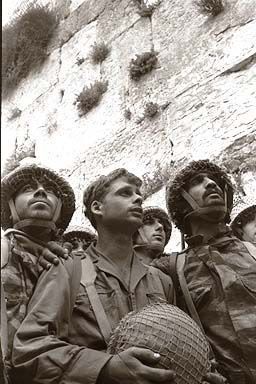
Israel's famous lyricist, Neomi Shemer

Israel survives the devastating Yom Kippur War
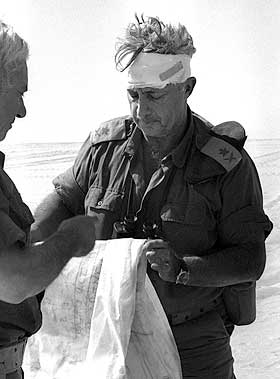
Yitzchak Rabin, Israel's first Israeli born Prime Minister, strolls with Gerald Ford

The Miraculous Entebbe Raid

Tal Brody and Macabbi Tel Aviv with the 1977 European Cup Championship
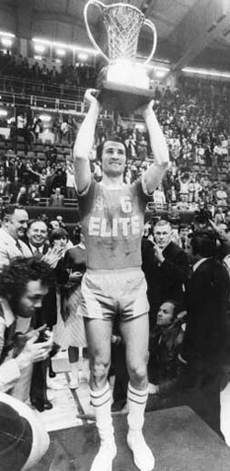
Izhar Cohen and the Alphabet win the 1978 Eurovision with Abanibi

Begin & Sadat talk peace

Bye Bye Osirak

Ethiopian Jewry arrives home
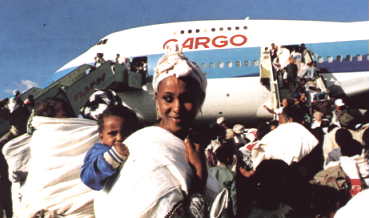
Russian Jewry begins their return to Israel in 1989

Reuven Atar stuns France in the 92nd minute with the winner in a 3-2 classic. Click here for 10 minutes of highlights

Ilan Ramon, Israel's first astronaut

Gal Fridman wins Gold in Athens Olympics (2004) becoming 1st Israeli to do so

There are obviously some major events I've left out but please leave a comment if you want me to add a specific picture ... Here's to the next 60 ...

David Ben Gurion reads the Declaration of Independence on May 14, 1948
Israeli soldiers hang the flag at Eilat
850,000 Jewish Refugees arrive in Israel after expulsion from the Arab World
Sallah Shabati, with a starring role from Chaim Topol, is nominated for an Oscar and wins a Golden Globe award
Jerusalem is reunited
Israel's famous lyricist, Neomi Shemer
Israel survives the devastating Yom Kippur War
Yitzchak Rabin, Israel's first Israeli born Prime Minister, strolls with Gerald Ford
The Miraculous Entebbe Raid
Tal Brody and Macabbi Tel Aviv with the 1977 European Cup Championship
Izhar Cohen and the Alphabet win the 1978 Eurovision with Abanibi
Begin & Sadat talk peace
Bye Bye Osirak
Ethiopian Jewry arrives home
Russian Jewry begins their return to Israel in 1989
Reuven Atar stuns France in the 92nd minute with the winner in a 3-2 classic. Click here for 10 minutes of highlights

Ilan Ramon, Israel's first astronaut
Gal Fridman wins Gold in Athens Olympics (2004) becoming 1st Israeli to do so
There are obviously some major events I've left out but please leave a comment if you want me to add a specific picture ... Here's to the next 60 ...
Friday, May 02, 2008
Grow Up Son
When I finished the army and moved to Jerusalem, there was a joke amongst the Anglo speaking community that once you were ready for a job, you'd be guaranteed one at IDT Global Services (back then, CSM). At the time, CSM was most likely the largest employer of English speakers in Israel. Today, it will still most likely still hold that title even though the company downsized and purged dozens of employees in the past week. For more on the story, click here for Haaretz' story (which was on the front page of the print edition on Wednesday).
Why am I boring you with these details?
Well, I started with IDT Global services back in January 2005 and a lot of the people who were let go this week were friends whom I had 'grown up' with in the business, friends for whom I did reports (while a Reporting Staffer) for, or helped with payroll queries (while I was a Payroll Staffer). Now these same friends who I used to laugh with, eat lunch with and work out with have been let go and a wave of uncertainity has hit those who have survived the culling. It's not the same company I left two weeks ago when I went on vacation - I've come back to a company where I feel like a newbie and I've yet to adjust to the new reality.
This 'adjustment' is the reason for my blog title. This is the reality of the professional world. Employees come and employees go and while drastic downsizing severly hurts the professional environment you once worked in, it is in one's best interest to not let the shock and concern cloud your ability to perform and come to work with the right attitude. Worrying about your friends and being sad is one thing, but it shouldn't interfere with the necessity to continue doing your work at the highest level possible.
Why am I boring you with these details?
Well, I started with IDT Global services back in January 2005 and a lot of the people who were let go this week were friends whom I had 'grown up' with in the business, friends for whom I did reports (while a Reporting Staffer) for, or helped with payroll queries (while I was a Payroll Staffer). Now these same friends who I used to laugh with, eat lunch with and work out with have been let go and a wave of uncertainity has hit those who have survived the culling. It's not the same company I left two weeks ago when I went on vacation - I've come back to a company where I feel like a newbie and I've yet to adjust to the new reality.
This 'adjustment' is the reason for my blog title. This is the reality of the professional world. Employees come and employees go and while drastic downsizing severly hurts the professional environment you once worked in, it is in one's best interest to not let the shock and concern cloud your ability to perform and come to work with the right attitude. Worrying about your friends and being sad is one thing, but it shouldn't interfere with the necessity to continue doing your work at the highest level possible.
Subscribe to:
Posts (Atom)

