Yesterday, on the walk home from shacharit (Morning prayer), a friend of mine got a phone call. He got bad news, it was obvious by his reaction.
This morning, when hashcavot (prayer for the deceased) were being read, the name (חן בן של תמר, Chen the son of Tamar) he had been saying the past few years during the prayer for the sick had suddenly been added to the unfortunate list.
I asked him after shacharit what had happened. Shortly after his Bar Mitzvah, Chen felt tremendous head pain during a footy match. He told his dad and within days, devastating news was revealed. 3 years later, this 16.5 year old kid succumbed to cancer.
I didn't know Chen, nor do I know his family, but this news hit me hard. No warning, nothing. Stories like these really hurt me. We're fragile beings, and one day we're well, the next day we're gone. They're tragic reminders that we must enjoy the 'now' for we don't know what's coming from around the corner. It's sad that it takes this kind of alarm bell to help us realize the importance of appreciating one's family, health and lot. שלא נדע ...
_
Wednesday, August 11, 2010
Thursday, August 05, 2010
The pathway to the study of Torah
"The pathway to the study of Torah is this, a morsel of bread with salt to eat, water to drink with measure, sleep on the ground, live a life of toil, but work diligently in the study of Torah. And if you do so, you will be happy and you will have a good life, as the psalmist said, 'Happy shalt thou be (in this world), and it should be well with thee (in the World to Come)."
Pirkei Avot, 6:4
The above is explained by the Ben Ish Chai (Taken from משל ונמשל) with the following parable:
Instead of writing up the Ben Ish Chai's analysis about the parable, I think I'd like to sum it up as follows: One shouldn't be intimidated, or turned off, by the weight or difficulty of Torah study - it is for our benefit, both now and in the future.
_
Pirkei Avot, 6:4
The above is explained by the Ben Ish Chai (Taken from משל ונמשל) with the following parable:
Two donkeys were carrying loads. One donkey was struggling with an extremely heavy load of salt, while the other was carrying a large sponge, that was so light that he didn't feel any discomfort. The donkey carrying the sponge walked around merrily, running up the mountains and jumping over the hills. The donkey carrying the salt struggled as the salt was so heavy.
Due to the trail they had chosen, the donkeys had to cross a river. When the donkey carrying the salt entered the river, the salt started to melt. As the salt melted away, the donkey started to cross the river happily and peacefully with the emptying sack. When the donkey carrying the sponge entered the water, the sponge got heavier and heavier. So heavy was the sponge that the donkey's legs could no longer carry him, and he drowned.
The journey that the donkey carrying the salt took was for his benefit, because it gave him peace and serenity after the heaviness had melted away. The donkey carrying the sponge had an easy time at the beginning, not even feeling the weight, but when he entered the water - it led to too much toil. The donkey couldn't stand the labor, and that was the reason he died.
Instead of writing up the Ben Ish Chai's analysis about the parable, I think I'd like to sum it up as follows: One shouldn't be intimidated, or turned off, by the weight or difficulty of Torah study - it is for our benefit, both now and in the future.
_
Monday, July 12, 2010
Update: Making Peace with Change
I did more research after writing yesterday's blog post. I still wasn't really that at peace with my decision. I wanted to ensure I was doing the right thing for myself, and my family.
After a quick review, I found out (I'm not sure how I missed this yesterday) that Rav Yosef Karo (Maran Yosef) actually writes in the Shulchan Aruch about shavoah she'chal bo as the Jews of Rhodes, and Sefardim (not to be confused here with Mizrachim), practiced it.
That led me to the key question here: does Minhag Yerushulayim (Jerusalem custom; That of the Sfradim who lived here, as the Ashkenazi Jews that lived here had their own Minhag Yerushalayim) take precedence here (as it was in practice before Karo wrote the Shulchan Aruch) as I am a resident of the city. As I am not a permanent resident of the city (at least not yet, so this may be revisited in the future) and have a halachic backing for my minhag (custom), I do not feel the need, or obligation, to change it.
_
After a quick review, I found out (I'm not sure how I missed this yesterday) that Rav Yosef Karo (Maran Yosef) actually writes in the Shulchan Aruch about shavoah she'chal bo as the Jews of Rhodes, and Sefardim (not to be confused here with Mizrachim), practiced it.
That led me to the key question here: does Minhag Yerushulayim (Jerusalem custom; That of the Sfradim who lived here, as the Ashkenazi Jews that lived here had their own Minhag Yerushalayim) take precedence here (as it was in practice before Karo wrote the Shulchan Aruch) as I am a resident of the city. As I am not a permanent resident of the city (at least not yet, so this may be revisited in the future) and have a halachic backing for my minhag (custom), I do not feel the need, or obligation, to change it.
_
Sunday, July 11, 2010
Making Peace with Change
Every morning, one of the members of the shul where I attend shacharit (morning services) read a halacha (Jewish law), or two, from the Yalkut Yosef. This past Thursday morning, the halacha read essentially said a minhag (custom) I held during the first nine days of Av may be wrong. I won't go into depth about the minhag (eating meat until Shavoah she'chal bo) but after the service ended, I discussed with a few members of the community what I do, which was confirmed by a Rabbi who is well versed in the halachot of Rhodes, an island south of Turkey which was a home to a thriving small Sefardi (Judeo-Spanish) community before the Holocaust.
By the time the conversation had ended, I had decided I needed to do some research to ensure what I was doing was in fact ok. I e-mailed my dad to ask him if the Rabbi had a source, and also picked up Rabbi Dobrinsky's excellent A Treasury of Sephardic Laws and Customs. After going back and forth, I realized that I needed to change my minhag. When I told my dad this, he approved but made the following comment:
It hurt me to read that. I'm extremely proud of my roots, and do my best to adhere to customs that have been passed along for generations. It left me in a bind.
This morning after shacharit, I had a long discussion with Yossi, who reads the Torah every Shabbat morning. I told him why I was struggling with what to do. He made the point that since the minhag does in fact clash with the halacha, it's best I do change the minhag. However, he then stressed something that I was foolishly overlooking. I can still teach Nissim that this was done in Rhodes (even if we do not practice it in Israel) while actually teaching and observing with him the Rhodesli customs (with regards to food, nusach and music for example) that were passed on to me by my parents.
I hope that, like my father & mother with me, I'm successful in transmitting my enthusiasm, love and appreciation of these customs* to Nissim (and G-d willng, the other children that follow) so that he carriers them, like me, on his journeys.
* I'd just like to add that while these customs are important, they're 2nd fiddle to teaching Nissim to love his faith and be an active & respectful member of Am Yisrael.
_
By the time the conversation had ended, I had decided I needed to do some research to ensure what I was doing was in fact ok. I e-mailed my dad to ask him if the Rabbi had a source, and also picked up Rabbi Dobrinsky's excellent A Treasury of Sephardic Laws and Customs. After going back and forth, I realized that I needed to change my minhag. When I told my dad this, he approved but made the following comment:
Unfortunately, the people who say that the tradition is untenable if there is no source are cementing the Holocaust’s work, because these communities’ written halachot were destroyed in the holocaust.
It hurt me to read that. I'm extremely proud of my roots, and do my best to adhere to customs that have been passed along for generations. It left me in a bind.
This morning after shacharit, I had a long discussion with Yossi, who reads the Torah every Shabbat morning. I told him why I was struggling with what to do. He made the point that since the minhag does in fact clash with the halacha, it's best I do change the minhag. However, he then stressed something that I was foolishly overlooking. I can still teach Nissim that this was done in Rhodes (even if we do not practice it in Israel) while actually teaching and observing with him the Rhodesli customs (with regards to food, nusach and music for example) that were passed on to me by my parents.
I hope that, like my father & mother with me, I'm successful in transmitting my enthusiasm, love and appreciation of these customs* to Nissim (and G-d willng, the other children that follow) so that he carriers them, like me, on his journeys.
* I'd just like to add that while these customs are important, they're 2nd fiddle to teaching Nissim to love his faith and be an active & respectful member of Am Yisrael.
_
Sunday, July 04, 2010
Gilad Shalit
I don't even know where to begin this. Fact is, I really hope this boy sees his parents and home soon. He's been in solitary confinement for over four years, with no contact with the world he left behind on June 25th, 2006. He's probably endured mental hardships none of us will even come close to experiencing. And yet, what I'm seeing on TV with this march demanding his return doesn't sit with me well. Now don't get me wrong, if I was Gilad's father I'd probably be doing the same exact thing. But this still doesn't sit well with me.
Gilad cannot come back at any cost - especially if that price will include jailed terrorists who will continue to be active. If they kill again, are we willing to tell those newly bereaved parents that Gilad's life was worth more than the lives of their loved ones? Pidyun Shovyim is an important issue here, but I feel its importance is lessened in this situation as it increases the desire of our enemies to take hostages. If I was Noam or Aviva Shalit, I wouldn't care about the last paragraph I've written. As a father myself, I respect and understand that is their way is the only way the parents should be thinking. But as an Israeli with no 'family' attachment to Gilad, I cannot allow myself to think that way, or to expect my government to act that way.
As a soldier, I struggle with this 'what if' scenario all the time. I think however that once in uniform, our life becomes 'less important' than that of our civilian population, and hence, we shouldn't endanger it in any way. I'd never want to be in Shalit's position, but I'd rather not be the potential reason civilians die if I was. I'm sure it would be the opposite if I was sitting in the same room as Gilad is now, but this is where I stand without that horrific reality being a part of my decision making process.
_
Gilad cannot come back at any cost - especially if that price will include jailed terrorists who will continue to be active. If they kill again, are we willing to tell those newly bereaved parents that Gilad's life was worth more than the lives of their loved ones? Pidyun Shovyim is an important issue here, but I feel its importance is lessened in this situation as it increases the desire of our enemies to take hostages. If I was Noam or Aviva Shalit, I wouldn't care about the last paragraph I've written. As a father myself, I respect and understand that is their way is the only way the parents should be thinking. But as an Israeli with no 'family' attachment to Gilad, I cannot allow myself to think that way, or to expect my government to act that way.
As a soldier, I struggle with this 'what if' scenario all the time. I think however that once in uniform, our life becomes 'less important' than that of our civilian population, and hence, we shouldn't endanger it in any way. I'd never want to be in Shalit's position, but I'd rather not be the potential reason civilians die if I was. I'm sure it would be the opposite if I was sitting in the same room as Gilad is now, but this is where I stand without that horrific reality being a part of my decision making process.
_
34 years later
My latest article in Kaminando y Avlando, the Sephardi Hebrew Congregation of Cape Town's monthly publication:
***
July 4th marked the 34th anniversary of the Entebbe Raid. Although four years have passed since I wrote this article for my blog, I think the point is still highly relevant in light of recent events in Israel and abroad.
-*-*-*-*-*-*
Another 4th of July is fast approaching here in Israel. A day that should mean something not only in Israel, but also worldwide, will probably only be mentioned because of its significance in US history. Little will be made of the fact that it is the anniversary of one of history's most daring anti-terror rescue operations. Thirty years have passed, but this event can still play a major role in shaping the world's mentality in pursuing its inalienable rights. During such an uncertain stage in Israel's & the world's war on radical Islam's terror tactics, July 4th should be remembered for the actions of Israel's elite forces during Operation Thunderbolt, otherwise known as the Raid on Entebbe.
A brief overview of the event: Late June 1976, an Air France jet left Israel and landed in Athens, where two Germans and two Arabs boarded the plane and hijacked it. The plane arrived in Entebbe, Uganda, where the terrorists were joined by more Arabs and friendly Ugandan troops (by orders of the country's president, Idi Amin). The terrorists demanded the release of their imprisoned comrades throughout Europe and Israel. After a few days, all the non-Jews and non-Israelis are released and flown to Paris – an eerie reminder for Israel of the Holocaust and the selections. As the world remained predictably silent, Israel planned a daring mission while 'attempting to negotiate.' Late July 3rd, Sayeret Matkal (Israel's most elite unit), with other standout soldiers from various units, left Israel on a 4,000 km flight in an attempt to deal a death blow to terrorism.
On July 4th, Israel's forces did the impossible: they rescued all but 4 of the hostages (2 were killed by stray bullets at the terminal, 1 died of his wounds in a Nairobi hospital and Dora Bloch z"l was left behind in a Ugandan hospital, where she was murdered by Ugandan troops) and one soldier, the commander of Sayeret Matkal, Yonatan ‘Yoni’ Netanyahu z"l. Israel had once again stood up to terror, refusing to allow it to dictate her policies.
The significance and importance of such an accomplishment should be stressed in light of worldwide events in the last few years. Islamic terror has killed thousands of innocent civilians since 2000, and while their numbers, supporters and strength continue to grow, the world's reactions become more timid and appeasingly pathetic. When the US pursues actions (offensives against terror supporting Afghani & Iraqi regimes) that it deems necessary to protect its citizens, far too many countries refuse to react. When Spain suffered a devastating attack that killed 191 people, its reaction was to change prime minister (PM) and withdraw all its troops from Iraq. Wonder what the terrorists learned from that?! When Australia lost over 100 citizens in the attacks on Bali in 2002, the reaction was a few harsh words from PM John Howard and since then, very little else. After the first suicide bus bombing in London, England's reaction also left much to be desired. So as radical Muslim activity flourishes in Europe, Northern Africa, the Middle East and Southeast Asia, too little is being done to put obstacles in the terrorists' paths. The inability to preempt, or react, is only further strengthening the belief of the terrorists that one day they will win the war against us.
The rescue at Entebbe stresses the right and duty of any nation to defend its citizens. A day to honor the bravery and dedication of those soldiers would stress a vital point: A country should undertake whatever means it deems necessary to protect its citizens from the threats of terrorism, be it a preemptive strike or by reacting to attacks. A good example of the above are the events surrounding the World Trade Center towers: Bill Clinton should have reacted with force after the first attack in '93, and by that I don't mean bombing a medicine factory in Sudan, and George Bush should have started to act when all the warnings came in before the tragic events of September 11th unfolded.
The free world is in a vital phase in its war to eliminate radical Islam's terror tactics and allow a moderate and peaceful Islam to flourish. Any backtracking or hesitation, like we're seeing today with Israel with regards to Hamas for example, will only strengthen the terrorists' resolve to destroy the values most of us take for granted. By commemorating and highlighting the brave actions of the IDF on July 4th 1976, the world would be sending a clear and necessary message to the terror cells of the world: No action taken against the citizens of the free world will go unpunished.
_
***
July 4th marked the 34th anniversary of the Entebbe Raid. Although four years have passed since I wrote this article for my blog, I think the point is still highly relevant in light of recent events in Israel and abroad.
-*-*-*-*-*-*
Another 4th of July is fast approaching here in Israel. A day that should mean something not only in Israel, but also worldwide, will probably only be mentioned because of its significance in US history. Little will be made of the fact that it is the anniversary of one of history's most daring anti-terror rescue operations. Thirty years have passed, but this event can still play a major role in shaping the world's mentality in pursuing its inalienable rights. During such an uncertain stage in Israel's & the world's war on radical Islam's terror tactics, July 4th should be remembered for the actions of Israel's elite forces during Operation Thunderbolt, otherwise known as the Raid on Entebbe.
A brief overview of the event: Late June 1976, an Air France jet left Israel and landed in Athens, where two Germans and two Arabs boarded the plane and hijacked it. The plane arrived in Entebbe, Uganda, where the terrorists were joined by more Arabs and friendly Ugandan troops (by orders of the country's president, Idi Amin). The terrorists demanded the release of their imprisoned comrades throughout Europe and Israel. After a few days, all the non-Jews and non-Israelis are released and flown to Paris – an eerie reminder for Israel of the Holocaust and the selections. As the world remained predictably silent, Israel planned a daring mission while 'attempting to negotiate.' Late July 3rd, Sayeret Matkal (Israel's most elite unit), with other standout soldiers from various units, left Israel on a 4,000 km flight in an attempt to deal a death blow to terrorism.
On July 4th, Israel's forces did the impossible: they rescued all but 4 of the hostages (2 were killed by stray bullets at the terminal, 1 died of his wounds in a Nairobi hospital and Dora Bloch z"l was left behind in a Ugandan hospital, where she was murdered by Ugandan troops) and one soldier, the commander of Sayeret Matkal, Yonatan ‘Yoni’ Netanyahu z"l. Israel had once again stood up to terror, refusing to allow it to dictate her policies.
The significance and importance of such an accomplishment should be stressed in light of worldwide events in the last few years. Islamic terror has killed thousands of innocent civilians since 2000, and while their numbers, supporters and strength continue to grow, the world's reactions become more timid and appeasingly pathetic. When the US pursues actions (offensives against terror supporting Afghani & Iraqi regimes) that it deems necessary to protect its citizens, far too many countries refuse to react. When Spain suffered a devastating attack that killed 191 people, its reaction was to change prime minister (PM) and withdraw all its troops from Iraq. Wonder what the terrorists learned from that?! When Australia lost over 100 citizens in the attacks on Bali in 2002, the reaction was a few harsh words from PM John Howard and since then, very little else. After the first suicide bus bombing in London, England's reaction also left much to be desired. So as radical Muslim activity flourishes in Europe, Northern Africa, the Middle East and Southeast Asia, too little is being done to put obstacles in the terrorists' paths. The inability to preempt, or react, is only further strengthening the belief of the terrorists that one day they will win the war against us.
The rescue at Entebbe stresses the right and duty of any nation to defend its citizens. A day to honor the bravery and dedication of those soldiers would stress a vital point: A country should undertake whatever means it deems necessary to protect its citizens from the threats of terrorism, be it a preemptive strike or by reacting to attacks. A good example of the above are the events surrounding the World Trade Center towers: Bill Clinton should have reacted with force after the first attack in '93, and by that I don't mean bombing a medicine factory in Sudan, and George Bush should have started to act when all the warnings came in before the tragic events of September 11th unfolded.
The free world is in a vital phase in its war to eliminate radical Islam's terror tactics and allow a moderate and peaceful Islam to flourish. Any backtracking or hesitation, like we're seeing today with Israel with regards to Hamas for example, will only strengthen the terrorists' resolve to destroy the values most of us take for granted. By commemorating and highlighting the brave actions of the IDF on July 4th 1976, the world would be sending a clear and necessary message to the terror cells of the world: No action taken against the citizens of the free world will go unpunished.
_
Thursday, June 17, 2010
United
Lyrics:
Chorus:
When the world's gone lost
We're gonna help you find the way
Too much drama in my eyes that I can't hide
When the world's gone lost
I don't plan to fall with it
Verse 1 (Ruff):
I'm on the wrong side of the map, activists with knifes got me trapped
Surrounded by hostility, trying not to react
Flotillas of hatred, we're caught in the matrix
I'm trying to survive, they're pulling the same tricks
This international hypocrisy won't get us far
One-sided media puts us behind bars
Nations with no minorities, judging with no authority
They're gonna tell me how to deal with what's in front of me
What about Sudan and North Korea? Could they care less?!
They wanna boycott us, they're gonna share less
We're lying on the fence for the rest of the world
Provide a buffer zone while overseas they get us sold
I know my people can be divided at times
Got too many opinions with too much shit on our minds
You can hate us now, we ain't gonna fight it
You're only making us stronger and more united
Chorus:
When the world's gone lost
We're gonna help you find the way
Too much drama in my eyes that I can't hide
When the world's gone lost
I don't plan to fall with it
Verse 2 (SHI 360):
But I'm already home and the media distorts your vision
Got blind followers here in full submission
Provocateurs, they just wanna instigate
And create the image you love to hate
You can talk about humanitarian aid
Politically affiliated IHH
Guess who's more popular? Erodgan
Fuck left and right, we should all stand as one
You really thought we were gonna let 'em in?
When yesterday they tried to bring Karine A - was that aid or to arm Jihad?
Wanna talk about aid? What about Gilad?
Because the horse is trojan, doors not open
I gotta do whatever to protect my home and
I'm a peace dealer, my flow killa
But no peace came at me on the flotilla
Chorus:
When the world's gone lost
We're gonna help you find the way
Too much drama in my eyes that I can't hide
When the world's gone lost
I don't plan to fall with it
עם ישראל חי
Lyrics: Guy "Ruff" Gabriel, Shai "SHI 360" Haddad
Music, production, mix and mastering: Avishay "Evish" Sapir
_
Wednesday, June 16, 2010
Tuesday, June 15, 2010
Pilar Rahola
Two great speeches by Pilar Rahola, a Spanish left winger activist & former politician (courtesy of Portal of Ideas):
Read the entire speech here.
Read the entire speech here.
_
The first question, then, is why so many intelligent people, when talking about Israel, suddenly become idiots. The problem that those of us, who do not demonize Israel have, is that there exists no debate on the conflict. All that exists is the banner; there’s no exchange of ideas. We throw slogans at each other; we don’t have serious information, we suffer from the “burger journalism” syndrome, full of prejudices, propaganda and simplification. Intellectual thinkers and international journalists have given up on Israel. It doesn't exist exist. That is why, when someone tries to go beyond the “single thought” of criticizing Israel, he becomes suspect and unfaithful, and is immediately segregated. Why?
I’ve been trying to answer this question for years: why?
Why, of all the conflicts in the world only this one interests them?
Why is a tiny country which struggles to survive criminalized?
Why does manipulated information triumph so easily?
Why are all the people of Israel, reduced to a simple mass of murderous imperialists?
Why is there no Palestinian guilt?
Read the entire speech here.
I am not Jewish. Ideologically I am left and by profession a journalist. Why am I not as anti Israeli as my colleagues? Because as a non-Jew I have the historical responsibility to fight against Jewish hatred and currently against the hatred for their historic homeland, Israel. To fight against anti-Semitism is not the duty of the Jews, it is the duty of the non-Jews.
As a journalist it is my duty to search for the truth beyond prejudice, lies and manipulations. The truth about Israel is not told. As a person from the left who loves progress, I am obligated to defend liberty, culture, civic education for children, coexistence and the laws that the Tablets of the Covenant made into universal principles. Principles that Islamic fundamentalism systematically destroys. That is to say that as a non-Jew, journalist and lefty I have a triple moral duty with Israel, because if Israel is destroyed, liberty, modernity and culture will be destroyed too.
The struggle of Israel, even if the world doesn’t want to accept it, is the struggle of the world.
Read the entire speech here.
_
Sunday, June 13, 2010
A Psalm in Jenin
My latest article in Kaminando y Avlando, the Sephardi Hebrew Congregation of Cape Town's monthly publication:
***
When reading stories about the IDF in newspapers from around the world, I am usually left aghast by the image they paint of our soldiers. Gone are the days when our soldiers were looked upon in a positive light. Nowadays, if most newspapers (including some Israeli ones sadly) are to be believed, IDF soldiers are vicious, blood thirsty lunatics who actively seek to eradicate Palestinians. In the past decade, newspapers have inflamed the worldwide anti-Israel sentiment with stories like the Mohammad Al-Dura death (the 12-year-old boy was killed in cold blood on live TV by IDF troops. Months later it was proven that Israeli soldiers were not stationed in a position where they could possibly have shot the boy – he was killed by Palestinian fire); the Jenin ‘Massacre’ (too many newspapers printed the ‘500 Palestinians killed, mostly civilians’ lie, when in fact only 50 were killed, of which over 80% were terrorists); the organ harvesting article last year...the list goes on and on. Too few articles, or books for that matter, paint the truthful image of the IDF – an army, which despite mistakes, strives to ensure the Palestinian population it works around is protected from unnecessary confrontations even at the risk of its very own soldiers’ lives.
One book that does do our soldiers justice is Brett Goldberg’s A Psalm in Jenin, which places the reader side by side with the soldiers who fought in Jenin during Operation Defensive Shield in 2002. What the book does well is it leads the reader from the ‘difficulties’ of the soldiers’ civilian lives straight into the difficulties the same soldiers, be they the 20-year-old kids or the thirty-something reservists, faced as they went from one booby trapped house to another in the heart of Jenin. It’s a must-read book – one that will give anyone who hasn’t served in the army a far better understanding of the human beings who fight to protect the land of Israel, and the many struggles they face while fighting a few miles from their homes. One of the book’s most powerful chapters takes place when the soldiers commemorate Yom Ha’Zikaron, Israel’s Memorial Day. During a break from fighting, a soldier organizes a ceremony during which he reads a letter by Gadi Ezra, who was tragically killed in Jenin:
The letter is often read during Yom Ha’Zikaron ceremonies nowadays. It’s painful evidence of the dedication and sacrifice our soldiers are willing to make to ensure this country eliminates the dangers facing her. Galit followed Gadi’s advice and ‘continued onwards,’ she got married and had four children.
Though I’ve always been a big fan of this book, it took on a whole new meaning since I joined my miluim (reserve duty) unit in 2006. On another one of those long guard duty stints, the topic of Jenin came up. By the time the conversation was over, I’d found out that a few of the soldiers in my unit were the Golani soldiers who fought in Jenin with Gadi Ezra and quite a few of the people mentioned in the book. During each stint, I discuss more of the book with them. They’re all my age, most of them married with kids and they still talk about those nights as if they happened yesterday - their fears, the long nights and close brushes with death, their friends, the blood and the funerals. The conversations normally end with a similar outcome, “It was hell, but we must continue on. It will be ok, יהיה טוב.” It’s as if Gadi’s words were engrained in all of them…
_
***
When reading stories about the IDF in newspapers from around the world, I am usually left aghast by the image they paint of our soldiers. Gone are the days when our soldiers were looked upon in a positive light. Nowadays, if most newspapers (including some Israeli ones sadly) are to be believed, IDF soldiers are vicious, blood thirsty lunatics who actively seek to eradicate Palestinians. In the past decade, newspapers have inflamed the worldwide anti-Israel sentiment with stories like the Mohammad Al-Dura death (the 12-year-old boy was killed in cold blood on live TV by IDF troops. Months later it was proven that Israeli soldiers were not stationed in a position where they could possibly have shot the boy – he was killed by Palestinian fire); the Jenin ‘Massacre’ (too many newspapers printed the ‘500 Palestinians killed, mostly civilians’ lie, when in fact only 50 were killed, of which over 80% were terrorists); the organ harvesting article last year...the list goes on and on. Too few articles, or books for that matter, paint the truthful image of the IDF – an army, which despite mistakes, strives to ensure the Palestinian population it works around is protected from unnecessary confrontations even at the risk of its very own soldiers’ lives.
One book that does do our soldiers justice is Brett Goldberg’s A Psalm in Jenin, which places the reader side by side with the soldiers who fought in Jenin during Operation Defensive Shield in 2002. What the book does well is it leads the reader from the ‘difficulties’ of the soldiers’ civilian lives straight into the difficulties the same soldiers, be they the 20-year-old kids or the thirty-something reservists, faced as they went from one booby trapped house to another in the heart of Jenin. It’s a must-read book – one that will give anyone who hasn’t served in the army a far better understanding of the human beings who fight to protect the land of Israel, and the many struggles they face while fighting a few miles from their homes. One of the book’s most powerful chapters takes place when the soldiers commemorate Yom Ha’Zikaron, Israel’s Memorial Day. During a break from fighting, a soldier organizes a ceremony during which he reads a letter by Gadi Ezra, who was tragically killed in Jenin:
My beloved Galit,
If this letter reaches you, it means that something has befallen me.
This morning I received word that the operation planned yesterday will take place, G-d willing. I told you that the operation had changed and that it was not what it was originally supposed to be – because I didn’t want you to worry you, my dearest. It was very hard for me not to tell you the truth, but I preferred to do so rather than to drive you crazy with worry. “One can tell a lie for Peace,” it is taught, and that also includes the peace of mind of the person that you love more than anything else on earth.
My beloved, I feel that on the one hand there is nothing that I would like more than to be with you, to love you, and to raise a family with you. But on the other hand, there is nothing that I want more than to go on this operation and deal such a great blow to the terrorists that they will never dare perpetrate another bombing or terror attack. That they will take into account that each time they commit an atrocity we will hit them in the most painful place possible and will be willing to pay the price. I am willing to be that price.
Do not be angry at me, my loved one, but in moments like this one must be guided by the greater good of the people of Israel, and one needs to deal a blow to evil as if one has no private life. As it is written, “In the armies of King David a conditional letter of divorce was granted before going off to war.”
My dearest, do not forget: everything is for the best, and if this is what the Master of the Universe has chosen, so be it. To us remains the task of accepting it all with love.
Everything the Lord does is for the best. Everything is for the best, even this. I promise you that I am in the most wonderful of places, without suffering, without regret. My only sorrow is for those who remain – for you, for my family, and for my friends.
Spread the good news, my dearest one. “Never despair, be only joyous.” That is what I ask of you even, if it is difficult.
I know that I can ask this of you, because I know well the joy and bliss that radiate from you naturally, those qualities with which I fell in love. They are what drew me to you when I first laid eyes upon you.
My dearest, my beloved. I love you and will always love you. Promise that you will continue onwards, and will not allow Sodom to triumph. You be the triumphant one. That is what must be.
I will love you to all eternities, and will always be yours.
The letter is often read during Yom Ha’Zikaron ceremonies nowadays. It’s painful evidence of the dedication and sacrifice our soldiers are willing to make to ensure this country eliminates the dangers facing her. Galit followed Gadi’s advice and ‘continued onwards,’ she got married and had four children.
Though I’ve always been a big fan of this book, it took on a whole new meaning since I joined my miluim (reserve duty) unit in 2006. On another one of those long guard duty stints, the topic of Jenin came up. By the time the conversation was over, I’d found out that a few of the soldiers in my unit were the Golani soldiers who fought in Jenin with Gadi Ezra and quite a few of the people mentioned in the book. During each stint, I discuss more of the book with them. They’re all my age, most of them married with kids and they still talk about those nights as if they happened yesterday - their fears, the long nights and close brushes with death, their friends, the blood and the funerals. The conversations normally end with a similar outcome, “It was hell, but we must continue on. It will be ok, יהיה טוב.” It’s as if Gadi’s words were engrained in all of them…
_
Monday, May 31, 2010
The Spies and their Sin
A few ideas about the sins that cost Moshe's generation a chance to conquer the land of Israel:
- Ramban focuses on the word אפס (translation: but, BaMidbar 13:28). If this was in fact a factual report, there was no need for a qualifier - stating facts was all that was required. 'But' was a contradiction to their first two sentences, that described the land so glowingly.
- Why was there a need to mention Amalek (BaMidbar 13:29)? Amalek was deliberately mentioned, despite not even being part of the land of Israel, in order to incite fear and doubt.
- Rav Twerski points out that the Spies' report highlighed their lack of belief in the mission at hand: "We were like grasshoppers ... and so we were in their eyes," (BaMidbar 13:33). So lacking in confidence were the Spies that they felt 'small' during the mission, and even anticipated how the residents of the land would view them. Hashem had taken Israel out of Egypt, but their feelings of weakness and inferiority due to the years of slavery had sadly accompanied them. This generation wouldn't have the privilege of conquering the land.
- לא נוכל לעלות (BaMidbar, 13:31) ... The Spies tried to convince the Nation of Israel that the task was not possible ("We cannot ascend"). The mass hysteria that followed on Tisha Be'Av ("the people wept that night," BaMidbar 14:1) has haunted us till this very day.
_
- Ramban focuses on the word אפס (translation: but, BaMidbar 13:28). If this was in fact a factual report, there was no need for a qualifier - stating facts was all that was required. 'But' was a contradiction to their first two sentences, that described the land so glowingly.
- Why was there a need to mention Amalek (BaMidbar 13:29)? Amalek was deliberately mentioned, despite not even being part of the land of Israel, in order to incite fear and doubt.
- Rav Twerski points out that the Spies' report highlighed their lack of belief in the mission at hand: "We were like grasshoppers ... and so we were in their eyes," (BaMidbar 13:33). So lacking in confidence were the Spies that they felt 'small' during the mission, and even anticipated how the residents of the land would view them. Hashem had taken Israel out of Egypt, but their feelings of weakness and inferiority due to the years of slavery had sadly accompanied them. This generation wouldn't have the privilege of conquering the land.
- לא נוכל לעלות (BaMidbar, 13:31) ... The Spies tried to convince the Nation of Israel that the task was not possible ("We cannot ascend"). The mass hysteria that followed on Tisha Be'Av ("the people wept that night," BaMidbar 14:1) has haunted us till this very day.
_
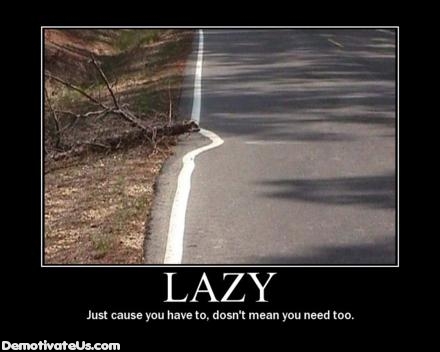
Dear Boss ...
People who do lots of work ... make lots of mistakes
People who do less work ... make less mistakes
People who do no work ... make no mistakes
People who make no mistakes ... gets promoted
That's why I spend most of my time sending e-mails & playing games at work I need a promotion
 _
_
People who do less work ... make less mistakes
People who do no work ... make no mistakes
People who make no mistakes ... gets promoted
That's why I spend most of my time sending e-mails & playing games at work I need a promotion
 _
_
Tuesday, May 25, 2010
Back in London
While waiting for my flight to London on Sunday, I was looking at our plane when I saw none other than Ehud Olmert putting his bag in a shining Audi with his bodyguard watching. I wonder if our former Prime Minister enjoyed the Champions League final he watched in Madrid Saturday night.
***
So I’m back in London with IDT. I arrived late Sunday night and was rather startled by the English weather. No it wasn’t snow, or hail, or even a rainstorm. It was warm, t-shirt appropriate weather … at 11pm at night!
***
So I have a friend who was rather surprised that I was going abroad for almost two weeks, leaving my wife and 18 month old son alone. I do understand where he’s coming from. It’s not easy for me or my wife. It does however seem to be a necessary part of any professional’s routine if s/he intends to climb his/her way up the corporate ladder (or in another world, any eligible reservist in Israel who understands the importance of serving the country, and does so). It is something that deprived me of my father for many weeks as I grew up, and Talya of her dad too. I doubt they would have been able to give their families many of the luxuries they provided were it not for these sacrifices. The question in my mind then becomes how can one strike a balance between his commitments to his career and his family so he can satisfy his desires and be happy & satisfied in both fields.
_
***
So I’m back in London with IDT. I arrived late Sunday night and was rather startled by the English weather. No it wasn’t snow, or hail, or even a rainstorm. It was warm, t-shirt appropriate weather … at 11pm at night!
***
So I have a friend who was rather surprised that I was going abroad for almost two weeks, leaving my wife and 18 month old son alone. I do understand where he’s coming from. It’s not easy for me or my wife. It does however seem to be a necessary part of any professional’s routine if s/he intends to climb his/her way up the corporate ladder (or in another world, any eligible reservist in Israel who understands the importance of serving the country, and does so). It is something that deprived me of my father for many weeks as I grew up, and Talya of her dad too. I doubt they would have been able to give their families many of the luxuries they provided were it not for these sacrifices. The question in my mind then becomes how can one strike a balance between his commitments to his career and his family so he can satisfy his desires and be happy & satisfied in both fields.
_
Wednesday, May 19, 2010
Pirkei Avot - Ethics of Our Fathers - Chapter 6, II
Pirkei Avot 6:11
- The first line is saying that everything has been created for a purpose. We all have a role to play, a paint stroke in a master painting.
- The last mishna is a fitting end to Pirkei Avot. We've spent six weeks reading what great figures in Judaism have stressed in order to improve our attitudes, behavior and way of life. All these lessons are rather meaningless if they're not done for a reason. As we are on this planet for a reason (As the first bullet point states), if we don't ensure that our time here is used in order to enhance the greatness of our Creator, then what exactly is the point of our existence?
Another cycle is done ... It's been fun and challenging. Until next time ...
_
כָּל מַה שֶּׁבָּרָא הַקָּדוֹשׁ בָּרוּךְ הוּא בָּעוֹלָמוֹ, לֹא בְרָאוֹ אֶלָּא לִכְבוֹדוֹ, שֶׁנֶּאֱמַר, כֹּל הַנִּקְרָא בִשְׁמִי וְלִכְבוֹדִי בְּרָאתִיו יְצַרְתִּיו אַף עֲשִׂיתִיו, וְאוֹמֵר יְהֹוָה יִמְלֹךְ לְעֹלָם וָעֶד
All that the Holy One, Blessed be He, created in this world, He created for His glory, as is said in Isaiah XLIII:7, "...every one that is called by My name; for I have created him for My glory. I have formed him; year, I have made him." And it is also said in Exodus XV:18, The Lord shall reign for ever and ever."
- The first line is saying that everything has been created for a purpose. We all have a role to play, a paint stroke in a master painting.
- The last mishna is a fitting end to Pirkei Avot. We've spent six weeks reading what great figures in Judaism have stressed in order to improve our attitudes, behavior and way of life. All these lessons are rather meaningless if they're not done for a reason. As we are on this planet for a reason (As the first bullet point states), if we don't ensure that our time here is used in order to enhance the greatness of our Creator, then what exactly is the point of our existence?
Another cycle is done ... It's been fun and challenging. Until next time ...
_
Wednesday, May 12, 2010
Rivlin's comments on Jerusalem Day
Reuven Rivlin, Knesset Speaker, delivered a few interesting words during his speech in the special Knesset session commemorating this national holiday:
Rivlin is pointing out a problem that I've raised before on this blog. It's a worrying issue with the secular Zionism movement - a failure to stress Jewishness as an essential part of the Israeli identity, a failure that could have grave consequences for our future ... or as Arik Sharon put it:
Jerusalem Day was created by law as a national holiday. And yet the nature of celebrations in Jerusalem and the identity of those dancing in the streets today teach us that the national holiday in its current form more resembles a sectorial holiday. To be honest, most of the main events in Jerusalem have long been held under the auspices of the religious public.
Rivlin is pointing out a problem that I've raised before on this blog. It's a worrying issue with the secular Zionism movement - a failure to stress Jewishness as an essential part of the Israeli identity, a failure that could have grave consequences for our future ... or as Arik Sharon put it:
I remember back in the 1950s and '60s when I was traveling abroad I felt the desire by others to consider me not a Jew but as an Israeli, to draw the distinction. You are an Israeli, they seemed to say. They, those people over there with strange clothes and strange ways - they are Jews. And in a way it felt easy to be accepted like that. But it was also dangerous. It was a signal that we had lost our Jewishness. And I for one, even then, never believed we would really be able to survive here if we were nothing more than Israelis. For our attachment to the land of Israel, our identity with it, comes through out Jewishness. I am a Jew, I thought then, as I think now. That does not mean I am a religious man. I am not. When it comes to practicing Judaism, there is much I do not know. But I do know for certain that above everything I am a Jew and only afterwards an Israeli and the rest_
Tuesday, May 11, 2010
18 months of Nissim
It's crazy how quickly time has flown by. It feels like just yesterday that I was told I have a healthy baby boy, or that Talya & I gave him my late Nonnou's name, or that I started taking photo after photo to capture the many precious moments as he grew up in front of my eyes.
So, as he reaches this small milestone in his life, I'd like to share the below slide show ... Enjoy:
_
So, as he reaches this small milestone in his life, I'd like to share the below slide show ... Enjoy:
_
Sunday, May 09, 2010
Pirkei Avot - Ethics of Our Fathers - Chapter 5, II
Pirkei Avot 5:16
- The Talmud states that one who gives charity is enriched (This is deduced from Malachi 3:10). Hence, one who wants others to not give charity has an evil eye as he doesn't want others to be enriched.
- The first question one should ask when reading this mishna is how can this mishna be talking about donors when two of the four examples (#2: desires that others give but not he and #4: does not give) do not give? This is explained nicely by Rav Moshe Aleshkar - who says that all four refer to people who do give charity but whose attitudes differ. Rav Twerski (Visions of the Fathers, pg 303-4), using Rav Aleshkar's reasoning, breaks the donors down in the following way:
_
ארבע מדות בנותני צדקה רוצה שיתן ולא ייתנו אחרים עינו רעה בשל אחרים שייתנו אחרים והוא לא ייתן עינו רעה בשלו שיתן וייתנו אחרים חסיד לא ייתן ולא ייתנו אחרים רשע.
There are four categories of those who give chartiy: a person who wishes to give, but does not desire that others also give; such a person has an evil eye towards others. He who desires that others give, but not he, such a person is stingy. One who gives and desires that others also give; he is pious. One who does not give, and wishes that others would not also give, he is wicked
- The Talmud states that one who gives charity is enriched (This is deduced from Malachi 3:10). Hence, one who wants others to not give charity has an evil eye as he doesn't want others to be enriched.
- The first question one should ask when reading this mishna is how can this mishna be talking about donors when two of the four examples (#2: desires that others give but not he and #4: does not give) do not give? This is explained nicely by Rav Moshe Aleshkar - who says that all four refer to people who do give charity but whose attitudes differ. Rav Twerski (Visions of the Fathers, pg 303-4), using Rav Aleshkar's reasoning, breaks the donors down in the following way:
- One who prefers that no one else should give, so that he may claim the entire credit for the project himself
- One who ultimately does donate but is a non-giver at the start
- One who gladly gives and hopes others follow suit
- One who donates begrudgingly
_
Saturday, May 08, 2010
Richard, Ron & Tzippi
While I was waiting at the dentist on Wednesday morning, I picked up the Yediot Achronot newspaper on the floor. The main story was about Richard Goldstone, the man responsible for the one-sided report on the Gaza war that even he said was flawed. The story bought to light how Goldstone was responsible for sending as many as 28 blacks to the gallows as an Apartheid era judge in South Africa. By the next day, the story was in the Jerusalem Post and Goldstone defended his decisions, "I was part of a system and had to respect the laws of the state." I was startled a man who's held in such high esteem by the international community could defend his actions that way. No one forced him to be a judge in South Africa - only he is responsible for putting himself in the position where he could do something he claims he was so opposed to (capital punishment). Alas, he did what he 'had' to do ... even if it meant turning his back on his own 'values'.
When Goldstone's name first hit the headlines many months ago, I asked some friends in the Johannesburg community what they thought of the man. They said that Goldstone would do anything to further his own political career. Knowing now how he willingly became an active cog in the Apartheid system and his similar eagerness to be a part of the UN's Gaza War report, their comments seem to have been right on the money.
Does anyone know if Goldstone gave any TRC testimonies?
***
Last week, Tel Aviv mayor Ron Huldai caused an uproar by slamming the private Haredi education system (though he did mention similar issues with secular & Arab private schools, he specifically focused on the Haredim). While it seems that his speech stems from hatred, he does touch on an important issue that I think is critical to Israel and her education system, “There is no other democracy in the world where the government funds private schools. If you want to fund a private school, you need to fund it yourself.” If private schools want to follow a different curriculum than that stipulated by the Education Ministry (though I think this curriculum needs ‘refreshing’), they have every right to do so. But they shouldn’t be funded by the government. It's only unfortunate that Huldai's message comes off as (or maybe is?) so hate filled -
When Goldstone's name first hit the headlines many months ago, I asked some friends in the Johannesburg community what they thought of the man. They said that Goldstone would do anything to further his own political career. Knowing now how he willingly became an active cog in the Apartheid system and his similar eagerness to be a part of the UN's Gaza War report, their comments seem to have been right on the money.
Does anyone know if Goldstone gave any TRC testimonies?
***
Last week, Tel Aviv mayor Ron Huldai caused an uproar by slamming the private Haredi education system (though he did mention similar issues with secular & Arab private schools, he specifically focused on the Haredim). While it seems that his speech stems from hatred, he does touch on an important issue that I think is critical to Israel and her education system, “There is no other democracy in the world where the government funds private schools. If you want to fund a private school, you need to fund it yourself.” If private schools want to follow a different curriculum than that stipulated by the Education Ministry (though I think this curriculum needs ‘refreshing’), they have every right to do so. But they shouldn’t be funded by the government. It's only unfortunate that Huldai's message comes off as (or maybe is?) so hate filled -
***
Haaretz's weekend edition contained an interesting interview with Tzippi Livni, the head of Kadima. Two points about the lady:
- I found it very odd that during the political tension between the US and Israel Livni remained so quiet. She's never shied away from taking shots at any of her political rivals, but here was a golden opportunity to do so and she remained mute. My guess was that Livni thought that US pressure would topple Bibi's government and would allow her the chance to establish a government. Now that it seems the US-Israel relationship is back on track and her 'hopes' for Bibi's collapse dashed, Livni is opening her mouth again, slamming Bibi and stating that the Likkud and Kadima need to unite in the Knesset. I wonder what stopped Livni from joining the coalition when Bibi was given the task to create one last year? Oh wait, you were too busy sulking about the election 'loss' or hoping that Bibi's coalition would fall to put the country ahead of your political career?
- Part of the interview revolves around the need to change three elements within Israel - education, military/national service & work. While I do agree with the need to change all three (and I'm happy Livni also stressed 'Jewish studies' along with civic studies for education reform), I just find it rather telling that she's pushing this a few days after Huldai's comments and news that Yair Lapid may be part of a new party pushing for the same reforms. I think this highlights what Shaul Mofaz said about Livni's inability to lead. I just hope she never gets close to being our Prime Minister again.
_
Monday, May 03, 2010
Pirkei Avot - Ethics of Our Fathers - Chapter 4, II
Pirkei Avot 4:1
- I find it interesting, and telling, how Pirkei Avot dictates we define someone who is smart, strong, rich or honored. Compare how 'we' define the aforementioned in the 'Western world,' and we see one of areas where the Western world and Jewish world constantly clash.
- Surely if one can learn from 'all,' one should be able to learn from a baby too ... but what? One of the things Nissim has taught me is one should do things with excitement. Whenever he gets up, he doesn't lay back down and relax. He wants to start his day an enthusiastic burst of energy. Babies look forward to each morning - a new discovery awaits - while those later on in life sadly lack that youthful passion. If I can learn such a valuable lesson from my 18 month old son, I'm sure I can learn something from everyone.
- Slightly related to our region and the difficulties in making peace, but perhaps he who is strong is one who 'represses the hatred we feel towards an enemy and makes a friend of him or her,' (taken from Rabbi Meir Matzliah Melamed's Pirkei Avot commentary).
- "Self control therefore needs the incredible strength of restraint. It requires holding back for just a few seconds between the things that happen to us and our response, creating a little space to think and process the point of view of the divine voice. It is what Stephen Covey calls the 'pause button between the stimulus and the response.'
- The part about honor is perhaps best summed up by Cuban poet Jose Marti, "Honrar, honra, "To honor, brings honor" (Rabbi Melamed).
_
בן זומא אומר איזה הוא חכם הלמד מכל אדם שנאמר מכל מלמדיי השכלתי (תהלים קיט צט) איזה הוא גיבור הכובש את יצרו שנאמר טוב ארך אפיים מגיבור (משלי טז לב) איזה הוא עשיר השמח בחלקו שנאמר יגיע כפיך כי תאכל אשריך וטוב לך (תהלים קכח ב) אשריך בעולם הזה וטוב לך לעולם הבא איזה הוא מכובד המכבד את הברייות שנאמר כי מכבדיי אכבד ובוזיי ייקלו (שמואל א ב ל). סוף
Ben Zoma used to say, who is wise? He who learns from all men, as is said in Psalms CXIX:99, "From all my teachers I have gained wisdom." Who is strong? He who controls his passions, as is said in the Book of Proverbs XVI:32, "better is the slow to anger than he mighty, and the one who rules his spirit than he who captures a city." Who is rich? He who rejoices in his lot, as is said in Psalms CXXVIII:2, "For thou shalt eat the labor of thy hands; happy shalt though be, and it shall be well with thee in this world and in the world to come." Who is honored? He who honors his fellow men, as is said in I Samuel II:30, "For I honor those who honor Me, and those who despise Me shall be lightly esteemed."
- I find it interesting, and telling, how Pirkei Avot dictates we define someone who is smart, strong, rich or honored. Compare how 'we' define the aforementioned in the 'Western world,' and we see one of areas where the Western world and Jewish world constantly clash.
- Surely if one can learn from 'all,' one should be able to learn from a baby too ... but what? One of the things Nissim has taught me is one should do things with excitement. Whenever he gets up, he doesn't lay back down and relax. He wants to start his day an enthusiastic burst of energy. Babies look forward to each morning - a new discovery awaits - while those later on in life sadly lack that youthful passion. If I can learn such a valuable lesson from my 18 month old son, I'm sure I can learn something from everyone.
- Slightly related to our region and the difficulties in making peace, but perhaps he who is strong is one who 'represses the hatred we feel towards an enemy and makes a friend of him or her,' (taken from Rabbi Meir Matzliah Melamed's Pirkei Avot commentary).
- "Self control therefore needs the incredible strength of restraint. It requires holding back for just a few seconds between the things that happen to us and our response, creating a little space to think and process the point of view of the divine voice. It is what Stephen Covey calls the 'pause button between the stimulus and the response.'
We need to train ourselves not to act quickly and instinctively. We need to use the unique ability of the human being to stop and ask ourselves the question: is this wrong or right? It takes amazing strength to wait a few seconds, but those few seconds can be the difference between an animalistic act and a divine one." (How Strong are You? by Rabbi Michoel Gourarie).
- The part about honor is perhaps best summed up by Cuban poet Jose Marti, "Honrar, honra, "To honor, brings honor" (Rabbi Melamed).
_
Subscribe to:
Posts (Atom)


