I guess it's telling ... I had this whole idea of what I'd write for my 8th aliya'versary blog yesterday, and I just plainly forgot to write it. Too busy at work, too busy at home and Liverpool were playing too. Oh well, so now it's 8 years and 1 day now ... It's odd to look back at the sparks that created this dream for me, or the determination and motivation in the months leading up to the move. I've thoroughly enjoyed this journey - the ups and the downs - and have no regrets. I'm looking forward to every day and every adventure life here with my precious family brings.
Other aliya'versary blogs: 3, 4, 5, 6, 7
***
Aaron and I were both members of WUJS's February 2003 group. Last week, he told me that he was making yerida with his family due to various issues. Israel isn't for everyone (at least not now), and it's a difficult challenge at times to make it work here. It's tough to lose good people like Aaron & his family, but one can only wish them luck and hope that they return (and if not the parents, then the children!). I hope their new adventure in the US only brings them happiness and fulfillment.
***
In the last two months, the Tunisian & Egyptian governments have been overthrown by massive internal unrest. In Lebanon, Hezbollah succeeded in a silent coup to rid the country of the democratically elected Said Hariri, the man who's father they murdered. These events have lit a fire in the Arab world - riots, protests, fatalities and hundreds of injuries have followed in Syria, Bahrain, Jordan, Yemen, Libya, Algeria & Iran. What does this mean for them? I really don't know. I am not very optimistic considering what we've seen happen in Gaza & Lebanon, or what has happened in Iran since the overthrow of the Shah in '79. I hope moderate, respectful leaders somehow get into power and usher in a new era for their people. I really do ... I'd rather not think about what happens if they don't ...
***
I watched a documentary about Yossi Gispan yesterday. The man is responsible for writing most of the Mizrachi hits that have propelled this genre to the forefront of the Israeli music scene. It was really interesting until the end where a music analyst and various artists decided to take shots at Yossi's genre (No points for guessing what they all had in common):
"This music is destroying the Hebrew language"
"I see a direct correlation between the success of the Mizrachi genre and that the most watched shows in Israel are reality TV shows that don't require thought or 'deep thinking'" (Ivri Leader)
"There's no Israeli culture, they've ruined it" (Mati Caspi)
"Israeli Music is at a low point that's it's never seen before. There's no way back from this vulgarity. We won't be able to return the rock, the pop, or 'Israeli country music' (שירי ארץ ישראל) to their old, good place. The Mizrachi singers also sing our repertoire, the white people." (Chava Alberstein)
Wait a second ... Elitism? Racism? Naaaah, not in Israel.
***
Should have probably blogged about this last month ... The King came back.
***
Talya & I are expecting #2 b'h in early April ... The roller coaster ride continues! :)
_
Friday, February 18, 2011
Sunday, February 13, 2011
הערכה-עצמית מול ענווה
(העשיר לא ירבה והדל לא ימעיט..." (כי תשא ל,טו"
בסדר האלף-בית באות לפני אותיות "לב" - אותיות א"ך (אות כ' לפני אות ל', ואות א' לפני אות ב'), ואחרי ה"לב" באות האותיות ג"ם (אחרי ל' - מ', ואחרי ב' - ג'). מלת "אך" משמעותה כלשון 'מיעוט', לעומתה מלת "גם" מבטאת לשון ריבוי. להורות כיצד להנהיג את ליבנו: פעמים ייתן את ליבו לצד ה'אך' שבו - כלומר ישפיל וימעיט עצמו, ופעמים עלין לשים לב לצד ה'גם' שלידו - יחזק את עצמו עד שירבה את ערכו בעיני עצמו
This is taken from פניני הבן איש חי
_
Friday, February 11, 2011
Channel 10's Documentary on R' Ovadia
I thought yesterday's Channel 10 documentary on R' Ovadia was extremely interesting. Here are some of the issues/facts that stood out during the documentary:
* R' Ovadia's family made aliyah to the Mandate from Iraq. All his brothers were members of the Etzel.
* R' Ovadia's family made aliyah to the Mandate from Iraq. All his brothers were members of the Etzel.
* R' Ovadia's father had his son work in his grocery store every weekday for a few hours. The Rosh Yeshiva of Porat Yosef (where R' Ovadia was learning) came to the store and told his father he'd work those hours every day as his son was extremely gifted and should focus on learning Torah. His father refused.
* R' Ovadia's father changed his tune when the store was robbed a few times and he realized his son wasn't a good 'store keeper.'
* From a young age, R' Ovadia always wanted to be Gadol Ha'Dor.
* After the Yom Kippur War, he presided over all the cases of the agunot when all other Rabbis asked had refused the important task. He spent hours every day with the Army reviewing every case and ensuring each woman was given a status of a widow (and hence, could re-marry if so she choosed). His family say he cried for hours every night during the process.
* His view on Halacha is far less machmir than most realize (Kocha D'hetera Ad)
* He has 11 children.
* He has 11 children.
* The idea of Shas was put in front of him after his great disappointment at being removed (political stunt?) from being the Chief Rabbi of Israel. Shas would not have come to be however if R' Shach had advised R' Ovadia against forming the party. The two fell out when R' Ovadia supported going into Rabin's government in 1992, while R' Shach disapproved.
* Most of the controversial comments in the media come after his weekly shiur on motza"sh (Saturday evening). Shulamit Aloni, one of those insulted, and others condemn the remarks despite acknowledging he at times does it for show. Most of the interviewees that one would assume are 'anti' R' Ovadia all acknowledge the tremendous good he's done to the country but express disappointment & disgust at the negative comments he's made.
* Lastly, is R' Ovadia anti-Zionist? ... "What is anti-Zionist? It is a lie, it is a term which they have concocted themselves. I served for ten years as a Chief Rabbi - a key public position in the State of Israel. In what way are we not Zionists? We pray for Zion, for Jerusalem and its inhabitants, for Israel and the Rabbis and their students. What is Zionist? By our understanding, a Zionist is a person who loves Zion and practices the commandment of settling the land. Whenever I am overseas I encourage Aliyah. In what way are they more Zionist than us?"
_
Sunday, February 06, 2011
7 Mistakes
This past Shabbat morning, a 14 year old kid read the haftarah at the synagogue I went to. As he read, one person (a family member) continually corrected him loudly with an aggressive tone when he made mistakes (This all happened while the ba'al koreh was next to the boy). A few corrections later, the kid stopped for a few seconds before continuing. The way he was being corrected was rattling him. I've known this kid for a few years and he always comes off as a kid with a healthy self-esteem, but he looked shaken yesterday when he came down from the bima. Later on, I went up to him and told him he did a good job and to not worry about the corrections, "You read well, and you'll only get better." "Don't worry, I'm used to it," he responded with a dejected frown.
This really bothered me most of Shabbat. It reminded me of my Bar Mitzvah experience - I was confident, and I thought I had read my parasha perfectly. When I asked my late Nonnou how I had done, he said something along the lines of "You did very well, but you made 7 mistakes." Despite this, Nonnou left the corrections to the ba'al koreh next to me and allowed me to read without any interruptions. While I'm rather certain my errors were minor (most likely 'small' pronunciation - where Nonnou was very strict - errors), I never found out where I erred ... so who knows!
While some may say Nonnou's handling of the situation put me in a worse position than the boy at synagogue yesterday, I feel exactly the opposite. I came off the bimah that day confident, happy with my performance, and eager to do it again. The boy yesterday was dejected and didn't enjoy the privilege he was given that much. Which youngster was given the necessary 'confidence booster'?
_
This really bothered me most of Shabbat. It reminded me of my Bar Mitzvah experience - I was confident, and I thought I had read my parasha perfectly. When I asked my late Nonnou how I had done, he said something along the lines of "You did very well, but you made 7 mistakes." Despite this, Nonnou left the corrections to the ba'al koreh next to me and allowed me to read without any interruptions. While I'm rather certain my errors were minor (most likely 'small' pronunciation - where Nonnou was very strict - errors), I never found out where I erred ... so who knows!
While some may say Nonnou's handling of the situation put me in a worse position than the boy at synagogue yesterday, I feel exactly the opposite. I came off the bimah that day confident, happy with my performance, and eager to do it again. The boy yesterday was dejected and didn't enjoy the privilege he was given that much. Which youngster was given the necessary 'confidence booster'?
_
Friday, February 04, 2011
The future of Shas ... hopefully
My latest article in Kaminando y Avlando, the Sephardi Hebrew Congregation of Cape Town's monthly publication:
***
***
In the national crisis that followed the discrimination against Sephardi students in an Emmanuel (‘the Bnei Brak of the Shomron’) school in June, two opinions came out of Shas, the Sephardi Haredi (Haredi = Ultra Orthodox) party. The majority stance was that of R’ Ovadia Yosef, who opposed the discrimination but criticized the intervention of the Supreme Court. The minority voice came from one MK (Member of Parliament), R’ Chaim Amsalem, who declared, “We need to get out of our inferiority complex and be proud of being Sephardim.” Since the Emmanuel crisis, R’ Amsalem has continued in his vocal attempts to rehabilitate Shas’s warped Sephardi worldview and pull the party, its Haredi followers and Ashkenazi brothers away from the Israeli-Ashkenazi Haredi ‘way of life.’
In order to understand why R’ Amsalem’s stance is so critical to
Army
In the early 1950s, David Ben Gurion exempted 400 yeshiva students from the army, so they could devote their time to Torah study, with the hope they’d replace the many sages we lost during the Holocaust. In 1977, Menachem Begin removed the 400-student cap and since then, Haredi students entering the yeshiva world have been able to get exemptions from the army if they so choose. While Shas has no issues with the IDF, they do not promote it for their Haredi followers (many of Shas’s voters are traditional or secular Sephardim – a dominant majority of this constituency serves in the IDF).
Unlike far too many in Shas, R’ Amsalem believes it’s the duty of every Jew to serve in the army – unless the person in question is a Torah prodigy (a student who is extremely advanced and learned relative to his age). These prodigies, a small minority, must continue to study Torah and Gemara all day, but the others must serve and protect the country. This would eliminate one of the most contentious issues in our country – why is one sector of our society exempt from this service?
Yeshiva
Before the creation of the State of Israel in 1948, few Jews who lived in the Arab world had the ability to study all day, mainly due to the need to pay taxes and take care of their families. Only the Torah prodigies were given that privilege. Unfortunately, far too many Haredim have decided they too are deserving of this privilege. Sadly, this trend has led to higher levels of poverty and greater reliance on tzedaka (charity). R’ Amsalem highlights this problem by quoting Rambam, who wrote that one who studies Torah, doesn’t work and lives from charity has desecrated Hashem and humiliated the Torah. Rambam was opposed to this lifestyle, and even went further by saying that studying Torah without pursuing a parnassa (livelihood) leads to idleness, crime and eventually theft. The continuing Haredi support for full-time yeshiva students needs to change – if not because of Rambam’s warnings, then because it is sentencing its followers to a life of poverty.
Conversions
With all the recent headlines about conversions in
Core Studies in School
Within the Israeli Haredi curriculum, core studies like English, mathematics and science are very often not taught. R’ Amsalem believes teaching these subjects is essential to allow Haredim to integrate into all walks of life. By refusing to do so, Haredi youngsters cannot enter the job market (bar avodot kodesh - like a shochet, a scribe, a Rabbi etc) and are left dependent on their leaders for allowances and donations (no wonder they vote for parties like Shas and UTJ come election time!). As R’ Amsalem says, “Studies in English and math, what’s bad about it? What is this idiocy? How does it take away from Torah?”
Employment
In 1980, 21% of Haredi men didn’t work. Today, the number has risen to a staggering 65%. Some of the reasons for this increase have already been discussed above. R’ Amsalem believes that the Haredi community must use Yaakov Avinu or Rambam as examples of Torah sages who integrated Torah study with work (another great example from the many Rabbis who worked and studied is Chafetz Chaim, who kept his modest shop open until he had earned enough for his daily needs; he then closed his shop, and studied the rest of the day). R’ Amsalem is stating the sad but obvious truth: Poverty levels will continue to rise within the Haredi world if this move towards mass voluntary unemployment doesn’t change, and that will only lead to more unnecessary confrontations with the Jews who shoulder the burden of this poverty within Israel and abroad.
R’ Chaim Amsalem has taken a brave step within the Haredi world. The backlash has been fierce - his Shas career is essentially over (especially since he referred to it as a ‘Lithuanian-Sephardic party’), and he’s been labeled a ‘Hebrew Amalekite.’ Despite the expected hostility from parts of the Haredi world, R’ Amsalem has received an outpouring of support from all over
Why the urgency? R’ Amsalem strongly believes that if the Haredi, be it Sephardi or Ashkenazi, community does its bit in the army and workforce, the face of the country will change dramatically for the better, the sinat chinam (baseless hatred) will drop and thousands will be drawn to the Torah of Israel.
May this man succeed in his mission, Amen.
_Monday, January 31, 2011
Pro-Israel Blog-off Results
Despite a surprising advantage from the fans, the judges were unfortunately not that impressed with my entry (73 rating out of 100).
Oh well, 'twas a fun ride and good exposure for this lil blog!
Congrats to the deserving winner, Elder of Ziyon.
_
Oh well, 'twas a fun ride and good exposure for this lil blog!
Congrats to the deserving winner, Elder of Ziyon.
_
Monday, January 24, 2011
The Pro-Israel Blog-off begins - Round 1
A few weeks ago, I entered my Zionist Football article in a pro-Israel blog competition.
The competition starts today at Israellycool and I'm up against some great blogs in the 1st round. I will be up against Elder of Ziyon and Liberty's Spirit.
Check out the entries, decide who's best, and vote here.
The winner (by fan voting & a panel of 4 judges) will win an iPad, which I wouldn't mind winning ... so if you like my entry, help me out! ;)
_
The competition starts today at Israellycool and I'm up against some great blogs in the 1st round. I will be up against Elder of Ziyon and Liberty's Spirit.
Check out the entries, decide who's best, and vote here.
The winner (by fan voting & a panel of 4 judges) will win an iPad, which I wouldn't mind winning ... so if you like my entry, help me out! ;)
_
Friday, January 21, 2011
Help Them See
Rabbi Noah Weinberg zt"l was speaking to a group about judging people to the good. He was asked how to deal with people who seem so negative and evil. He replied: "Imagine you were at a corner ready to cross at a light. All of the sudden from behind someone shoves you into the street. You fall and get up scratched and dirty; you turn, ready to give the person who shoved you some of the angriest words you know. When you turn around, ready to pounce, you see that the person behind you is wearing dark glasses and holding a white cane. How do you feel now? Instantly you calm down, and your anger dissipates. He couldn't help it. he was blind."
"That", Rabbi Weinberg said is how we deal with people who appear to us to be evil and mean. "The person is blind. S/he doesn't wake up in the morning and decide to hurt people that day. The person literally doesn't know what they are doing. They are blind". "The next time your parent, in-law, coworker etc. does something to make you crazy, picture them wearing dark glasses and holding a white cane. They are blind. They can't see that they are doing wrong. Help them, guide them, and show them gently the error of their ways. But don't expect them to change. A blind person can't see overnight. It takes time, and sometimes they will never see."
Take from Gossip : Ten Pathways to Eliminate It from Your Life and Transform Your Soul by Lori Palatnik & Bob Burg.
_
"That", Rabbi Weinberg said is how we deal with people who appear to us to be evil and mean. "The person is blind. S/he doesn't wake up in the morning and decide to hurt people that day. The person literally doesn't know what they are doing. They are blind". "The next time your parent, in-law, coworker etc. does something to make you crazy, picture them wearing dark glasses and holding a white cane. They are blind. They can't see that they are doing wrong. Help them, guide them, and show them gently the error of their ways. But don't expect them to change. A blind person can't see overnight. It takes time, and sometimes they will never see."
Take from Gossip : Ten Pathways to Eliminate It from Your Life and Transform Your Soul by Lori Palatnik & Bob Burg.
_
Monday, January 17, 2011
Breathing
A man once complained bitterly to R' Levi Yitzchok of Berditchev that his business was failing. He was completely absorbed with this and could not think of anything else. His life had come to a standstill.
R' Levi Yitzchok said, 'You cannot think of anything else? Come, let us go to the mikveh." The man assumed that R' Levi Yitzchok intended to enhance his prayers for him by purifying himself in the mikveh. Once they were in the mikveh, R' Levi Yitzchok submerged the man's head underwater, and the man struggled to break free. R' Levi Yitzchok then said, "What was in your mind when I held your head under water?" "I wanted to breathe," the man said. "Were you thinking about your business?" "No," the man said, "I just wanted to be able to breathe."
"Then there is something more important to you than your business, isn't there? You should think of all the other things that are actually more important than your business and direct proper attention to them. Then you will act more constructively, and a more positive attitude will help you in your business as well."
Taken from 'The Enemy Within' by Rabbi Abraham J. Twerski.
_
Thursday, January 06, 2011
Zionist Football
My latest article in Kaminando y Avlando, the Sephardi Hebrew Congregation of Cape Town's monthly publication:
***
***
Israel, like many other countries in the world, is football (soccer) mad. Football’s the national sport and the country takes tremendous interest in games and leagues both domestic and international. Every Saturday or Sunday afternoon, thousands of Israelis can be found at the country’s various stadia cheering on their teams.
Although the Israeli league is considered to be rather weak, there is normally a yearly representative in the Champions League or the Europa League (formerly known as the UEFA cup). In the last ten years, Israel has seen Maccabi Haifa defeat Manchester United, Hapoel Tel Aviv defeat AC Milan and Maccabi Tel Aviv defeat Ajax in these competitions. These results, and the participation in these prestigious tournaments, are a source of great pride for Israelis.
The same feelings are often replicated when one of our own plays in one of the big European leagues. From past greats like Haim Revivo (Celta Vigo), Avi Nimni (Atletico Madrid), Tal Banin (Brescia) and Eyal Berkovic (Manchester City & Celtic) to today’s heroes like Yossi Benayoun (Liverpool & Chelsea), Tal Ben Haim (Chelsea & West Ham), Ben Sahar (Chelsea & Espanyol) and Gai Assulin (Barcelona & Manchester City), Israelis love to see their own succeed and represent Israel abroad.
The aforementioned individual and club successes have unfortunately yet to translate into any national team success. Having not been at any major tournament since the 1970 World Cup, most fans funnily enough still believe that the national team will qualify for the next Euro or the World Cup. (Until we actually do, we’ll have to be grateful for seeing our flag waved around as it was by then Hapoel Tel Aviv defender, Ghana’s John Pantsil – picture below).

It seems that most of us fans have internalized David Ben Gurion’s famous quote, “In Israel, in order to be a realist you must believe in miracles!” With football being such a passion for most Israelis, many of the youth dream of being the next Yossi Benayoun or Tal Ben Haim. However, not every kid follows through with these ‘dreams,’ be it due to ability, injuries or … Zionism.
Last year, I joined FC Jaffa, a team in the newly created Anglo Olim League. The 7-team league required all teams to field Anglo Olim, while also allowing two Israeli born players per squad. One of the Israeli players on our team was a 25 year old by the name of Rani Madmon. On the first ride from Jerusalem to our home pitch in Ramat Aviv, Rani and I struck up a conversation about how we played the game while growing up. Rani grew up in the youth system of Beitar Yerushalyaim, one of Israel’s top teams. Ever present in their youth squads from a young age, Rani started talking about all the players he’d grown up with - household names for anyone like me who’s followed Beitar the past few years.
As we discussed the subject more, I asked him why he wasn’t out there at Teddy (Beitar’s Stadium) every second weekend. “I turned down the contract they offered me when I was 18,” he explained. You work your whole life to accomplish a lifelong dream, and when you’re on the cusp of achieving it, you turn it down? “I wanted to defend my family, my friends, my country,” He explained. “I couldn’t stand by as Jerusalem was exploding and do nothing, “ he continued, “Serving in the army was more important than football.”
I was shocked.
You see, even though I feel I am a passionate Zionist, I don’t really know if I could have made that decision if I were in his boots. Rani served 4 years in the army, becoming an officer in combat engineering. He still does miluim (reserve duty) every year and has little regrets about his decision.
Rani is but one story like this. Many of Israel’s talented 18-year-old footballers (not to mention musicians, scientists etc) put their careers on hold, sometimes permanently, in order to join the army and contribute to the defense of Israel. This, and a poor football infrastructure, has continually dented the development of football in our country. However, it’s precisely this dedication and love of Israel, which I think is still prevalent among Israel’s youth, that ensures Israel will overcome the internal and external obstacles in its path.
_
Monday, January 03, 2011
Hamas's Honesty
Two months ago, Hamas admitted that the Israeli strike on the 1st day of the Gaza War eliminated 250 of their fighters - a fact even Richard Goldstone refused to acknowledge.
This month, another dose of Hamas honesty has shown the rife dishonesty within NGOs when reporting about Israel. Many NGOs reported the civilian death count at 75%+ of the 1,100+ Palestinian deaths. Naturally, by the time Israel released her numbers (Sadly, 39% of the dead were civilians, with the remaining 709 Palestinians being militants), the world had already slammed Israel for this 'Jenin' like massacre.
The truth?
In the already linked article, Anne Herzberg made some important points:
The damage has already been done. It is essential however that we learn and internalize (yet again) the lesson that our country will always be attacked - from within and without - with falsehoods. We do make our mistakes, and when we do, we need to acknowledge and learn from them. However, before we do so, let's make sure the truth hasn't been swept under the rug in order to allow more disgraceful and hateful attacks on Israel.
_
This month, another dose of Hamas honesty has shown the rife dishonesty within NGOs when reporting about Israel. Many NGOs reported the civilian death count at 75%+ of the 1,100+ Palestinian deaths. Naturally, by the time Israel released her numbers (Sadly, 39% of the dead were civilians, with the remaining 709 Palestinians being militants), the world had already slammed Israel for this 'Jenin' like massacre.
The truth?
In a November 2010 interview given by Hamas Interior Minister Fathi Hamad to the Al-Hayat newspaper, Hamas acknowledged that 600-700 Hamas members were killed in the Gaza fighting – more than double the number of combatants published by the NGOs’ and Richard Goldstone’s unreliable version of events.
In the already linked article, Anne Herzberg made some important points:
In particular, NGOs and Goldstone used their unsupported casualty claims as the sole basis for charges of “disproportionate” or “indiscriminate” Israeli attacks against Gaza civilians, even though under international law, the number of casualties is not a dispositive factor in determining whether war crimes were committed.
Each NGO conveyed its version of events. B’Tselem alleged that 75% of those killed were civilians. PCHR originally claimed 70% and later increased to 85%, and DCI-PS alleged that Israel killed 352 “children” (PCHR claimed 313).
The damage has already been done. It is essential however that we learn and internalize (yet again) the lesson that our country will always be attacked - from within and without - with falsehoods. We do make our mistakes, and when we do, we need to acknowledge and learn from them. However, before we do so, let's make sure the truth hasn't been swept under the rug in order to allow more disgraceful and hateful attacks on Israel.
_
Thursday, December 30, 2010
Anfield Remembers Avi Cohen z'l
Click here to watch the applause to honor the late Avi Cohen & Bill Jones.
One of the banners displayed:
 _
_
One of the banners displayed:
 _
_
Wednesday, December 29, 2010
Avi Cohen z'l
After fighting for his life for 8 days, Avi Cohen z'l passed away this morning at the age of 54.
Cohen z'l was the 1st Israeli to play for Liverpool (and the top flight in England), who at the time were one of the best teams in Europe (if not the best).
Click here for Haaretz's write up.
Click here for King Kenny's (as well as others) tribute.
Click here for Avi Cohen, the Road Sign
Click here for Liverpool's plan to honor Avi Cohen against Wolves (29.12.2010 vs Wolves)
 May his soul rest in peace, Baruch Dayan Ha'Emet
_
Cohen z'l was the 1st Israeli to play for Liverpool (and the top flight in England), who at the time were one of the best teams in Europe (if not the best).
Click here for Haaretz's write up.
Click here for King Kenny's (as well as others) tribute.
Click here for Avi Cohen, the Road Sign
Click here for Liverpool's plan to honor Avi Cohen against Wolves (29.12.2010 vs Wolves)
 May his soul rest in peace, Baruch Dayan Ha'Emet
_
Tuesday, December 21, 2010
Eli's Last Words
נדיה יקרתי, משפחתי היקרה, אני כותב אליכם מילים אחרונות אלה בתקווה שתישארו תמיד מאוחדים. אני מבקש מאשתי שתסלח לי, שתדאג לעצמה ושתעניק השכלה טובה לילדינו ... נדיה יקירתי, ראשית את להינשא שנית, למאן יהיה אב לילדינו, בנושא זה את חופשיה לגמרי. אני מבקשך לא להתאבל על העבר אלא לפנות אל העתיד. אני שולח לכם נשיקות ארונות. התפללו לעליית נשמתי.
שלכם, אלי
Syria likes to go on and on about how Israel isn't serious about peace, while they naturally are.
Syria should show how serious they are to Israel and the world by simply returning the bones of Eli Cohen z'l to Israel. Put all the pressure on Israel to re-start peace talks with Syria, while allowing his family to bury his remains under this tombstone:

Sadly, they'll never show anyone how desperate for peace talks they really are ...
_
Sunday, December 19, 2010
Yaakov and his sons
I liked this analysis by R' Yaakov Kamenetsky:
Jacob was like the sun and his sons were like stars. When the sun is out, stars are not visible, but when the sun sets, the stars take over the sky. So too, after Jacob's death, the tribal ancestors achieved greater importance, for the presence of their light in the increasing darkness of the Egyptian exile kept hope alive in their offspring. As long as Jews do not recognize the onset of exile, as long as they are conscious of their true roots, they are only in geographic, but not spiritual, exile._
Sunday, December 12, 2010
Robbie & I
I was going through some old documents, and I found the first contribution I made to an article, albeit an internet footy article. The article was written by James Gill shortly after Liverpool had sold Robbie Fowler, a player I grew up idolizing. Though the link to the article is no longer available, here it that article (note to self: next time, alt + print screen):
Fans 'broken' at Fowler move_
28 November 2001
By Sports.com's JAMES GILL
Most Sports.com readers have taken Robbie Fowler’s move from Liverpool to Leeds pretty badly.
Now that Fowler has agreed personal terms with Leeds, some of you couldn’t be more upset.
Ben Cambers took it particularly badly by revealing that he "will be going into mourning for a week.” I’m sure he’s not the only one.
Taylan took the move just as badly saying that Fowler's departure had “broken” him.
Taylan makes the point that Fowler was one of a few players to have come up through the ranks at Liverpool with most of the current squad brought in from elsewhere. He’ll now be cheering for the likes of Michael Owen, Steven Gerrard and Jamie Carragher.Shah Punit highlighted the fact that Fowler should not have been allowed to leave, due to the fact that Liverpool are out to win both the league and the Champions League.
One Liverpool fan was prepared to agree with the club, as Kevin Fried felt it was the best for both parties.
“Robbie's brilliance is unquestionable, but inconsistent in a rotation system.” That could well prove to be an excellent shout.
“I would've preferred seeing Robbie playing overseas because he is dangerous, he is a brilliant player, and if he clicks Leeds could become an even more dangerous team,” Kevin continued.
“Good luck Robbie, I'll support you 36 games a season from now on. It will be good to see a smile on your face again.”
Bill Westwood also feels the decision was right and has every faith that young Czech star Milan Baros will rise to the occasion at Anfield.
Bill describes Baros as “a superb footballer as Robbie was back in the good old days.” We shall see.
Leeds fans have also voiced their opinion. Gareth Rhodes of West Yorkshire couldn’t hide his delight.
“What an absolute steal – 26, still to hit his prime, World Cup on the way – I reckon he'll bag at least 25 this season.” If Gareth is right, the Premiership title could well go to Elland Road.
But, perhaps the most profound comment goes to Avram Piha, who says quite simply "Robbie quit Anfield because Liverpool quit on Robbie."

Sunday, December 05, 2010
Joseph's punishment, Yehuda's reaction
What led Yehuda to confront Joseph when all the brothers shirked away?
One explanation I really liked is from Meshech Chochmah. At the end of Mikeitz, Yehuda realizes that Joseph's punishment for Benjamin is a result of a fabricated charge. Benjamin had just been branded a thief after being caught 'red handed' with Joseph's goblet. Why then does Joseph want a thief to be a servant in his own household? Yehuda realized that this was a forced predicament (as Sforno remarks in VaYigash 44:18), and this gave him the courage to approach Joseph and contest the punishment.
_
One explanation I really liked is from Meshech Chochmah. At the end of Mikeitz, Yehuda realizes that Joseph's punishment for Benjamin is a result of a fabricated charge. Benjamin had just been branded a thief after being caught 'red handed' with Joseph's goblet. Why then does Joseph want a thief to be a servant in his own household? Yehuda realized that this was a forced predicament (as Sforno remarks in VaYigash 44:18), and this gave him the courage to approach Joseph and contest the punishment.
_
Thursday, December 02, 2010
The Hint in their Names
R' Hirsch comments that Joseph's choice of name for his two sons (Mikeitz 41:51-52) is proof of his loyalty to his origins and determination not to be a part of Egyptian culture. How so?
Joseph named his first son Manasseh because "God has made me forget" (כי נשני אלוקים). Akeidah comments that Joseph was expressing his gratefulness that God had allowed him to forget the hardships inflicted upon him due to his brothers' actions. He had made peace with the 'master plan,' which allowed him to forget any ill will he may have felt towards his brothers, and eventually open up Goshen to his them (protecting them from any Egyptian influence) once his dreams were fulfilled.
His second son is called Ephraim, for "God has made me fruitful in the land of my suffering," (כי הפרני אלוקים בארץ עניי). Despite his dramatic ascent to being the 2nd most powerful man in Egypt, he still regarded Egypt as the land of his suffering. As Abarbanel notes, despite the greatness and splendor Joseph enjoyed as viceroy, he still saw himself as a stranger in Egypt and was 'suffering' as he was away from his father, his family & the Holy Land.
Despite the many obstacles Joseph faced that could have led him to turn his back on his family and home, he managed to make peace with his lot, forgive his brothers and stay loyal to the 'world' he belonged to.
(Ideas taken from The Stone Edition Chumash)
_
Joseph named his first son Manasseh because "God has made me forget" (כי נשני אלוקים). Akeidah comments that Joseph was expressing his gratefulness that God had allowed him to forget the hardships inflicted upon him due to his brothers' actions. He had made peace with the 'master plan,' which allowed him to forget any ill will he may have felt towards his brothers, and eventually open up Goshen to his them (protecting them from any Egyptian influence) once his dreams were fulfilled.
His second son is called Ephraim, for "God has made me fruitful in the land of my suffering," (כי הפרני אלוקים בארץ עניי). Despite his dramatic ascent to being the 2nd most powerful man in Egypt, he still regarded Egypt as the land of his suffering. As Abarbanel notes, despite the greatness and splendor Joseph enjoyed as viceroy, he still saw himself as a stranger in Egypt and was 'suffering' as he was away from his father, his family & the Holy Land.
Despite the many obstacles Joseph faced that could have led him to turn his back on his family and home, he managed to make peace with his lot, forgive his brothers and stay loyal to the 'world' he belonged to.
(Ideas taken from The Stone Edition Chumash)
_
Tuesday, November 30, 2010
A Siren
On the way to work from Nissim's Hanukkah bash, I was deeply engrossed in the latest Mossad book. As we crossed Yaffo, a loud siren started wailing. I have never heard one of these sirens this loudly before, and as I looked around, I saw quite a few people with startled looks on their faces. "Oh shit, is this war?," I thought for a second. Suddenly, a few people started saying it's a drill, and I, as well as other passengers, started returning to the pre-siren routine.
The siren left me a bit shaken. It just made me think about how it must have been on Yom Kippur 37 years ago when that siren was for real, and our country was trying to block a joint Syria-Egyptian attack. Thankfully, this was only a drill ... but I can't stop thinking that one day a siren will have me running home to grab my gear.
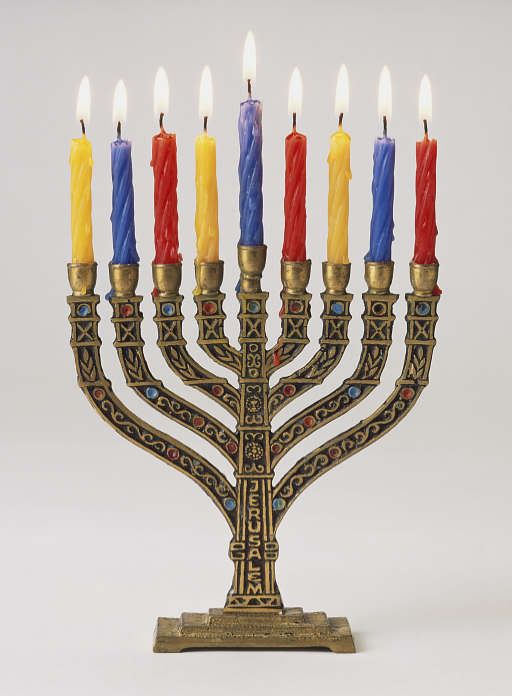
On a more happy note, חג אורים שמח to all my readers ... Happy Hanukkah.
 _
_
The siren left me a bit shaken. It just made me think about how it must have been on Yom Kippur 37 years ago when that siren was for real, and our country was trying to block a joint Syria-Egyptian attack. Thankfully, this was only a drill ... but I can't stop thinking that one day a siren will have me running home to grab my gear.
On a more happy note, חג אורים שמח to all my readers ... Happy Hanukkah.
 _
_
Sunday, November 28, 2010
Masapan ... The Tradition Continues
Masapan (aka Marzipan) is a traditional dessert for Sefardim (Jews of Spanish descent). While there is some dispute to the origin of the desert (be it Europe or the Middle East), there is no debate that this desert made from crushed almonds and sugar is delicious! Add it to the list of of other Sefardi dishes (like burmwelos or pastelis) I've finally learned how to make (with the help of my dad this time around). The final product wasn't bad at all (good reviews from all who tried it), but I look forward to improving it as my dad's is definitely better!. Photo evidence below:
 Stirring in the almonds
 Playing with the dough

Rolling the dough
 The final product

The recipe (sorry for the blurry picture) Stirring the boiling water and sugar mix, removing the 'scum'
 Stirring in the almonds
 Playing with the dough
Rolling the dough
 The final product
_
Subscribe to:
Posts (Atom)


