Despite a surprising advantage from the fans, the judges were unfortunately not that impressed with my entry (73 rating out of 100).
Oh well, 'twas a fun ride and good exposure for this lil blog!
Congrats to the deserving winner, Elder of Ziyon.
_
Monday, January 31, 2011
Monday, January 24, 2011
The Pro-Israel Blog-off begins - Round 1
A few weeks ago, I entered my Zionist Football article in a pro-Israel blog competition.
The competition starts today at Israellycool and I'm up against some great blogs in the 1st round. I will be up against Elder of Ziyon and Liberty's Spirit.
Check out the entries, decide who's best, and vote here.
The winner (by fan voting & a panel of 4 judges) will win an iPad, which I wouldn't mind winning ... so if you like my entry, help me out! ;)
_
Friday, January 21, 2011
Help Them See
Rabbi Noah Weinberg zt"l was speaking to a group about judging people to the good. He was asked how to deal with people who seem so negative and evil. He replied: "Imagine you were at a corner ready to cross at a light. All of the sudden from behind someone shoves you into the street. You fall and get up scratched and dirty; you turn, ready to give the person who shoved you some of the angriest words you know. When you turn around, ready to pounce, you see that the person behind you is wearing dark glasses and holding a white cane. How do you feel now? Instantly you calm down, and your anger dissipates. He couldn't help it. he was blind."
"That", Rabbi Weinberg said is how we deal with people who appear to us to be evil and mean. "The person is blind. S/he doesn't wake up in the morning and decide to hurt people that day. The person literally doesn't know what they are doing. They are blind". "The next time your parent, in-law, coworker etc. does something to make you crazy, picture them wearing dark glasses and holding a white cane. They are blind. They can't see that they are doing wrong. Help them, guide them, and show them gently the error of their ways. But don't expect them to change. A blind person can't see overnight. It takes time, and sometimes they will never see."
Take from Gossip : Ten Pathways to Eliminate It from Your Life and Transform Your Soul by Lori Palatnik & Bob Burg.
_
Monday, January 17, 2011
Breathing
A man once complained bitterly to R' Levi Yitzchok of Berditchev that his business was failing. He was completely absorbed with this and could not think of anything else. His life had come to a standstill.
R' Levi Yitzchok said, 'You cannot think of anything else? Come, let us go to the mikveh." The man assumed that R' Levi Yitzchok intended to enhance his prayers for him by purifying himself in the mikveh. Once they were in the mikveh, R' Levi Yitzchok submerged the man's head underwater, and the man struggled to break free. R' Levi Yitzchok then said, "What was in your mind when I held your head under water?" "I wanted to breathe," the man said. "Were you thinking about your business?" "No," the man said, "I just wanted to be able to breathe."
"Then there is something more important to you than your business, isn't there? You should think of all the other things that are actually more important than your business and direct proper attention to them. Then you will act more constructively, and a more positive attitude will help you in your business as well."
Taken from 'The Enemy Within' by Rabbi Abraham J. Twerski.
_
Thursday, January 06, 2011
Zionist Football
My latest article in Kaminando y Avlando, the Sephardi Hebrew Congregation of Cape Town's monthly publication:
***
***
Israel, like many other countries in the world, is football (soccer) mad. Football’s the national sport and the country takes tremendous interest in games and leagues both domestic and international. Every Saturday or Sunday afternoon, thousands of Israelis can be found at the country’s various stadia cheering on their teams.
Although the Israeli league is considered to be rather weak, there is normally a yearly representative in the Champions League or the Europa League (formerly known as the UEFA cup). In the last ten years, Israel has seen Maccabi Haifa defeat Manchester United, Hapoel Tel Aviv defeat AC Milan and Maccabi Tel Aviv defeat Ajax in these competitions. These results, and the participation in these prestigious tournaments, are a source of great pride for Israelis.
The same feelings are often replicated when one of our own plays in one of the big European leagues. From past greats like Haim Revivo (Celta Vigo), Avi Nimni (Atletico Madrid), Tal Banin (Brescia) and Eyal Berkovic (Manchester City & Celtic) to today’s heroes like Yossi Benayoun (Liverpool & Chelsea), Tal Ben Haim (Chelsea & West Ham), Ben Sahar (Chelsea & Espanyol) and Gai Assulin (Barcelona & Manchester City), Israelis love to see their own succeed and represent Israel abroad.
The aforementioned individual and club successes have unfortunately yet to translate into any national team success. Having not been at any major tournament since the 1970 World Cup, most fans funnily enough still believe that the national team will qualify for the next Euro or the World Cup. (Until we actually do, we’ll have to be grateful for seeing our flag waved around as it was by then Hapoel Tel Aviv defender, Ghana’s John Pantsil – picture below).

It seems that most of us fans have internalized David Ben Gurion’s famous quote, “In Israel, in order to be a realist you must believe in miracles!” With football being such a passion for most Israelis, many of the youth dream of being the next Yossi Benayoun or Tal Ben Haim. However, not every kid follows through with these ‘dreams,’ be it due to ability, injuries or … Zionism.
Last year, I joined FC Jaffa, a team in the newly created Anglo Olim League. The 7-team league required all teams to field Anglo Olim, while also allowing two Israeli born players per squad. One of the Israeli players on our team was a 25 year old by the name of Rani Madmon. On the first ride from Jerusalem to our home pitch in Ramat Aviv, Rani and I struck up a conversation about how we played the game while growing up. Rani grew up in the youth system of Beitar Yerushalyaim, one of Israel’s top teams. Ever present in their youth squads from a young age, Rani started talking about all the players he’d grown up with - household names for anyone like me who’s followed Beitar the past few years.
As we discussed the subject more, I asked him why he wasn’t out there at Teddy (Beitar’s Stadium) every second weekend. “I turned down the contract they offered me when I was 18,” he explained. You work your whole life to accomplish a lifelong dream, and when you’re on the cusp of achieving it, you turn it down? “I wanted to defend my family, my friends, my country,” He explained. “I couldn’t stand by as Jerusalem was exploding and do nothing, “ he continued, “Serving in the army was more important than football.”
I was shocked.
You see, even though I feel I am a passionate Zionist, I don’t really know if I could have made that decision if I were in his boots. Rani served 4 years in the army, becoming an officer in combat engineering. He still does miluim (reserve duty) every year and has little regrets about his decision.
Rani is but one story like this. Many of Israel’s talented 18-year-old footballers (not to mention musicians, scientists etc) put their careers on hold, sometimes permanently, in order to join the army and contribute to the defense of Israel. This, and a poor football infrastructure, has continually dented the development of football in our country. However, it’s precisely this dedication and love of Israel, which I think is still prevalent among Israel’s youth, that ensures Israel will overcome the internal and external obstacles in its path.
_
Monday, January 03, 2011
Hamas's Honesty
Two months ago, Hamas admitted that the Israeli strike on the 1st day of the Gaza War eliminated 250 of their fighters - a fact even Richard Goldstone refused to acknowledge.
This month, another dose of Hamas honesty has shown the rife dishonesty within NGOs when reporting about Israel. Many NGOs reported the civilian death count at 75%+ of the 1,100+ Palestinian deaths. Naturally, by the time Israel released her numbers (Sadly, 39% of the dead were civilians, with the remaining 709 Palestinians being militants), the world had already slammed Israel for this 'Jenin' like massacre.
The truth?
In the already linked article, Anne Herzberg made some important points:
The damage has already been done. It is essential however that we learn and internalize (yet again) the lesson that our country will always be attacked - from within and without - with falsehoods. We do make our mistakes, and when we do, we need to acknowledge and learn from them. However, before we do so, let's make sure the truth hasn't been swept under the rug in order to allow more disgraceful and hateful attacks on Israel.
_
This month, another dose of Hamas honesty has shown the rife dishonesty within NGOs when reporting about Israel. Many NGOs reported the civilian death count at 75%+ of the 1,100+ Palestinian deaths. Naturally, by the time Israel released her numbers (Sadly, 39% of the dead were civilians, with the remaining 709 Palestinians being militants), the world had already slammed Israel for this 'Jenin' like massacre.
The truth?
In a November 2010 interview given by Hamas Interior Minister Fathi Hamad to the Al-Hayat newspaper, Hamas acknowledged that 600-700 Hamas members were killed in the Gaza fighting – more than double the number of combatants published by the NGOs’ and Richard Goldstone’s unreliable version of events.
In the already linked article, Anne Herzberg made some important points:
In particular, NGOs and Goldstone used their unsupported casualty claims as the sole basis for charges of “disproportionate” or “indiscriminate” Israeli attacks against Gaza civilians, even though under international law, the number of casualties is not a dispositive factor in determining whether war crimes were committed.
Each NGO conveyed its version of events. B’Tselem alleged that 75% of those killed were civilians. PCHR originally claimed 70% and later increased to 85%, and DCI-PS alleged that Israel killed 352 “children” (PCHR claimed 313).
The damage has already been done. It is essential however that we learn and internalize (yet again) the lesson that our country will always be attacked - from within and without - with falsehoods. We do make our mistakes, and when we do, we need to acknowledge and learn from them. However, before we do so, let's make sure the truth hasn't been swept under the rug in order to allow more disgraceful and hateful attacks on Israel.
_
Thursday, December 30, 2010
Anfield Remembers Avi Cohen z'l
Click here to watch the applause to honor the late Avi Cohen & Bill Jones.
One of the banners displayed:
 _
One of the banners displayed:
 _
Wednesday, December 29, 2010
Avi Cohen z'l
After fighting for his life for 8 days, Avi Cohen z'l passed away this morning at the age of 54.
Cohen z'l was the 1st Israeli to play for Liverpool (and the top flight in England), who at the time were one of the best teams in Europe (if not the best).
Click here for Haaretz's write up.
Click here for King Kenny's (as well as others) tribute.
Click here for Avi Cohen, the Road Sign
Click here for Liverpool's plan to honor Avi Cohen against Wolves (29.12.2010 vs Wolves)
 May his soul rest in peace, Baruch Dayan Ha'Emet
_
Tuesday, December 21, 2010
Eli's Last Words
נדיה יקרתי, משפחתי היקרה, אני כותב אליכם מילים אחרונות אלה בתקווה שתישארו תמיד מאוחדים. אני מבקש מאשתי שתסלח לי, שתדאג לעצמה ושתעניק השכלה טובה לילדינו ... נדיה יקירתי, ראשית את להינשא שנית, למאן יהיה אב לילדינו, בנושא זה את חופשיה לגמרי. אני מבקשך לא להתאבל על העבר אלא לפנות אל העתיד. אני שולח לכם נשיקות ארונות. התפללו לעליית נשמתי.
שלכם, אלי
Syria likes to go on and on about how Israel isn't serious about peace, while they naturally are.
Syria should show how serious they are to Israel and the world by simply returning the bones of Eli Cohen z'l to Israel. Put all the pressure on Israel to re-start peace talks with Syria, while allowing his family to bury his remains under this tombstone:

Sadly, they'll never show anyone how desperate for peace talks they really are ...
_
Sunday, December 19, 2010
Yaakov and his sons
I liked this analysis by R' Yaakov Kamenetsky:
Jacob was like the sun and his sons were like stars. When the sun is out, stars are not visible, but when the sun sets, the stars take over the sky. So too, after Jacob's death, the tribal ancestors achieved greater importance, for the presence of their light in the increasing darkness of the Egyptian exile kept hope alive in their offspring. As long as Jews do not recognize the onset of exile, as long as they are conscious of their true roots, they are only in geographic, but not spiritual, exile._
Sunday, December 12, 2010
Robbie & I
I was going through some old documents, and I found the first contribution I made to an article, albeit an internet footy article. The article was written by James Gill shortly after Liverpool had sold Robbie Fowler, a player I grew up idolizing. Though the link to the article is no longer available, here it that article (note to self: next time, alt + print screen):
Fans 'broken' at Fowler move_
28 November 2001
By Sports.com's JAMES GILL
Most Sports.com readers have taken Robbie Fowler’s move from Liverpool to Leeds pretty badly.
Now that Fowler has agreed personal terms with Leeds, some of you couldn’t be more upset.
Ben Cambers took it particularly badly by revealing that he "will be going into mourning for a week.” I’m sure he’s not the only one.
Taylan took the move just as badly saying that Fowler's departure had “broken” him.
Taylan makes the point that Fowler was one of a few players to have come up through the ranks at Liverpool with most of the current squad brought in from elsewhere. He’ll now be cheering for the likes of Michael Owen, Steven Gerrard and Jamie Carragher.Shah Punit highlighted the fact that Fowler should not have been allowed to leave, due to the fact that Liverpool are out to win both the league and the Champions League.
One Liverpool fan was prepared to agree with the club, as Kevin Fried felt it was the best for both parties.
“Robbie's brilliance is unquestionable, but inconsistent in a rotation system.” That could well prove to be an excellent shout.
“I would've preferred seeing Robbie playing overseas because he is dangerous, he is a brilliant player, and if he clicks Leeds could become an even more dangerous team,” Kevin continued.
“Good luck Robbie, I'll support you 36 games a season from now on. It will be good to see a smile on your face again.”
Bill Westwood also feels the decision was right and has every faith that young Czech star Milan Baros will rise to the occasion at Anfield.
Bill describes Baros as “a superb footballer as Robbie was back in the good old days.” We shall see.
Leeds fans have also voiced their opinion. Gareth Rhodes of West Yorkshire couldn’t hide his delight.
“What an absolute steal – 26, still to hit his prime, World Cup on the way – I reckon he'll bag at least 25 this season.” If Gareth is right, the Premiership title could well go to Elland Road.
But, perhaps the most profound comment goes to Avram Piha, who says quite simply "Robbie quit Anfield because Liverpool quit on Robbie."

Sunday, December 05, 2010
Joseph's punishment, Yehuda's reaction
What led Yehuda to confront Joseph when all the brothers shirked away?
One explanation I really liked is from Meshech Chochmah. At the end of Mikeitz, Yehuda realizes that Joseph's punishment for Benjamin is a result of a fabricated charge. Benjamin had just been branded a thief after being caught 'red handed' with Joseph's goblet. Why then does Joseph want a thief to be a servant in his own household? Yehuda realized that this was a forced predicament (as Sforno remarks in VaYigash 44:18), and this gave him the courage to approach Joseph and contest the punishment.
_
Thursday, December 02, 2010
The Hint in their Names
R' Hirsch comments that Joseph's choice of name for his two sons (Mikeitz 41:51-52) is proof of his loyalty to his origins and determination not to be a part of Egyptian culture. How so?
Joseph named his first son Manasseh because "God has made me forget" (כי נשני אלוקים). Akeidah comments that Joseph was expressing his gratefulness that God had allowed him to forget the hardships inflicted upon him due to his brothers' actions. He had made peace with the 'master plan,' which allowed him to forget any ill will he may have felt towards his brothers, and eventually open up Goshen to his them (protecting them from any Egyptian influence) once his dreams were fulfilled.
His second son is called Ephraim, for "God has made me fruitful in the land of my suffering," (כי הפרני אלוקים בארץ עניי). Despite his dramatic ascent to being the 2nd most powerful man in Egypt, he still regarded Egypt as the land of his suffering. As Abarbanel notes, despite the greatness and splendor Joseph enjoyed as viceroy, he still saw himself as a stranger in Egypt and was 'suffering' as he was away from his father, his family & the Holy Land.
Despite the many obstacles Joseph faced that could have led him to turn his back on his family and home, he managed to make peace with his lot, forgive his brothers and stay loyal to the 'world' he belonged to.
(Ideas taken from The Stone Edition Chumash)
_
Tuesday, November 30, 2010
A Siren
On the way to work from Nissim's Hanukkah bash, I was deeply engrossed in the latest Mossad book. As we crossed Yaffo, a loud siren started wailing. I have never heard one of these sirens this loudly before, and as I looked around, I saw quite a few people with startled looks on their faces. "Oh shit, is this war?," I thought for a second. Suddenly, a few people started saying it's a drill, and I, as well as other passengers, started returning to the pre-siren routine.
The siren left me a bit shaken. It just made me think about how it must have been on Yom Kippur 37 years ago when that siren was for real, and our country was trying to block a joint Syria-Egyptian attack. Thankfully, this was only a drill ... but I can't stop thinking that one day a siren will have me running home to grab my gear.
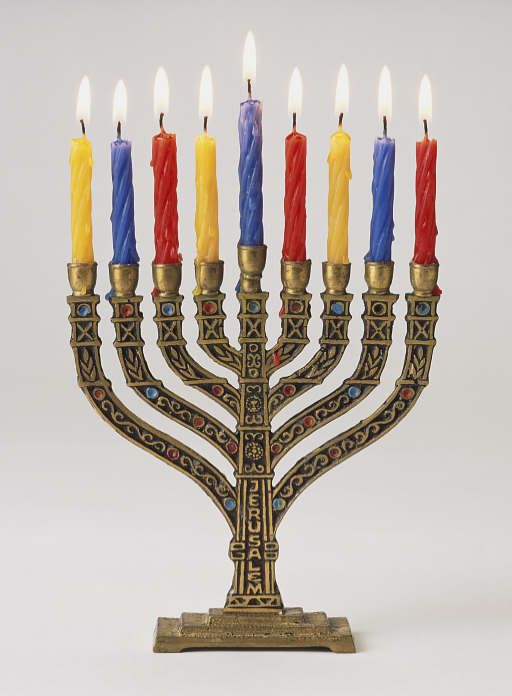
On a more happy note, חג אורים שמח to all my readers ... Happy Hanukkah.
 _
The siren left me a bit shaken. It just made me think about how it must have been on Yom Kippur 37 years ago when that siren was for real, and our country was trying to block a joint Syria-Egyptian attack. Thankfully, this was only a drill ... but I can't stop thinking that one day a siren will have me running home to grab my gear.
On a more happy note, חג אורים שמח to all my readers ... Happy Hanukkah.
 _
Sunday, November 28, 2010
Masapan ... The Tradition Continues
Masapan (aka Marzipan) is a traditional dessert for Sefardim (Jews of Spanish descent). While there is some dispute to the origin of the desert (be it Europe or the Middle East), there is no debate that this desert made from crushed almonds and sugar is delicious! Add it to the list of of other Sefardi dishes (like burmwelos or pastelis) I've finally learned how to make (with the help of my dad this time around). The final product wasn't bad at all (good reviews from all who tried it), but I look forward to improving it as my dad's is definitely better!. Photo evidence below:
 Stirring in the almonds
 Playing with the dough

Rolling the dough
 The final product

The recipe (sorry for the blurry picture) Stirring the boiling water and sugar mix, removing the 'scum'
 Stirring in the almonds
 Playing with the dough

Rolling the dough
 The final product

_
Monday, November 22, 2010
Selling Joseph
Did the brothers ever realize the gravity of their sin when they sold Joseph?
Sforno comments that after their detainment in Egypt, the brothers examined their deeds to see why God had punished them. They do not display any remorse for the sale itself, "Indeed we are guilty concerning our brother inasmuch as we saw his heartfelt anguish when he pleaded with us and we paid no heed; that is why this anguish has come upon us," (Mikeitz 42:21). It seems that the brothers saw the sale as a harsh act, albeit the correct one.
How did the brothers rationalize this?
One interesting possibility is the brothers felt that Joseph wasn't a threat to them, but to their family's destiny. They were fully aware of the 'weeding out' process which had seen Ishmael and Esau 'removed' from the nation of Israel. The brothers saw that Joseph was bringing dissension to the family, which would put a dent in the mission of the Patriarchs. Hence, he was a danger that had to be dealt with.
(Ideas taken from The Stone Edition Chumash)
_
Saturday, November 20, 2010
United we must stand
My latest article in Kaminando y Avlando, the Sephardi Hebrew Congregation of Cape Town's monthly publication:
***
The more I study Israel’s history, the more I am disappointed and infuriated by the constant strife we’ve created for ourselves, amongst ourselves. Be it the clashes between the religious and the secular, or between the political right and the political left, or the Ashkenazim and the Mizrachim, we always seem to create harmful rifts within our nation. Although this is not a recent phenomenon, it’s something that continually needs to be addressed as it’s as dangerous an enemy to the Jewish people as terrorism and assimilation are.
Although they only refer to strife amongst family units, the first few parshiyot of the Torah teach about the destructive consequences of strife and the necessity to eliminate it. In Bereshit When Cain’s sacrifice to Hashem wasn’t accepted and Abel’s was, Cain became extremely jealous of his brother. The resulting strife led Cain to ‘rise up’ and kill his brother. Within a few parshiyot of this tragic story, the Torah teaches us how we must handle strife. In Lech Leca, Avram’s shepherds rebuke Lot’s shepherds for allowing their herds to graze on other people’s pastures (Rashi). Avram, unlike Cain, approaches his nephew and tries to stop the conflict from causing further turmoil, “Please let there be no more strife between me and you, and between my herdsmen and your herdsmen, for we are kinsmen,” (13:8). Although Avram eventually allows Lot and his herds to move to more fertile grounds, his actions teach us an important lesson. When faced with strife, even due to legitimate reasons, one must find a way to discuss the problem, make peace and coexist. Friction, be it between brothers, amongst a family or within our nation, will almost always lead to negative consequences. Hence, one must approach it and look for a peaceful resolution to end the conflict, unless of course no such option is available. (An example from the Torah being the sale of Joseph in Va’Yeishev – see Sforno’s commentary.) Rashi sums it up nicely when, during his commentary on Parashat Noach, he asks which generation’s sin was greater, the generation of the flood, which did not plan a rebellion against Hashem, or the generation of the Dispersion (Tower of Babel), which did? His answer is the former, as the generation was comprised of robbers who quarreled with each other and were completely destroyed in the flood, while the latter dwelt harmoniously together, and hence were spared despite their blasphemies. Surely this demonstrates how dangerous strife is and how great unity is! 4:1-16, we learn about the tragic story of Cain and Abel.
In the years leading up to and in the aftermath of the creation of the State, Israel twice was on the verge of Civil War. In late 1944, the Jewish Agency and the Haganah were convinced that Menachem Begin’s Irgun (aka Etz”l) were eager to take over the leadership of the Yishuv. The tension between the two organizations reached a boiling point in 1945 when Eliyahu Hakim and Eliyahu Bet-Zuri (members of the Stern Gang) assassinated Lord Moyne in Cairo. After the assassination of Lord Moyne, who was responsible for implementing the White Paper (the document that kept thousands of desperate Jews from immigrating to the British Mandate during World War II), the Jewish Agency implemented the “Hunting Season” (the Season for short), during which the Haganah actively worked with the British police to capture Irgun and Stern Gang members. Did the Irgun respond with violence as their brothers betrayed them to the British? No, their response had already been outlined in their famous pamphlet in 1944:
The Season gradually came to a halt due to massive public pressure, but only after almost one thousand Jews were handed over to the British. Am Yisrael almost allowed jealousy and lack of trust to cause itself tremendous damage. Unfortunately, the lessons of those dark days were not learned and the country was placed in a similarly frightening situation within a few years.
Shortly after Israel’s Declaration of Independence, a ship carrying almost 1,000 Irgun members and large quantities of ammunition made its way to Israel from France. The Altalena was given permission by David Ben-Gurion, Israel’s prime minister, to land the ship as long as it was done quickly. The cooperation quickly soured when Begin requested that most of the weapons go to the IDF’s newly incorporated Irgun battalions, a move Ben-Gurion thought would reinforce the false notion of ‘an army within an army.’ Ben-Gurion refused to accept Begin’s reasoning and the boat left its original docking area of Kfar Vitkin, and proceeded to Tel Aviv, where Ben-Gurion had the IDF concentrate large forces on the beach. The ship was shelled, and it caught fire. With chaos on board, many jumped overboard and were met by rafts of concerned Israelis. Jewish fire still continued to strafe the deck of the ship despite the captain waving the white flag (In ‘The Revolt,’ Menachem Begin writes how the fire was continually aimed at him – was it an assassination attempt?) Many of the Irgun fighters who swam towards the beach were greeted with grenades. By the end of the tragic day, sixteen Irgun members and 3 IDF soldiers were dead. Instead of allowing this horrifying event to rip the country apart and take away focus from defeating the invading Arab armies, Begin made the famous ‘Speech of Tears,’ which highlighted the necessity of finding a solution to strife, even after such a tragedy:
In late 1967, Ben-Gurion remarked that had he then known Begin as he did now, the face of history would have been different.
There are obviously many more examples than those presented; the message however is clear enough. We can be our own worst enemies, or we can do our best to find common ground and make peace amongst ourselves despite our differences. The key here is not just to overcome the strife, which every relationship – be it on a small family scale or large national scale – has, but to build unity amongst our people. There’s a famous midrash that says that G-d would forgive Am Yisrael if its people practiced idolatry in unity. A sin of that magnitude, entered into on the national level, can be forgiven if the whole nation commits the sin together. Think about that. How powerful and important must unity (אחדות) be? In fact, if we look at one of our most important daily prayers, the Shema, we’ll see unity again being stressed. In the Shema, we say ‘Shema Yisrael’ – Hear O’ Israel. The ‘hear’ should be written ‘Shimu’ – listen in the plural – as it’s addressing the people of Israel. However it is written as a singular. In the daily reaffirmation of our faith, we are acknowledging the importance of being a united nation. Our continuous ability to hurt ourselves was highlighted, ironically enough, by Anwar Sadat, the Egyptian president who was in office during the Yom Kippur War (1973) and then proceeded to sign a peace treaty with Begin and Israel (1979). When asked how one can destroy Israel, he answered smartly, “Leave them alone in peace for 25 years.” Sadat’s negative advice should be taken by us as an important lesson – unless we continually work on strengthening and unifying Am Yisrael, we are setting ourselves up for unnecessary tragedies.
** How good and pleasant it is when brothers live together in unity (Pslam 133:1) **
***
The more I study Israel’s history, the more I am disappointed and infuriated by the constant strife we’ve created for ourselves, amongst ourselves. Be it the clashes between the religious and the secular, or between the political right and the political left, or the Ashkenazim and the Mizrachim, we always seem to create harmful rifts within our nation. Although this is not a recent phenomenon, it’s something that continually needs to be addressed as it’s as dangerous an enemy to the Jewish people as terrorism and assimilation are.
Although they only refer to strife amongst family units, the first few parshiyot of the Torah teach about the destructive consequences of strife and the necessity to eliminate it. In Bereshit When Cain’s sacrifice to Hashem wasn’t accepted and Abel’s was, Cain became extremely jealous of his brother. The resulting strife led Cain to ‘rise up’ and kill his brother. Within a few parshiyot of this tragic story, the Torah teaches us how we must handle strife. In Lech Leca, Avram’s shepherds rebuke Lot’s shepherds for allowing their herds to graze on other people’s pastures (Rashi). Avram, unlike Cain, approaches his nephew and tries to stop the conflict from causing further turmoil, “Please let there be no more strife between me and you, and between my herdsmen and your herdsmen, for we are kinsmen,” (13:8). Although Avram eventually allows Lot and his herds to move to more fertile grounds, his actions teach us an important lesson. When faced with strife, even due to legitimate reasons, one must find a way to discuss the problem, make peace and coexist. Friction, be it between brothers, amongst a family or within our nation, will almost always lead to negative consequences. Hence, one must approach it and look for a peaceful resolution to end the conflict, unless of course no such option is available. (An example from the Torah being the sale of Joseph in Va’Yeishev – see Sforno’s commentary.) Rashi sums it up nicely when, during his commentary on Parashat Noach, he asks which generation’s sin was greater, the generation of the flood, which did not plan a rebellion against Hashem, or the generation of the Dispersion (Tower of Babel), which did? His answer is the former, as the generation was comprised of robbers who quarreled with each other and were completely destroyed in the flood, while the latter dwelt harmoniously together, and hence were spared despite their blasphemies. Surely this demonstrates how dangerous strife is and how great unity is! 4:1-16, we learn about the tragic story of Cain and Abel.
In the years leading up to and in the aftermath of the creation of the State, Israel twice was on the verge of Civil War. In late 1944, the Jewish Agency and the Haganah were convinced that Menachem Begin’s Irgun (aka Etz”l) were eager to take over the leadership of the Yishuv. The tension between the two organizations reached a boiling point in 1945 when Eliyahu Hakim and Eliyahu Bet-Zuri (members of the Stern Gang) assassinated Lord Moyne in Cairo. After the assassination of Lord Moyne, who was responsible for implementing the White Paper (the document that kept thousands of desperate Jews from immigrating to the British Mandate during World War II), the Jewish Agency implemented the “Hunting Season” (the Season for short), during which the Haganah actively worked with the British police to capture Irgun and Stern Gang members. Did the Irgun respond with violence as their brothers betrayed them to the British? No, their response had already been outlined in their famous pamphlet in 1944:
“Yes, the dread of the loyal Jew is understandable. Are we to witness our children raising their hands or aiming their weapons against one another? What will they do, those persecuted people against whom the terrible edicts are directed? How will they defend themselves? ...These are grave questions, and we feel it our duty - on our own behalf and on behalf of the Irgun Zvai Le'umi in Eretz Israel - to provide an answer. And this is our answer: you may stay calm, loyal Jews; there will be no fraternal strife in this country...”
The Season gradually came to a halt due to massive public pressure, but only after almost one thousand Jews were handed over to the British. Am Yisrael almost allowed jealousy and lack of trust to cause itself tremendous damage. Unfortunately, the lessons of those dark days were not learned and the country was placed in a similarly frightening situation within a few years.
Shortly after Israel’s Declaration of Independence, a ship carrying almost 1,000 Irgun members and large quantities of ammunition made its way to Israel from France. The Altalena was given permission by David Ben-Gurion, Israel’s prime minister, to land the ship as long as it was done quickly. The cooperation quickly soured when Begin requested that most of the weapons go to the IDF’s newly incorporated Irgun battalions, a move Ben-Gurion thought would reinforce the false notion of ‘an army within an army.’ Ben-Gurion refused to accept Begin’s reasoning and the boat left its original docking area of Kfar Vitkin, and proceeded to Tel Aviv, where Ben-Gurion had the IDF concentrate large forces on the beach. The ship was shelled, and it caught fire. With chaos on board, many jumped overboard and were met by rafts of concerned Israelis. Jewish fire still continued to strafe the deck of the ship despite the captain waving the white flag (In ‘The Revolt,’ Menachem Begin writes how the fire was continually aimed at him – was it an assassination attempt?) Many of the Irgun fighters who swam towards the beach were greeted with grenades. By the end of the tragic day, sixteen Irgun members and 3 IDF soldiers were dead. Instead of allowing this horrifying event to rip the country apart and take away focus from defeating the invading Arab armies, Begin made the famous ‘Speech of Tears,’ which highlighted the necessity of finding a solution to strife, even after such a tragedy:
“We shall continue to love the people of Israel, and we shall continue to fight for the people of Israel...Help me to persuade my people that it is forbidden for brother to raise a hand against brother, that it is forbidden that a Hebrew weapon be used against Hebrew fighters.”
In late 1967, Ben-Gurion remarked that had he then known Begin as he did now, the face of history would have been different.
There are obviously many more examples than those presented; the message however is clear enough. We can be our own worst enemies, or we can do our best to find common ground and make peace amongst ourselves despite our differences. The key here is not just to overcome the strife, which every relationship – be it on a small family scale or large national scale – has, but to build unity amongst our people. There’s a famous midrash that says that G-d would forgive Am Yisrael if its people practiced idolatry in unity. A sin of that magnitude, entered into on the national level, can be forgiven if the whole nation commits the sin together. Think about that. How powerful and important must unity (אחדות) be? In fact, if we look at one of our most important daily prayers, the Shema, we’ll see unity again being stressed. In the Shema, we say ‘Shema Yisrael’ – Hear O’ Israel. The ‘hear’ should be written ‘Shimu’ – listen in the plural – as it’s addressing the people of Israel. However it is written as a singular. In the daily reaffirmation of our faith, we are acknowledging the importance of being a united nation. Our continuous ability to hurt ourselves was highlighted, ironically enough, by Anwar Sadat, the Egyptian president who was in office during the Yom Kippur War (1973) and then proceeded to sign a peace treaty with Begin and Israel (1979). When asked how one can destroy Israel, he answered smartly, “Leave them alone in peace for 25 years.” Sadat’s negative advice should be taken by us as an important lesson – unless we continually work on strengthening and unifying Am Yisrael, we are setting ourselves up for unnecessary tragedies.
** How good and pleasant it is when brothers live together in unity (Pslam 133:1) **
_
Sunday, November 14, 2010
Sayeret Matkal in Entebbe
Last week, I finished Iddo Netanyahu's latest book סיירת מטכ"ל באנטבה (Book's title in English: Sayeret Matkal in Entebbe). The first part of the book goes into great detail about the planning, drills and execution of the operation. What sets this book apart from other books I've read is that instead of telling the story of Entebbe through the author's eyes, the story is told through in-depth interviews with all the soldiers who participated in the greatest hostage rescue operation of our time. The reader gets an in depth understanding of all the details from the day of the kidnapping to the 'made for the big screen' rescue operation. After writing "Yoni's Last Battle," what was Iddo's reasoning for yet another book about the operation?
Within a month of the operation, Muki Betser - who was 2nd in command during the operation - started mudding Yoni Netanyahu's role in planning and executing the operation before he was killed. Interview after interview given by Muki have shown him as the leading man in this operation, from its start to the exhilarating finale. With his lies sadly becoming the 'facts' even the IDF presents in their official report on the raid (not to mention Muki's book, "Secret Soldier: The True Life Story of Israel's greatest Commando"), Iddo's book tries to set the record straight. His method is simple and devastating: it takes Muki's testimonies (from August 1976 till 2003, including excerpts from his book), and shows how Muki constantly tweaks his testimonies, always contradicting his original report (Given a few days after the raid) and the testimonies of the soldiers who ran side by side with him on Uganda's soil.
Below are a few of the lies Muki has passed as facts over the years ... followed by the truth (in bold):
- Muki was instrumental in the operation's planning. From the moment Yoni returned from the Sinai on Wednesday (29.6.1976), he was the key figure in planning the operation. Muki confirms this in his original testimony after the operation. Muki had little, if anything, to do with any of the planning (some of his testimony clearly show this, be it not knowing the reason for using the Mercedes or when the soldier counts for the vehicles were altered)
- Muki requested to be at the head of his unit when storming the terminal, something he states he had to demand from Yoni. This is the norm in the IDF - commanders lead. There was most likely no request ...
- On the way to the terminal, Muki states that the two Ugandan troops that approached the Mercedes should not have been killed, but bypassed as per the original plan. The drills for the operation included two 'guards', an addition made by Yoni. In the drills, as per various soldiers' testimonies, the guards were always shot at. They had to be killed - had they been left alive or even bypassed, their fire may have killed/injured the troops before they got to the terminal (which was still 150-200 meters away). Some soldiers remember the Ugandan troops cocking their guns - a sign that 'bypassing them' as Muki had requested in the car would probably have had tragic consequences.
- Yoni was at the back of the Mercedes and the orders came from Muki. No soldier interviewed remembers Yoni anywhere but the front of the Mercedes and giving all the orders.
- On the way to the control tower, Muki killed two Ugandans - emptying his clip in the process. The lag this caused as the soldiers waited behind the tower did not delay the storming of the terminal. There is no evidence from the soldiers that Muki actually killed any Ugandan soldiers. That he fired, no one denies. That he stopped and delayed the storming of the terminal, no one denies (including himself). That Yoni screamed at him to advance (a few soldiers mention him screaming, "מוקי קדימה" - "Muki Advance"), no one denies. That Yoni overtook Muki and other soldiers followed suit, no one denies (including Muki). Muki's stalling could have cost many lives (soldiers and hostages) were it not for Yoni's actions. There is testimony from two soldiers who said Muki explained on the plane ride home that his gun had jammed, and that he had not bought a 'double clip,' which was a requirement for the operation, and that forced his 'lengthy' (a matter of seconds) stop.
- Muki missed his entrance (1st of the 4) due to faulty intelligence. Muki, and other soldiers, report that they got updated photos of the terminal (courtesy of the Mossad) in Sharm El Sheikh where they had time to review them. Muki claims the door was sealed shut - it wasn't. The door was just closed and Muki never attempted to open it, instead running to the next entrance.
- Muki entered the main hall side by side with Amir Ofer and Amnon Peled, and had a hand in killing 3 (at times, he claims all 4) of the terrorists in the main terminal. By the time Muki had entered the hall AFTER Amir and Amnon, 3 of the 4 terrorists had been shot and their guns kicked away. Muki, it seems, confirmed the kill on 2 of them. Amos Goren, as per Muki's original testimony, killed the 4th terrorist while entering the main entrance with Muki. Muki did shoot when he entered the hall, but unlike most of his testimonies, his bullets hit lifeless or incapacitated terrorists.
- Muki, in his book, claims that all four aforementioned soldier shot Jean-Jacques Maimoni as he jumped up to celebrate the Israeli arrival. The 3 other soldiers never mention firing at Maimoni, only Muki does. It is important to note that Muki's actions were 100% correct, he had to react and couldn't take a chance that Maimoni was an armed terrorist. That doesn't mean he needs to 'share the blame' of killing the hostage with the other soldiers in the room.
Iddo's work is impeccable. Any reader can not help but be angered by Muki's muddying of the truth and continuous attacks on his dead commander's actions (I only touched on this briefly with the two Ugandan guards). In order to show how this is sadly the norm with Muki, Iddo brings Muki's testimony on various operations:
- Operation Spring of Youth
Muki's unit, which included Yoni under his command, stormed one of the rooms. Muki entered the room at the same time as Zvi Livna and they both killed the terrorist. While Muki was SUPPOSED to storm the room first, it was Zvi who entered the room first and shot the terrorist. Muki confirmed the kill.
- Yom Kippur War
a) 40 Syrian commandos ambushed a group of Sayeret Matkal soldiers. Muki and Yoni led both their squads in storming the Syrian position, killing all 40 commandos. After they were ambushed, Yoni organized his squad under heavy fire and stormed the Syrian position. Muki and his squad provided critical cover fire and the Syrian threat was neutralized.
b) When Yossi Ben Hanan's squadron of tanks was obliterated by Syrian forces within Syrian territory, Muki talked with Yanush Ben Gal and volunteered to lead a squad to rescue Ben Hanan and another survivor. Yoni, as per Yanush's testimony, volunteered Sayeret Matkal for the dangerous rescue operation. He led it successfully and as per Ben Hanan's testimony, was the one giving out the orders throughout the operation.
There is a re-occuring theme here ... Muki volunteers & initiates operations, planning them to perfection and then carries them out flawlessly while others make mistakes that contribute to endangering the mission's success. Yoni, his commander, is a lethargic and disinterested figure, always being 'led' by Muki. It's sad that Muki's testimonies have been accepted as 'truth,' so much so that the few revealed parts of the official IDF report on Entebbe (printed by Haaretz in the early 1990s) follow his stories and hence, are completely inconsistent* with the testimonies of the soldiers who were there! One can only hope that the truth can outlast the many lies of Muki, and that Yoni's essential role in planning and executing this mission will not be taken away from him. This book is a must read for anyone interested in the truth about Operation Entebbe.
* Due to the many holes Muki's 'facts' created, even Dan Shomron got in on the lies. Shomron claimed to have provided Sayeret Matkal on the Thursday night (30.6.1976) with a detailed plan on the storming of the old terminal. This is a pure lie, not even supported by any of Muki's forever changing testimonies. Shomron did present Sayeret Matkal with a plan of storming the old terminal, but it was just another line in the list of potential operations (For example, landing rubber rafts on Lake Victoria) Shomron wanted the Unit to look into.
Click here for a Ynet article about Muki's falsification of history.
_
Saturday, November 06, 2010
Yoni Netanyahu - The Real Story
For those of you who speak Hebrew, click here for a fantastic one hour documentary about Yoni Netanyahu z'l, the Sayeret Matkal commander who fell during Operation Entebbe.
יהי זכרו ברוך
_
יהי זכרו ברוך
_
Wednesday, November 03, 2010
Hamas admits what Goldstone couldn't
In a recent article from Haaretz (Another source is here, a UAE English newspaper.), Hamas's Interior Minister Fathi Hamad admitted that during the first day of Operation Cast Lead, 250 Hamas fighters were killed:
So why is this important? Firstly, it shows Israel's strike on the 1st day of the War was legitimate. There was obviously an extremely accurate intelligence update that Israel couldnt' pass up on. Secondly, rewind to Richard Goldstone's UN report:
Hamas confirmed for the first time on Monday that between 200 and 300 members of the organization's military wing were killed during Israel's offensive in the Gaza Strip at the end of 2008, Israel Radio reported.
Israel launched Operation Cast Lead in December 2008 in efforts to curb missile fire from the Palestinian territory into Israel's southern communities. Immediately following the operation, Hamas reported that less than 50 of its men had been killed.
Hamas' Interior Minister Fathi Hamad, who was confirmed the figures in an interview with the London-based Arabic language daily Al-Hayat, said that the so-called "police officers" who were killed during the first day of the operation were actually 250 Hamas fighters, and that 150 additional "security personnel" were also killed.
Israel Radio indicated that these figures were consistent with the numbers initially reported by the Israel Defense Forces Spokesperson's Unit immediately following the operation, which Hamas denied.
So why is this important? Firstly, it shows Israel's strike on the 1st day of the War was legitimate. There was obviously an extremely accurate intelligence update that Israel couldnt' pass up on. Secondly, rewind to Richard Goldstone's UN report:
417. Except for the statements of the police spokesperson, the Israel Government has presented no other basis on which a presumption can be made against the overall civilian nature of the police in Gaza. It is true that the police and the security forces created by Hamas in Gaza may have their origins in the Executive Force. However, while the Mission would not rule out the possibility that there might be individuals in the police force who retain their links to the armed groups, it believes that the assertion on the part of the Government of Israel that “an overwhelming majority of the police forces were also members of the Hamas military wing or activists of Hamas or other terrorist organizations” appears to be an overstatement that has led to prejudicial presumptions against the nature of the police force that may not be justified.
I guess this is yet another reason why the Honorable Judge backed off the report, "If this was a court of law, there would have been nothing proven." Definitely Goldstoned.
_
Subscribe to:
Posts (Atom)


