Monday, June 30, 2008
... and on the Bus, Part II
As I stood on the bus today, I heard a rather powerful conversation taking place in front of me. An older man with white hair and a black kippah stated, "That bombing at Cafe Hillel that took Alon Mizrahi and 6 others, remember?". The man next to him nodded, before being totally caught off guard by the man's next statement, "He's my son." As the old man continued to emotionally describe his departed son, I stood quietly, listening and paying my respects to a man who lost one of his most important assets. "He never had a chance to get married, to raise a family, to live," the old man continued, "They killed him before he had a chance to grow." His harrowing words reminded me of a similar statement in a speech I heard in Arad's cemetery during 2005's Memorial Day where one of the speakers described the pain of seeing saplings being ripped from the ground before they even had a chance to blossom into trees. Alon Mizrahi was only 22 when he died preventing a suicide bomber from entering Cafe Hillel on Emek Refaiim in Jerusalem ... Another name in what sadly seems like a never ending list of victims in our struggle to live on our land.
Friday, June 20, 2008
Olim World Cup
When I saw Telfed's website looking for players for the OLIM World Cup, I couldn't pass up the opportunity to be involved in this team. I have heard of the competition after some of my friends won it last year, and wanted to be a part of it. Although it wasn't easy finding South Africans to play, be it because of prior commitments or lack of interest in the game, we eventually found enough players to form a team for the 16 man 5 on 5 tournament at the Goal Time complex in Tel Aviv.
As the new team to the competition, no one knew what to expect from us, including ourselves. We started off the tournament with a fantastic 5-2 win over Switzerland, followed by another strong showing in a 2-1 win over Sweden. With these two victories, we were already guaranteed not only a place in the quarter finals, but also the top spot in our group. However, the difficult win over Sweden had a heavy price to pay - our top scorer, Simon, went down with a knee injury and our goalkeeper, Natan, also hurt himself. The team never fully recovered from their absences, and suffered difficult losses in the last group game (4-0 to Chile) and the quarter finals (5-0 to Ethiopia).
Although we were disappointed at how our tournament ended, we were still proud of the run we had had. The team spirit and camaraderie was phenomenal throughout the four games and it showed on the pitch, where 8 players who had little experience playing with each other managed to compete and win games. The quarter finals was a good achievement in our debut in this tournament, and we'll be looking to go even further next year.

Thursday, June 19, 2008

Tuesday, June 10, 2008
Pirkei Avot - Ethics of Our Fathers - Chapter 6
Pirkei Avot 6:5
I would like to look into the numbered sentence in this mishna. Why should one not wish for the table of kings? I think there's two very good reasons for this:
(1) The first reason is stated in the 1st sentence, "Do not seek greatness for yourself and do not chase after honors." It seems that this sentence refers to your 'spiritual journey' and how it shouldn't be guided by the desire gain recognition or honors. Our desire to improve ourselves spiritually should not be motivated by the wanting to have the 'table of kings', but by the aspiration to better oneself. If one's motivation is driven by the desire for honor, he becomes solely focused on himself - losing all the benefits of the journey. As Rabbi Elazar HaKafar says in Pirkei Avot 4:21, "Jealousy, lust and [the desire for] honor put a man out of the world."
(2) The second reason is described wonderfully by Rabbi Meir Melamed:
As I end what has been a fun and enlightening project, I would like to thank those who have commented and given me valuable feedback. I hope it's been as enjoyable and productive for you as it's been for me.
*************
I would like to dedicate this last entry to Madame Bella, who passed away yesterday at the age of 85 in Sea Point, South Africa. Despite surviving the horrors of Auschwitz, she managed to smile and lead a remarkable life. May her dear soul rest in peace.
אל תבקש גדלה לעצמך, ואל תחמוד כבוד, יותר לימודך עשה, ואל צצאוה לשלחנם של מלכים, ששלחנך גדול משלחנם, וכתרך גדול מכתרם, ונאמן הוא בעל מלאכתך שישלם לך שכר פעלתך
Non bushkes grandeza, i non kovdisyes onra demasyada de tu meldar az i non deze'es a sus mezas de los reyes, ke tu meza garnde mas ke sus mezas I tu korona grande mas ke sus koronas, i fiel el duenyo de tu ovra ke pagara a ti presyo de tu ovra
Do not seek greatness for yourself and do not chase after honors. Put into practice more than what you have learned, and do not wish for the table of kings (1), because your table is superior to theirs, and your crown higher than theirs, and worthy of faith is your Master (God) to repay the reward of your (good) deeds
I would like to look into the numbered sentence in this mishna. Why should one not wish for the table of kings? I think there's two very good reasons for this:
(1) The first reason is stated in the 1st sentence, "Do not seek greatness for yourself and do not chase after honors." It seems that this sentence refers to your 'spiritual journey' and how it shouldn't be guided by the desire gain recognition or honors. Our desire to improve ourselves spiritually should not be motivated by the wanting to have the 'table of kings', but by the aspiration to better oneself. If one's motivation is driven by the desire for honor, he becomes solely focused on himself - losing all the benefits of the journey. As Rabbi Elazar HaKafar says in Pirkei Avot 4:21, "Jealousy, lust and [the desire for] honor put a man out of the world."
(2) The second reason is described wonderfully by Rabbi Meir Melamed:
Do not wish for the table of kings who, without any work or effort, have the best of everything. The king acquires this crown not because of any special ability, but out of royal descent. But you acquired your table, your greatness and your crown through your own merit.
As I end what has been a fun and enlightening project, I would like to thank those who have commented and given me valuable feedback. I hope it's been as enjoyable and productive for you as it's been for me.
*************
I would like to dedicate this last entry to Madame Bella, who passed away yesterday at the age of 85 in Sea Point, South Africa. Despite surviving the horrors of Auschwitz, she managed to smile and lead a remarkable life. May her dear soul rest in peace.
Monday, June 02, 2008
Pirkei Avot - Ethics of Our Fathers - Chapter 5
Pirkei Avot 5:13
I have two questions (& hopefully answers too) about the above mishna ...
1. It seems that the four people mentioned in the mishna are discussed relative to their desire to give tzedaka (charity). So how exactly is the first person, one who doesn't give (mine is mine) or take (what is yours is yours), fit into the equation? One of the reasons for this, as discussed by Rambam (Maimonides) in Mishnah Torah (Hilchot Gerushin 2:20), is that every Jew's inner desire is to give and help the less fortunate, and in the process distancing oneself away from sin. So what stops us from being charitable? I think this is why the Mishnah compares this person to one from Sodom (for more on the Sodomites, click here) as they were so wrapped up in their own existences that they forgot about those around them. Rabbi Melamed explains this far more eloquently, "A person who gives nothing of his own may be indifferent to the welfare of others out of selfishness, much like the people of Sodom." Perhaps this 'first' person is intentionally mentioned as a warning to the outcome of those who self indulge and in the process, fail to even notice and help those around them.
2. How can a 'pious' person live by the ethos, "what is mine is yours, and what is yours is mine,"? It seems quite a bit too much to ask of one person. I somehow doubt that the writer of this mishnah expects us to give all our possessions away. Building on the previous question, the essence of being a human being is understanding those around you, and trying to live within that environment peacefully and happily. One cannot be happy in any group, be it your family or an office or society, if he's indifferent to those around him. Hence, a pious person, while not expected to give everything he owns (The Talmud says an individual should give no more than one fifth of his assets), is expected to understand his environment well enough to know when to give to those around him (whatever aid this may be).
ארבע מדות באדם. האומר שלי שלי ושלך שלך, זו מדה בינונית. ויש אומרים, זו מדת סדום. שלי שלך ושלך שלי, עם הארץ. שלי שלך ושלך שלך, חסיד. שלי שלי ושלך שלי, רשע
Kuatro kondisyones en el ombre, El ke dizo lo mio mio i lo tuyo tuyo esta kondisyon medyana, I ay dizyentes esta kondisyon de Sedom. Lo mio tuyo i lo tuyo mio Am A'arets, Lo mio tuyo i lo tuyo tuyo bueno. Lo mio mio i lo tuyo mio malo.
People have four characteristics: there is the person who says, "What is mine is mine, and what is yours is yours"; such a person is average (neither pious nor wicked), although some believe that the people of Sodom were like this. Another one says, "What is mine is yours, and what is yours is mine." One who says that is a fool (am ha-aretz). He who says, "What is mine is yours, and what is yours, is yours," is a pious person. But one who says, "What is yours is mine, and what is mine is mine", is wicked
I have two questions (& hopefully answers too) about the above mishna ...
1. It seems that the four people mentioned in the mishna are discussed relative to their desire to give tzedaka (charity). So how exactly is the first person, one who doesn't give (mine is mine) or take (what is yours is yours), fit into the equation? One of the reasons for this, as discussed by Rambam (Maimonides) in Mishnah Torah (Hilchot Gerushin 2:20), is that every Jew's inner desire is to give and help the less fortunate, and in the process distancing oneself away from sin. So what stops us from being charitable? I think this is why the Mishnah compares this person to one from Sodom (for more on the Sodomites, click here) as they were so wrapped up in their own existences that they forgot about those around them. Rabbi Melamed explains this far more eloquently, "A person who gives nothing of his own may be indifferent to the welfare of others out of selfishness, much like the people of Sodom." Perhaps this 'first' person is intentionally mentioned as a warning to the outcome of those who self indulge and in the process, fail to even notice and help those around them.
2. How can a 'pious' person live by the ethos, "what is mine is yours, and what is yours is mine,"? It seems quite a bit too much to ask of one person. I somehow doubt that the writer of this mishnah expects us to give all our possessions away. Building on the previous question, the essence of being a human being is understanding those around you, and trying to live within that environment peacefully and happily. One cannot be happy in any group, be it your family or an office or society, if he's indifferent to those around him. Hence, a pious person, while not expected to give everything he owns (The Talmud says an individual should give no more than one fifth of his assets), is expected to understand his environment well enough to know when to give to those around him (whatever aid this may be).
Wednesday, May 28, 2008
Monday, May 26, 2008
Pirkei Avot - Ethics of Our Fathers - Chapter 4
Pirkei Avot 4:2
In my opinion, Ben Azzai is stressing the key to staying within a 'positive' & enriching life routine. By performing what he calls 'light' commandments, one prepares himself to do 'heavier' commandments, as well as instilling within himself the 'routine' of doing good. Ben Azzai's stress on 'light' however seems to mean that we shouldn't be judging commandments, as the small ones not only provide the platform for the 'heavier' commandments, but also reward us with more mitzvot.
On a personal level, I remember that what helped me on my path to being more religious was a 'light' request by a good friend at work. They needed one person for a minyan and they requested my presence. I obliged and soon became a regular 'member' of the minyan. Within a few weeks, this 'light' mitzvah had become a 3 day routine and I haven't really looked back since. Repeated positive actions will generally lead to a positive routine, which is what we all strive for in life.
Ben Azzai also warns us of the danger of transgressions, stating one needs to 'flee' from them as one transgression leads to another. The Talmud (Sotah 22a) also delves into this by teaching that if one sins and repeats it, the sin becomes permissible to him. Ben Azzai's solution to the problem of seeing sins as 'permissible' is to flee from them, and in the process, avoiding temptations and transgressions that could form a potentially self-destructive routine.
Routines are like tornadoes and once one's drawn into it, it becomes more difficult to break away. Hence, we should continually prepare ourselves by taking positive steps so that when that tornado approaches, it's one that only benefits and enriches our lives.
בן עזאי אומר: הוי רץ למצוה קלה, ובורח מן העברה. שמצוה גוררת מצוה, ועברה גוררת עברה, ששכר מצוה, ושכר עברה עברה
Ben Azai dizyen Se korién a 'mitzva' livyana i fuyén de la 'avera', ke 'mizva' akarea 'mitzva' I 'avera' akarea 'avera', ke presyo de 'mitzva', 'mitzva' I presyo de 'avera', 'avera'.
Ben Azzai would say, be eager to observe a light commandment and flee from transgression, for one commandment (mitzvah - also, blessing) induces another, one transgression induces another; the reward of one mitzvah is another mitzvah, while the retribution of a transgression is another.
In my opinion, Ben Azzai is stressing the key to staying within a 'positive' & enriching life routine. By performing what he calls 'light' commandments, one prepares himself to do 'heavier' commandments, as well as instilling within himself the 'routine' of doing good. Ben Azzai's stress on 'light' however seems to mean that we shouldn't be judging commandments, as the small ones not only provide the platform for the 'heavier' commandments, but also reward us with more mitzvot.
On a personal level, I remember that what helped me on my path to being more religious was a 'light' request by a good friend at work. They needed one person for a minyan and they requested my presence. I obliged and soon became a regular 'member' of the minyan. Within a few weeks, this 'light' mitzvah had become a 3 day routine and I haven't really looked back since. Repeated positive actions will generally lead to a positive routine, which is what we all strive for in life.
Ben Azzai also warns us of the danger of transgressions, stating one needs to 'flee' from them as one transgression leads to another. The Talmud (Sotah 22a) also delves into this by teaching that if one sins and repeats it, the sin becomes permissible to him. Ben Azzai's solution to the problem of seeing sins as 'permissible' is to flee from them, and in the process, avoiding temptations and transgressions that could form a potentially self-destructive routine.
Routines are like tornadoes and once one's drawn into it, it becomes more difficult to break away. Hence, we should continually prepare ourselves by taking positive steps so that when that tornado approaches, it's one that only benefits and enriches our lives.
Sunday, May 18, 2008
Pirkei Avot - Ethics of Our Fathers - Chapter 3
Pirkei Avot 3:12
This short mishnah I think is derived from the famous slogan uttered by the Jewish nation at the foot of Mount Sinai (Exodus 24:7), "We will do and we will hear." The meaning of Rabbi Hanina ben Dosa's advice here is your deeds should outweigh your wisdom. In other words, without observing (even when we're unsure why - for example, why pig is un-kosher) the mitzvot, your wisdom can never truly grow. Rabbi Dovid Rosenfeld builds on this at torah.org:
To further build on this, if one studies so much that it prevents him from putting into action what he's learned, what good does it do? In essence, he hasn't learned anything.
Later on in the chapter (Verse 3:22), Rabbi Elazar describes the example given by Rabbi Hanina in the following terms:
Rabbi Melamed sums up the above beautifully, "What is essential is not theory but practice, and that both together constitute the ideal for a person."
On that note, Buenas Semanas ...
הוא היה אומר: כל שמעשיו מרביו מחכמתיו, חכמתו מתקימת. וכל שחכמתו מרבה ממעשיו, אין חכמתו מתקימת
El era dizyen Todo el ke sus echas munchas mas ke su sensya, Su sensya se afirma. I todo el ke su sensya muncha mas ke sus echas - Non su sensya se afirma.
He also used to say, everyone whose actions are greater than his learning, his learning will endure; but everyone whose learning is greater than his actions, his learning will not endure.
This short mishnah I think is derived from the famous slogan uttered by the Jewish nation at the foot of Mount Sinai (Exodus 24:7), "We will do and we will hear." The meaning of Rabbi Hanina ben Dosa's advice here is your deeds should outweigh your wisdom. In other words, without observing (even when we're unsure why - for example, why pig is un-kosher) the mitzvot, your wisdom can never truly grow. Rabbi Dovid Rosenfeld builds on this at torah.org:
In the Sefer Hachinuch, a master treatise on the 613 Commandments, the author (a 13th Century Spanish scholar; the precise authorship seems to be unknown) offers a profound psychological insight: One who acts a certain way -- whatever his intentions -- will be influenced by his deeds and will eventually become the person he impersonates (Mitzvah 16).
To further build on this, if one studies so much that it prevents him from putting into action what he's learned, what good does it do? In essence, he hasn't learned anything.
Later on in the chapter (Verse 3:22), Rabbi Elazar describes the example given by Rabbi Hanina in the following terms:
One whos knowledge surpasses his works, to what is he likened? to a tree with abundant boughs and scanty roots. The wind blows, uproots it and it lies a prone log ... However, he whose works exceed his wisdom, to what is he likened? To a tree with sparse boughs but abundant roots. Though all the winds in the world come and blow against it, they cannot budge it from its place.
Rabbi Melamed sums up the above beautifully, "What is essential is not theory but practice, and that both together constitute the ideal for a person."
On that note, Buenas Semanas ...
Thursday, May 15, 2008
The New US Flag pin
How the Democrats have had fun laughing at George Bush for the last 8 years, and for good reason. Is anyone else then not surprised how quiet they've gone since their brightest hope to return to the White House spoke about the 57 States of the United States of America? And courtesy of the LA Times, the Obama's Pin:


Wednesday, May 14, 2008
Is the Israeli government on vacation?
While most of Jerusalem is being shut down for another visit by George Bush, our fellow citizens are being terrorized continually in the South. Today's main stories should be ringing alarm bells for every Israeli politician:
HELLO!?!?! Our citizens in the South are facing daily warfare and we're spending millions to welcome George Bush? What has this country come to? It's sad that these people are being forced to 'quit' their world because their brothers have forsaken them & because they don't live in 'important' cities like Tel Aviv or Netanya. If these 'border' cities fall, Israel will follow ...
The disengagement really worked wonders, eh?
Gaza rocket hits Ashkelon mall; several people hurt
By The Associated Press
A rocket fired from the Gaza Strip, apparently a Katyusha-type rocket, exploded in a shopping center in the southern city of Ashkelon on Wednesday, wounding at least ten people.
According to preliminary reports, three of the injured were in serious condition, two were in moderate condition and at least eleven suffered minor wounds.
40 families leaving Gaza border community after member killed
By Fadi Eyadat, Mijal Grinberg and Yuval Azoulay
Some 40 families from Kibbutz Kfar Aza, near the Gaza Strip, have decided to leave the area.
"We decided to leave the kibbutz until things quiet down, and unfortunately, it will be with white flags," Dudi Doron, a member of Kibbutz Kfar Aza, said Tuesday. "Neither I nor my children will be Israel's hostages. We will come back when there is a solution to life," Doron said.
Last night, like every night since Friday, when kibbutz member Jimmy Kedoshim was killed by mortar fire while standing in his garden, a number of kibbutz members met to discuss plans to leave en masse.
"Its a matter of where to go and not if to go," another member, Shlomi Koren, said. "I don't expect anyone to solve the problem for me. I have to do it myself because no one has shown any willingness to do it."
HELLO!?!?! Our citizens in the South are facing daily warfare and we're spending millions to welcome George Bush? What has this country come to? It's sad that these people are being forced to 'quit' their world because their brothers have forsaken them & because they don't live in 'important' cities like Tel Aviv or Netanya. If these 'border' cities fall, Israel will follow ...
The disengagement really worked wonders, eh?
Sunday, May 11, 2008
Pirkei Avot - Ethics of Our Fathers - Chapter 2
In my last post, Zak S. asked for a more in-depth explanation about why Sefardim read Pirkei Avot during the last six weeks of the Counting of the Omer. So far, I've found three reasons. Firstly, at the end of the Omer, is Shavout (Festival of Weeks) where we celebrate receiving the Torah. In order to be prepared for the festival and the awesome responsibility of accepting the Torah, we study this ethical work to refine our middot (characteristics). On that same note, each day of the Counting of the Omer represents a different midda (characteristic), which can be enhanced by following the advice of Pirkei Avot. Last but not least, when Spring comes along, we tend to spend more time outside doing activities and spending less time on our studies. Hence, as Spring begins with Passover, we start a positive routine of committing time to Pirkei Avot. If anyone has any other different reasons, please feel free to share by leaving a comment. On that note ... back to the project:
Pirkei Avot 2:5
In this short Mishna, Hillel gives us five pieces of advice (numbered in the English translation). Let's look at four of them ...
(1) In essence, Hillel seems to be talking about the importance of staying within a 'Jewish community', a community that should be able to offer you a spiritual home. In my opinion, a Jewish community where you feel comfortable is essential to your development and happiness. Even if one feels that community life is 'unnecessary', Hillel's warning tells us that it is an essential 'pillar' of life.
(2) While this is a difficult statement to understand, I liked Rabbi Meir Matzliah Melamed's commentary on it:
Hillel, in a strongly worded warning, stresses the need to stay away from evil (similar to what I wrote last week). Rabbi Menachem M. Schneerson alters the verse slightly by transalating it as follows: "Do Not Be Sure Of Yourself Until The Day You Die." In my opinion, Schneerson's word usuage urges one to be humble (for judgment comes but after our passing). No matter how well you behave, or how 'good' you are, do not be certain of your true standing in Hashem's 'eyes'.
(3) I find myself judging or criticizing people constantly - it's something that seems part of my nature. Hillel tries to make the task of not judging easier by requesting that we try and relate to a person before judging him. We shouldn't condemn someone's actions until we ourselves, under the same circumstances, succeed in doing the 'right thing'. Ovadiah Bartinoro, one of the greatest commentators on the Mishnah, explained the verse as follows, "If you see your neighbor ensnared by some temptation, do not judge harshly until you have faced the same temptation and mastered it." It would seem that is almost impossible to 'judge' another person as we are never sure what he went through before he committed his act. Sforno agrees with this notion, saying that one can never truly share another's perspective nor be exposed to the factors that influence that person's behavior. Therefore one is forever incapable of judging another. (Bartinoro & Sforno, quoted from here). I guess we shouldn't be criticizing our Presidents & Prime Ministers either, eh?
(4) Simply put, don't procrastinate! Hillel's advice here is not to put off studying (or any important activities) for a later time, for that later time may not come. In a world where we're always focused on tomorrow and our future, we should always take advantage of the available time to do the often neglected activities - be it studying or family time - for we really know not if the sun will rise tomorrow.
Pirkei Avot 2:5
הלל אומר: אל תפרוש מן הצבור, ואל תאמיך בעצמן עד יום מותך, ואל תדין את חברך עד שתגיע למקומו, ואל תאמר דבר שאי אפשר לשמוע שסופו להשמע, ואל תאמר לכשאפנה אשנה, שמא לא תפנה
Hillel dizyen: Non te apartes de el kahal, i non kreas en ti mizmo asta dia de tu morir I non djuzges a tu haver asta ke ayeges a su lugar, i non digas koza ke es imposivle por oyir, ke su fin por se'er oyida, i non digas kuando tendré vagar meldare, kisás non tendrás vagar
Hillel used to say, do not separate yourself from the community (1). Trust not thyself till the day of thy death (2). Judge not thy fellow man until thou come to his situation (3). Say naught that is unintelligible for it is to be understood ultimately. Say not, "When I have leisure, I will study;" per-chance thou wilt have no leisure (4).
In this short Mishna, Hillel gives us five pieces of advice (numbered in the English translation). Let's look at four of them ...
(1) In essence, Hillel seems to be talking about the importance of staying within a 'Jewish community', a community that should be able to offer you a spiritual home. In my opinion, a Jewish community where you feel comfortable is essential to your development and happiness. Even if one feels that community life is 'unnecessary', Hillel's warning tells us that it is an essential 'pillar' of life.
(2) While this is a difficult statement to understand, I liked Rabbi Meir Matzliah Melamed's commentary on it:
Stay away as far as possible from temptation and sin even if you are very virtuous and have a strong character. No matter how wise, intelligent, or religious a person may be, he may strong into the wrong path.
Hillel, in a strongly worded warning, stresses the need to stay away from evil (similar to what I wrote last week). Rabbi Menachem M. Schneerson alters the verse slightly by transalating it as follows: "Do Not Be Sure Of Yourself Until The Day You Die." In my opinion, Schneerson's word usuage urges one to be humble (for judgment comes but after our passing). No matter how well you behave, or how 'good' you are, do not be certain of your true standing in Hashem's 'eyes'.
(3) I find myself judging or criticizing people constantly - it's something that seems part of my nature. Hillel tries to make the task of not judging easier by requesting that we try and relate to a person before judging him. We shouldn't condemn someone's actions until we ourselves, under the same circumstances, succeed in doing the 'right thing'. Ovadiah Bartinoro, one of the greatest commentators on the Mishnah, explained the verse as follows, "If you see your neighbor ensnared by some temptation, do not judge harshly until you have faced the same temptation and mastered it." It would seem that is almost impossible to 'judge' another person as we are never sure what he went through before he committed his act. Sforno agrees with this notion, saying that one can never truly share another's perspective nor be exposed to the factors that influence that person's behavior. Therefore one is forever incapable of judging another. (Bartinoro & Sforno, quoted from here). I guess we shouldn't be criticizing our Presidents & Prime Ministers either, eh?
(4) Simply put, don't procrastinate! Hillel's advice here is not to put off studying (or any important activities) for a later time, for that later time may not come. In a world where we're always focused on tomorrow and our future, we should always take advantage of the available time to do the often neglected activities - be it studying or family time - for we really know not if the sun will rise tomorrow.
Wednesday, May 07, 2008
Sunday, May 04, 2008
Pirkei Avot - Ethics of Our Fathers
Pirkei Avot (Ethics of Our Fathers), one of the tractates contained in Nezikin within the Mishnah, offers moral advice and insights of the leading sages of different generations. One of the customs of the Sfradim & Mizrachim is that we read the six chapters of Pirkei Avot during the last six weeks of the Counting of the Omer. So, as I continue to delve into this amazing work, I've decided to share one quote a week and offer some commentaries on it. The format will be simple - the quote in Hebrew, Ladino & English followed by some commentary on it. Please feel free to add your take in the comments.
*This 'project' is dedicated to my late Nonnou (Grandfather in Italian) Nissim who lived by this tractate. Although he failed to get me interested in it as young boy (I did write the opening few lines for 100 Rand though), he helped plant the seeds that have allowed me to mature spiritually.
Pirkei Avot 1:7
Besides the obvious, Nittai teaches us a very important lesson here: The effect of detrimental & bad people on us. Around bad influences, we are likely to adapt bad character traits without even realizing it. We can see this being practiced in the Torah by Yaakov Avinu, who twice in Parashat Vayishlach, made major decisions to avoid associating with what he saw as evil. When Yaakov leaves Aram-Naharim, his reasoning to Leah & Rachel is:
One famous Torah commentary offers an additional interpretation. The literal translation of Yaakov's reasoning is, "I see your father's face, and it is not to me as it was in earlier days. In the past, when I saw your father, I saw the evil in him and it repelled me. Now, I seem to be more tolerant of him." By associating so long with Laban, Leah & Rachel's father, Yaakov felt he was becoming callused by his corrupt ways and worried that it would corrupt him. Later on in the parasha, Yaakov twice refuses the help of his twin brother Esau for similar reasons. One other commentary on Nittai's second piece of advice that I liked commentated that the 'wicked person' is in fact Yezer Ha'Rah (the evil inclination).
Nittai's last tidbit of advice is something that I'm sure many struggle with, a question that even Moshe couldn't find an answer for, 'Why the righteous suffer?'. The late Rabbi Meir Matzliah Melamed states the difficulty rather eloquently:
In essence, what Nittai is saying here is advising the religious Jew how to live: Don't despair, embrace life and love the world and Hashem, and make your life worth living.
*This 'project' is dedicated to my late Nonnou (Grandfather in Italian) Nissim who lived by this tractate. Although he failed to get me interested in it as young boy (I did write the opening few lines for 100 Rand though), he helped plant the seeds that have allowed me to mature spiritually.
Pirkei Avot 1:7
נתאי הארבלי אומר: הרחק משכן רע, ואל תתחבר לרשע, ואל תתיאש מן הפרענות
Nitai el Arbeli dizyen: Aléshate de vizino malo, i non te adjuntes kon el malo i non te desfeuzyes de los males
Nittai of Arbel was wont to say, keep away from an evil neighbor. Have no association with a wicked person, and do not fail to believe in final retribution.
Besides the obvious, Nittai teaches us a very important lesson here: The effect of detrimental & bad people on us. Around bad influences, we are likely to adapt bad character traits without even realizing it. We can see this being practiced in the Torah by Yaakov Avinu, who twice in Parashat Vayishlach, made major decisions to avoid associating with what he saw as evil. When Yaakov leaves Aram-Naharim, his reasoning to Leah & Rachel is:
I have noticed that your father's disposition is not towards me as in earlier days
One famous Torah commentary offers an additional interpretation. The literal translation of Yaakov's reasoning is, "I see your father's face, and it is not to me as it was in earlier days. In the past, when I saw your father, I saw the evil in him and it repelled me. Now, I seem to be more tolerant of him." By associating so long with Laban, Leah & Rachel's father, Yaakov felt he was becoming callused by his corrupt ways and worried that it would corrupt him. Later on in the parasha, Yaakov twice refuses the help of his twin brother Esau for similar reasons. One other commentary on Nittai's second piece of advice that I liked commentated that the 'wicked person' is in fact Yezer Ha'Rah (the evil inclination).
Nittai's last tidbit of advice is something that I'm sure many struggle with, a question that even Moshe couldn't find an answer for, 'Why the righteous suffer?'. The late Rabbi Meir Matzliah Melamed states the difficulty rather eloquently:
When we see an evil person prospering, and not being punished immediately for the evil he or she commits, do not despair, for sooner or later, those who are evil will receive their just deserts. On the other hand, if good people suffer, and are not rewarded for their good deeds, they should not refrain from keeping up their good works, for reward always comes in time
In essence, what Nittai is saying here is advising the religious Jew how to live: Don't despair, embrace life and love the world and Hashem, and make your life worth living.
Saturday, May 03, 2008
Happy 60th
This Thursday night, Israel will celebrate her 60th year as an independent country. So, in honor of this tremendous feat, which has come with many highs and lows, I offer a short picture journey through some of the highs:
David Ben Gurion reads the Declaration of Independence on May 14, 1948

Israeli soldiers hang the flag at Eilat

850,000 Jewish Refugees arrive in Israel after expulsion from the Arab World

Sallah Shabati, with a starring role from Chaim Topol, is nominated for an Oscar and wins a Golden Globe award

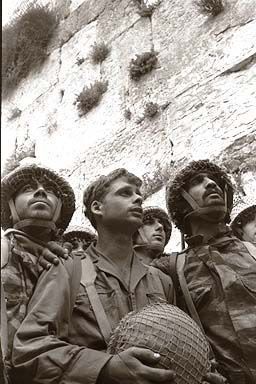
Jerusalem is reunited

Israel's famous lyricist, Neomi Shemer

Israel survives the devastating Yom Kippur War

Yitzchak Rabin, Israel's first Israeli born Prime Minister, strolls with Gerald Ford

The Miraculous Entebbe Raid

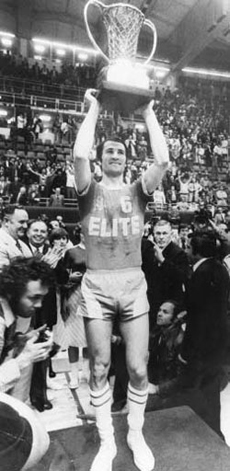
Tal Brody and Macabbi Tel Aviv with the 1977 European Cup Championship

Izhar Cohen and the Alphabet win the 1978 Eurovision with Abanibi

Begin & Sadat talk peace

Bye Bye Osirak

Ethiopian Jewry arrives home

Russian Jewry begins their return to Israel in 1989

Reuven Atar stuns France in the 92nd minute with the winner in a 3-2 classic. Click here for 10 minutes of highlights

Ilan Ramon, Israel's first astronaut

Gal Fridman wins Gold in Athens Olympics (2004) becoming 1st Israeli to do so

There are obviously some major events I've left out but please leave a comment if you want me to add a specific picture ... Here's to the next 60 ...

David Ben Gurion reads the Declaration of Independence on May 14, 1948

Israeli soldiers hang the flag at Eilat

850,000 Jewish Refugees arrive in Israel after expulsion from the Arab World
Sallah Shabati, with a starring role from Chaim Topol, is nominated for an Oscar and wins a Golden Globe award

Jerusalem is reunited
Israel's famous lyricist, Neomi Shemer
Israel survives the devastating Yom Kippur War
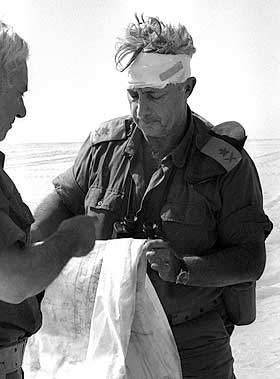
Yitzchak Rabin, Israel's first Israeli born Prime Minister, strolls with Gerald Ford

The Miraculous Entebbe Raid

Tal Brody and Macabbi Tel Aviv with the 1977 European Cup Championship
Izhar Cohen and the Alphabet win the 1978 Eurovision with Abanibi

Begin & Sadat talk peace

Bye Bye Osirak

Ethiopian Jewry arrives home

Russian Jewry begins their return to Israel in 1989

Reuven Atar stuns France in the 92nd minute with the winner in a 3-2 classic. Click here for 10 minutes of highlights

Ilan Ramon, Israel's first astronaut

Gal Fridman wins Gold in Athens Olympics (2004) becoming 1st Israeli to do so

There are obviously some major events I've left out but please leave a comment if you want me to add a specific picture ... Here's to the next 60 ...

Friday, May 02, 2008
Grow Up Son
When I finished the army and moved to Jerusalem, there was a joke amongst the Anglo speaking community that once you were ready for a job, you'd be guaranteed one at IDT Global Services (back then, CSM). At the time, CSM was most likely the largest employer of English speakers in Israel. Today, it will still most likely still hold that title even though the company downsized and purged dozens of employees in the past week. For more on the story, click here for Haaretz' story (which was on the front page of the print edition on Wednesday).
Why am I boring you with these details?
Well, I started with IDT Global services back in January 2005 and a lot of the people who were let go this week were friends whom I had 'grown up' with in the business, friends for whom I did reports (while a Reporting Staffer) for, or helped with payroll queries (while I was a Payroll Staffer). Now these same friends who I used to laugh with, eat lunch with and work out with have been let go and a wave of uncertainity has hit those who have survived the culling. It's not the same company I left two weeks ago when I went on vacation - I've come back to a company where I feel like a newbie and I've yet to adjust to the new reality.
This 'adjustment' is the reason for my blog title. This is the reality of the professional world. Employees come and employees go and while drastic downsizing severly hurts the professional environment you once worked in, it is in one's best interest to not let the shock and concern cloud your ability to perform and come to work with the right attitude. Worrying about your friends and being sad is one thing, but it shouldn't interfere with the necessity to continue doing your work at the highest level possible.
Friday, March 28, 2008
Remember
The Gedenk Movement (Gedenk means "remember" in Yiddish) is a humanitarian campaign dedicated to raising youth awareness about genocide through art and education.
Subliminal, an Israeli rapper, & Miri Ben-Ari, a grammy award winning Violinist, perform in this powerful song for Gednek:
Subliminal, an Israeli rapper, & Miri Ben-Ari, a grammy award winning Violinist, perform in this powerful song for Gednek:
Tuesday, March 25, 2008
The Future ... today?
I've blogged in the past about some of Israel's rising footy talents, only to feel let down by their inability to take the next step in their careers. Although Toto Tammuz, Yuval Sphungil & Ben Sahar are all still young, all three have failed to take the next step in the game. Be it due to a lack of playing time or poor form, the aforementioned threesome have seemingly regressed after strong 2006/07 club & international campaigns. Only Amit Ben Shushan, the speedy Beitar striker, has managed to have a solid campaign, contributing 7 goals to what will most likely be Beitar's second consecutive league championship. Their lack of impact on the international stage however was one of the low points of an otherwise strong Euro 2008 qualifying campaign (Israel tied for 3rd place with England).
With the preparations already beginning for the 2010 World Cup, Dror Kashtan has surprised the fans with the selection of one of the hottest properties in European football: Barcelona's 16.5 year old Guy Assulin. I have known about Assulin for the past year and a half after I 'discovered' him on Football Manager 2007. Having tried to follow his career as best as possible, it seemed quite obvious that he was highly regarded not only within Barcelona, but also within Spain as the Spanish FA tried to entice the youngster to play for Spain. However, from day one, Assulin stated he wanted to play for Israel and tomorrow, he'll hopefully get the opportunity to strut his stuff with the blue & white. With a relatively 'easy' World Cup 2010 qualifying group, a team with hungry and gifted youngsters like Assulin, Maor Bozaglo, Lior Rafaelov, Tammuz & Sahar may surprise and help Israel qualify for her first major tournament appearance since 1970.

For anyone interested in watching some live footage of Assulin playing for Barcelona C & Barcelona B, click here, here, here, here, here or here.
Monday, March 24, 2008
A Pattern Emerges
It seems that every time I have my ticket booked to the US to visit my family, the IDF requests my presence for reserve duty. Three years ago (2005), I booked a ticket to surprise my mom for her 50th birthday. I was called up and used it as my 'excuse' for not being able to make the event in New York, knowing that the call up was voluntary due to it being less than a year after my discharge from normal service. The next year (2006), during the Second Lebanon War, I was called up for duty and cancelled my ticket willingly to serve. Last year, a trip to the US for my engagement party was predictably followed by a call up to serve during the planned vacation. For that stint, I served a weekend but still traveled to see my family. Fast forward to today ... Another call up for the day after I am supposed to leave with Talya for a 10 day trip to the US. Luckily it's only a day long stint and my commander has no problem with my absence ...
4 tickets booked in the last 3 years, 4 call ups during the anticipated time of travel ... hmmm ... perhaps the army should coordinate these call ups with me! :)
************
Purim ... Anyone else get the feeling we're living through the modern day Purim with Hamman replaced by Mahmoud Ahmadinejad?
4 tickets booked in the last 3 years, 4 call ups during the anticipated time of travel ... hmmm ... perhaps the army should coordinate these call ups with me! :)
************
Purim ... Anyone else get the feeling we're living through the modern day Purim with Hamman replaced by Mahmoud Ahmadinejad?
Tuesday, March 18, 2008

Saturday, March 08, 2008
Booing the Dead
In today's Bnei Sachnin-Maccabi Netanya game in Sachnin, there was a minute silence before the game to honor the 8 who died in the horrific terrorist attack in Jerusalem this past Thursday. During the minute of silence, a lot of the Sachnin, Israel's best Israeli-Arab team, booed and screamed curses. This sickening act of disrespect was thankfully not accepted by all Sachnin fans, who tried to quiet them and in some instances, also started physical confrontations with them. It's worrying times ...
For those who read Hebrew, the incident is mentioned here.
For an update on the killer and the investigation, click here.
Lastly, a short clip about the attack ... Please pass it on:
For those who read Hebrew, the incident is mentioned here.
For an update on the killer and the investigation, click here.
Lastly, a short clip about the attack ... Please pass it on:
Subscribe to:
Posts (Atom)


